
To winterize a tankless water heater effectively, your strategy depends on whether your home will remain occupied during freezing weather. For occupied homes during standard winter weather, keep the unit plugged into electrical power so its internal freeze-protection heating elements remain active, wrap exposed external pipes with foam insulation sleeves ($15–$45), and schedule routine maintenance before freezing temperatures hit Middle Tennessee. For seasonal properties, vacant homes, or severe winter storms involving prolonged power outages, complete winterization requires shutting down electrical and gas connections, isolating the main water supply, fully draining the internal heat exchanger, and purging residual water with controlled low-pressure air lines. Because internal components like flow sensors, solenoid valves, and compact copper heat exchangers can rupture easily if drained or pressurized incorrectly, homeowners should rely on a licensed technician to perform internal line blowouts and complex seasonal servicing. Following proper freeze-prevention steps protects your home against burst water lines and avoids severe freeze damage that can cost $1,500 to $3,000 or more in equipment replacement.
Key Takeaways
- Keep Power Active: On-demand water heaters rely on internal electrical ceramic heating blocks that only protect the unit when power remains connected.
- Insulate External Lines: Exposed cold and hot water lines require foam pipe sleeves or self-regulating heat trace tape to prevent external ice blockages.
- Drain Vacant Systems: Empty homes and seasonal cabins require a complete system shutdown, internal flushing, and low-pressure air evacuation before winter.
- Prepare for Outages: Severe winter storms that cut electrical power eliminate built-in freeze protection within hours, increasing severe freeze risks.
- Hire Licensed Experts: Technical procedures like clearing internal water traps and Flushing heat exchangers should be handled by a certified professional.
Will a Hot Water Heater Freeze in the Winter? Understanding the Risks
Many homeowners wonder: can a hot water heater freeze in the winter? The short answer is yes. While traditional tank water heaters hold 40 to 80 gallons of warm water that takes time to chill, tankless units hold only a small amount of water inside high-efficiency copper or stainless steel tubing. When ambient temperatures drop below 32°F, that standing water can freeze rapidly. As ice expands, it creates immense internal hydraulic pressure. This pressure ruptures internal copper coils, cracks brass control valves, and ruins precision flow sensors.
According to data published by the Insurance Institute for Business & Home Safety, frozen and burst water pipes are among the leading causes of winter residential property damage, with average insurance claims exceeding $10,000 per incident. In a tankless system, the heat exchanger is the most costly component to replace. If standing water freezes inside this narrow assembly, the metal stretches and splits, destroying the unit’s airtight combustion chamber. Replacing a cracked heat exchanger often costs nearly as much as installing an entirely new water heater.
Cold winter drafts compound this risk. Outdoor tankless units, garage-mounted systems, and crawlspace installations face immediate exposure to sub-freezing winds. Even indoor units installed near exterior vents can freeze if cold air travels backward down the exhaust termination pipe during a hard freeze. Understanding how to winterize water heater connections and system components is essential for protecting your investment throughout the colder months.
Built-In Freeze Protection vs. Manual Winterizing on Demand Water Heater Systems
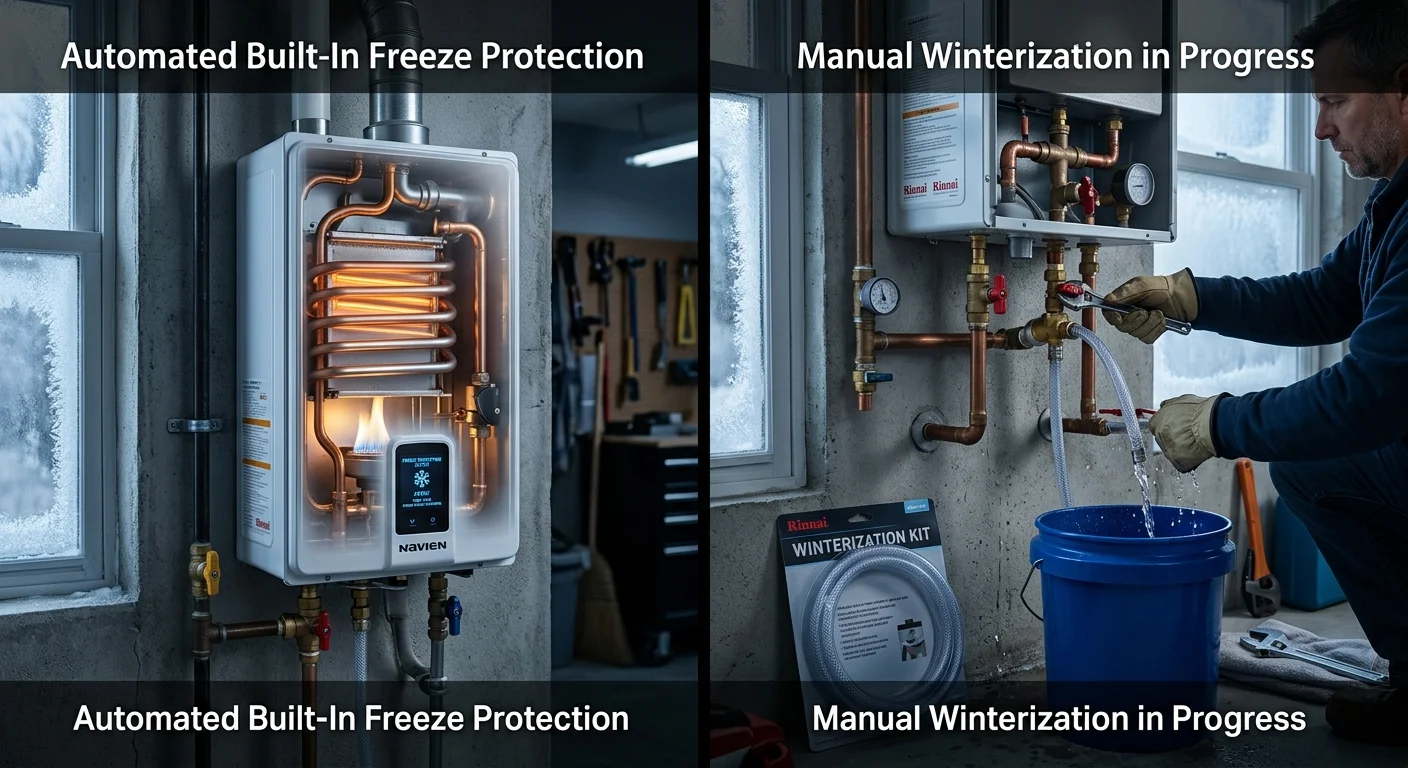
Modern gas and electric tankless water heaters feature built-in freeze protection designed to handle brief cold snaps. Internal ceramic heating blocks are placed near the heat exchanger and water valves. When internal sensors detect temperatures dropping near 38°F, the system automatically energizes these tiny heating elements to warm the heat exchanger and prevent ice formation. Gas units may also briefly fire their main burner to generate heat within the water path.
However, built-in freeze protection has distinct limitations that every homeowner should understand:
- Electrical Reliance: Built-in heating elements depend entirely on continuous AC power. If a winter ice storm causes a localized power outage, built-in freeze protection shuts down immediately.
- External Line Exposure: Integrated heaters only warm the components inside the unit cabinet. They do not heat the external copper water pipes, shutoff valves, or filter assemblies connected to your home.
- Temperature Limits: Most factory freeze-protection systems are designed for ambient temperatures down to -4°F in windless conditions. Sub-zero temperatures accompanied by high wind gusts can easily overwhelm these internal elements.
Because built-in features cannot protect your plumbing during blackouts or extreme arctic fronts, manual winterizing on demand water heater preparations become vital. Learning how to winterize tankless water heater setups ensures your home stays protected even when severe weather disrupts municipal utilities.
The Essential Cold Snap Checklist for Winterizing Tankless Water Heater Systems
When preparing your home for freezing winter weather, taking the right pre-season steps prevents unexpected breakdowns. While homeowners can handle basic external insulation and power checks, technical servicing should always be conducted by a qualified specialist. The sequence below outlines the professional protocol used to winterize tankless water heater units safely during extended shut-offs or severe cold snaps.
- Isolate Utilities: The technician turns off the electrical circuit breaker dedicated to the water heater and shuts down the gas supply valve to eliminate any risk of accidental ignition or electrical shorting.
- Shut Off Cold Water Supply: The main cold water inlet valve leading into the unit is closed tightly to stop incoming water flow into the heat exchanger.
- Drain Internal Water Lines: Service isolation valves are opened, and drain caps are removed to allow standing water inside the unit to drain completely into bucket line assemblies.
- Remove and Clean In-Line Water Filters: The technician unthreads the cold water inlet filter, drains trapped water from the screen housing, cleans out mineral sediment, and thoroughly dries the assembly.
- Evacuate Residual Pockets with Low-Pressure Air: Using regulated compressed air (typically under 30 PSI to prevent internal seal damage), air is pushed through the system to clear water from internal traps, check valves, and internal piping bends.
- Disconnect Condensate Traps (Condensing Models): For high-efficiency condensing tankless units, the technician disconnects and drains the acidic condensate trap, which stores standing water that can freeze and shatter plastic housings.
Attempting these steps without proper training, line gauges, or regulated air compressors can damage delicate flow rotors and ceramic parts. Entrusting these tasks to an expert ensures that every drop of residual moisture is safely removed without compromising manufacturer warranties.
Comparing Winter Protection Options for On-Demand Units
Protecting your water heating system requires balancing local climate conditions, installation locations, and equipment choices. Review the comparison table below to determine which freeze protection strategy aligns best with your home layout.
| Protection Method | Best Suited For | Typical Cost Range | Level of Freeze Protection |
|---|---|---|---|
| Built-In Electric Protection | Indoor units in conditioned spaces during brief winter chills | Included with unit ($0 additional) | Moderate (Requires continuous electrical power) |
| External Pipe Insulation & Heat Tape | Garage, basement, and crawlspace piping runs | $20–$80 (DIY materials) | Good for external lines above 15°F |
| Recirculation Pump System | Homes with long pipe runs subject to intermittent freezes | $300–$800 (Installed) | High (Keeps water moving through lines) |
| Professional System Draining & Air Purge | Vacant homes, seasonal properties, or prolonged power loss | $150–$350 (Service visit) | Maximum (Eliminates all internal water) |
Selecting the right combination of freeze protection measures ensures your equipment remains operational year after year. For optimal energy management, research published by the U.S. Department of Energy demonstrates that insulating hot water pipes lowers standby heat losses and raises water temperatures by 2°F–4°F, saving energy while lowering freeze risks.
How to Protect Outdoor and Garage-Mounted Tankless Water Heaters
Outdoor and garage installations present unique winter challenges across Middle Tennessee communities like Franklin, Brentwood, and Nashville. Outdoor units are directly exposed to frigid winds, snow, and ice, while garage installations often suffer from sharp drop-offs in ambient temperature due to uninsulated garage doors and drafty structural walls.
To keep an outdoor or garage-mounted system safe during cold winter stretches, prioritize these structural protective measures:
Install Heavy-Duty Pipe Sleeve Insulation
All exposed hot and cold water pipes entering and exiting the bottom of the unit must be fully insulated. Pre-slit polyethylene foam or rubber pipe insulation sleeves with thick walls should be wrapped tightly around the lines. Pay special attention to brass fittings and shutoff valves, which transfer heat away rapidly. Use weather-resistant foil tape or UV-rated cable ties to seal all insulation seams completely.
Utilize Self-Regulating Electric Heat Trace Cables
In unheated garages or outdoor locations where temperatures fall below 20°F for extended periods, standard foam insulation alone may not prevent freezing. Certified self-regulating heat trace tape can be installed along external copper pipes under the foam insulation. These specialized heating cables automatically adjust their heat output based on ambient temperature, preventing pipe freezes without overheating the lines.
Fit Heavy-Duty Weatherproofing Covers
Installing an outdoor tankless water heater cover or protective cabinet creates an insulated barrier against harsh wind chill. Cold winds blowing across an unshielded metal cabinet strip heat away rapidly, forcing internal ceramic heaters to work continuously. A custom-fitted winter cover or weatherproof enclosure retains ambient warmth and reduces the likelihood of frost penetration.
Check Vent Termination and Backdraft Dampers
Direct vent tankless systems draw outside air for combustion through dedicated vent pipes. During strong winter storms, cold air can travel down the intake or exhaust venting, reaching the internal heat exchanger inside your home. Plumbers ensure that proper spring-loaded backdraft dampers are operational and that vent terminations feature approved wind caps to block freezing gusts.
Critical Mistakes to Avoid When Winterizing On Demand Water Heater Units
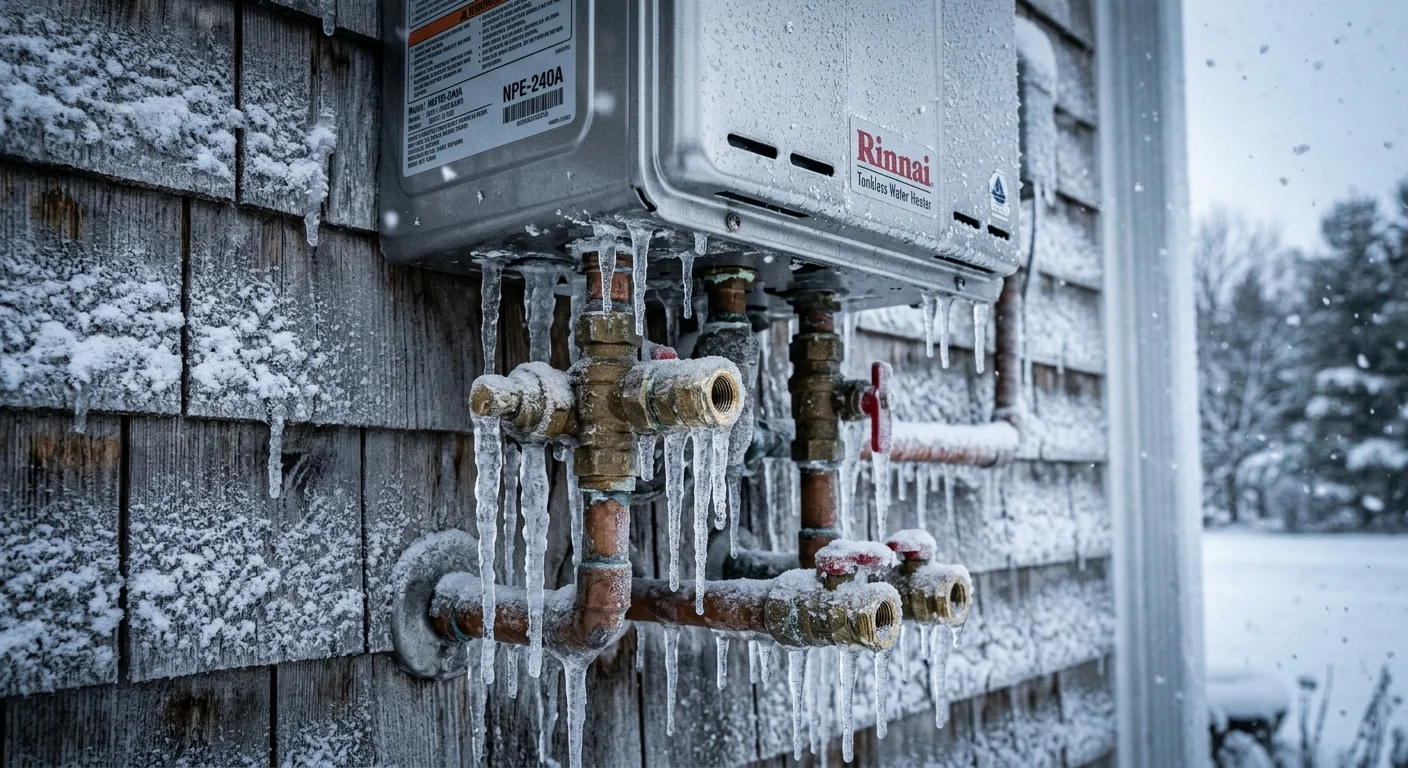
Improper maintenance habits and simple misunderstandings often lead to severe winter plumbing emergencies. Homeowners trying to manage freeze threats should avoid these common pitfalls:
- Unplugging the Unit to Save Electricity: Some homeowners unplug their tankless water heater before leaving on winter vacation. Disconnecting the power cord disables the internal freeze-protection heating blocks, allowing standing water inside the unit to freeze solid during the first cold front.
- Using High-Pressure Compressed Air: Attempting a DIY compressed air blowout using standard automotive tire inflators or unregulated air compressors can blast high PSI air through delicate internal components. Excess air pressure shatters internal plastic flow turbine rotors, destroys delicate rubber seals, and invalidates manufacturer warranties.
- Ignoring Hard Water Scale Buildup: Mineral scale accumulation inside heat exchanger tubes restricts water flow and creates uneven thermal distribution. Hard water scale creates small pockets where static water collects and freezes more quickly. Regular descaling maintenance is critical before winter arrives.
- Leaving Garden Hoses Connected: Outdoor hose bibs connected to water lines near your tankless unit must be disconnected before freezing weather hits. Attached garden hoses retain water, causing ice to back up into interior home plumbing and water heater supply lines.
Why Professional Tankless Water Heater Service Is Vital Before Winter
Professional water heater maintenance for high-efficiency equipment requires technical knowledge, specialized tools, and precise diagnostic equipment. When you understand how a tankless water heater works, it becomes clear why professional servicing is so important. These systems combine high-voltage electrical circuits, sensitive gas control valves, microprocessors, and ultra-compact water channels into a tight cabinet space. A single error during winter prep can lead to water leaks, burner lockouts, or structural cracking.
Partnering with an experienced practitioner gives homeowners peace of mind before winter cold snaps arrive. An expert technician checks error code histories, inspects flame sensors, verifies gas pressure drops, tests internal freeze elements, and performs thorough flushing procedures to clear scale. To maximize system performance and reach the full average water heater lifespan in Franklin, TN, professional care is an essential investment.
When searching for a trusted local technician, hiring a qualified water heater service professional ensures your system receives exact factory-recommended maintenance. Comprehensive safety checks identify minor hairline leaks or failing sensors before they evolve into full system outages in the dead of winter.
Ensure Uninterrupted Hot Water This Winter with The Hot Water Heater Pros
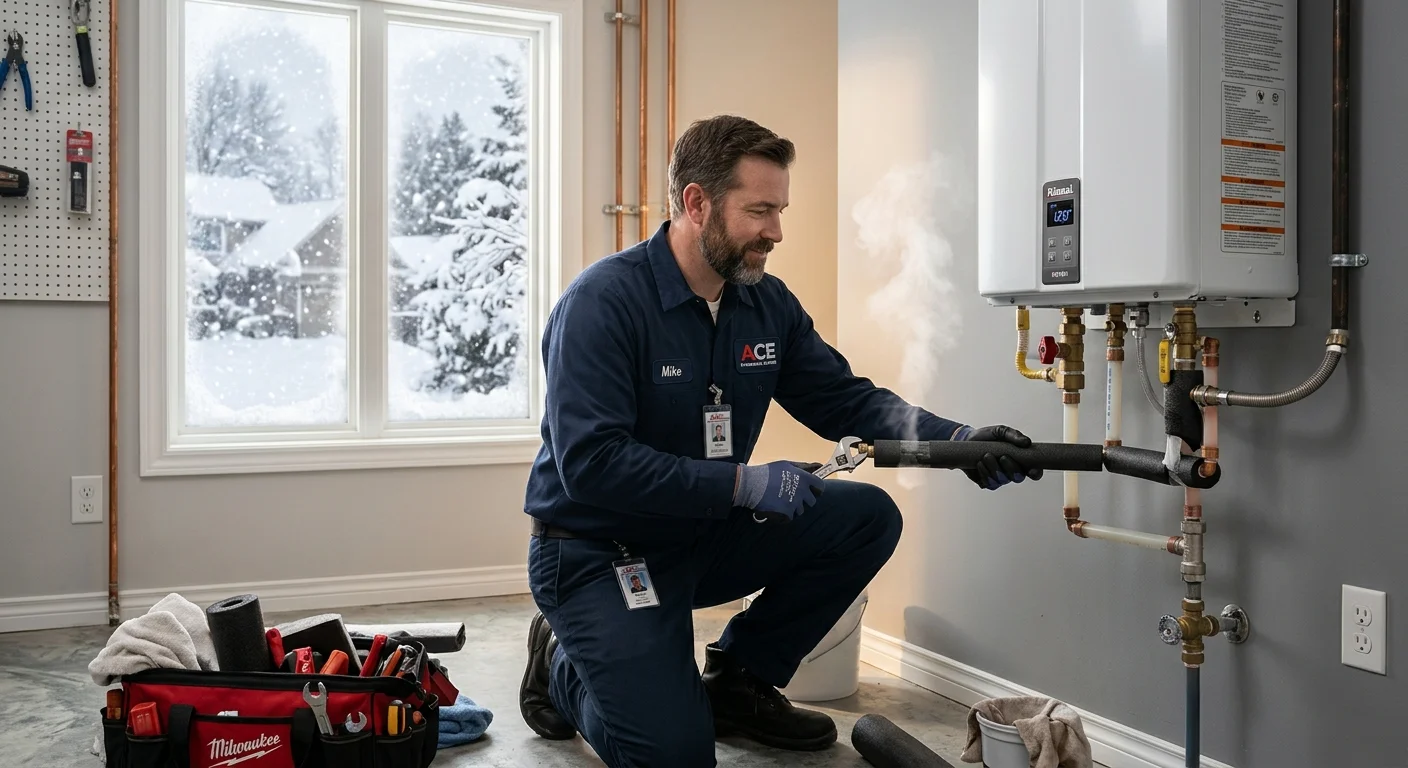
When temperatures plummet across Middle Tennessee, you need absolute confidence that your hot water system will deliver continuous, reliable warmth. At The Hot Water Heater Pros, we specialize exclusively in hot water heating systems. Our team serves homeowners across Franklin, Brentwood, Nashville, Cool Springs, Spring Hill, Thompson’s Station, Murfreesboro, Mt. Juliet, and Fairview with fast, expert seasonal care.
Whether you need comprehensive pre-winter servicing, seasonal system draining, pipe insulation upgrades, or specialized tankless water heater maintenance, our licensed specialists bring clean, professional execution to every job. Avoid expensive freeze damage, cracked heat exchangers, and cold-weather emergencies this season. Contact The Hot Water Heater Pros today to schedule your winterization inspection and keep your hot water flowing strong all winter long.
