
For Middle Tennessee homeowners looking to slash utility bills while enjoying dependable hot water, a heat pump water heater (also known as a hybrid water heater) is the absolute best choice. If you currently rely on a standard electric tank system and pay high monthly power bills, upgrading to a hybrid system will immediately cut your water heating energy use by up to 70% or more. However, if your home lacks the physical space required for proper airflow or if you have a low-demand household where upfront costs outweigh long-term savings, a traditional tank or a high-efficiency gas system might still be a better fit. As local hot water experts in Franklin, we consistently recommend heat pump technology for family homes where hot water usage is high. This modern appliance works by moving heat rather than creating it, acting like a refrigerator in reverse. Over its lifetime, this system pays for itself multiple times over, making it an incredibly smart investment for most residential properties in Nashville, Brentwood, and surrounding areas.
Key Takeaways
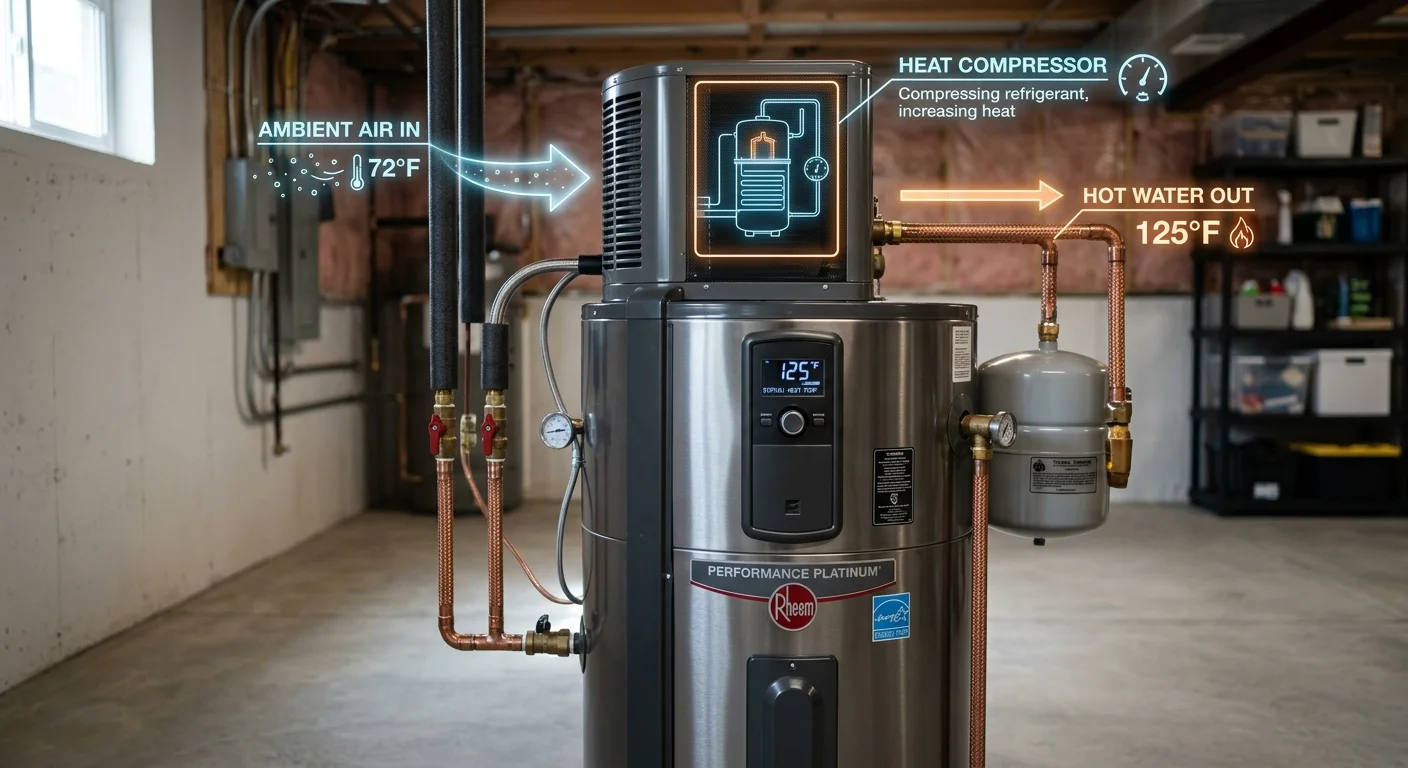
- Unmatched Efficiency: Heat pump water heaters use up to 70% less electricity than traditional electric tank heaters.
- Rapid Payback Period: Higher upfront purchase and installation costs are typically recouped within three to five years through lower utility bills.
- Federal Incentives: Homeowners in 2026 can claim substantial federal tax credits and local utility rebates to offset installation costs.
- Specific Space Needs: These systems require a minimum volume of surrounding air space and consistent warm temperatures to operate at peak efficiency.
- Professional Required: Complex electrical, plumbing, and condensate drainage requirements mean you must hire an expert for installation and maintenance.
What Is a Heat Pump Water Heater and How Does It Compare?
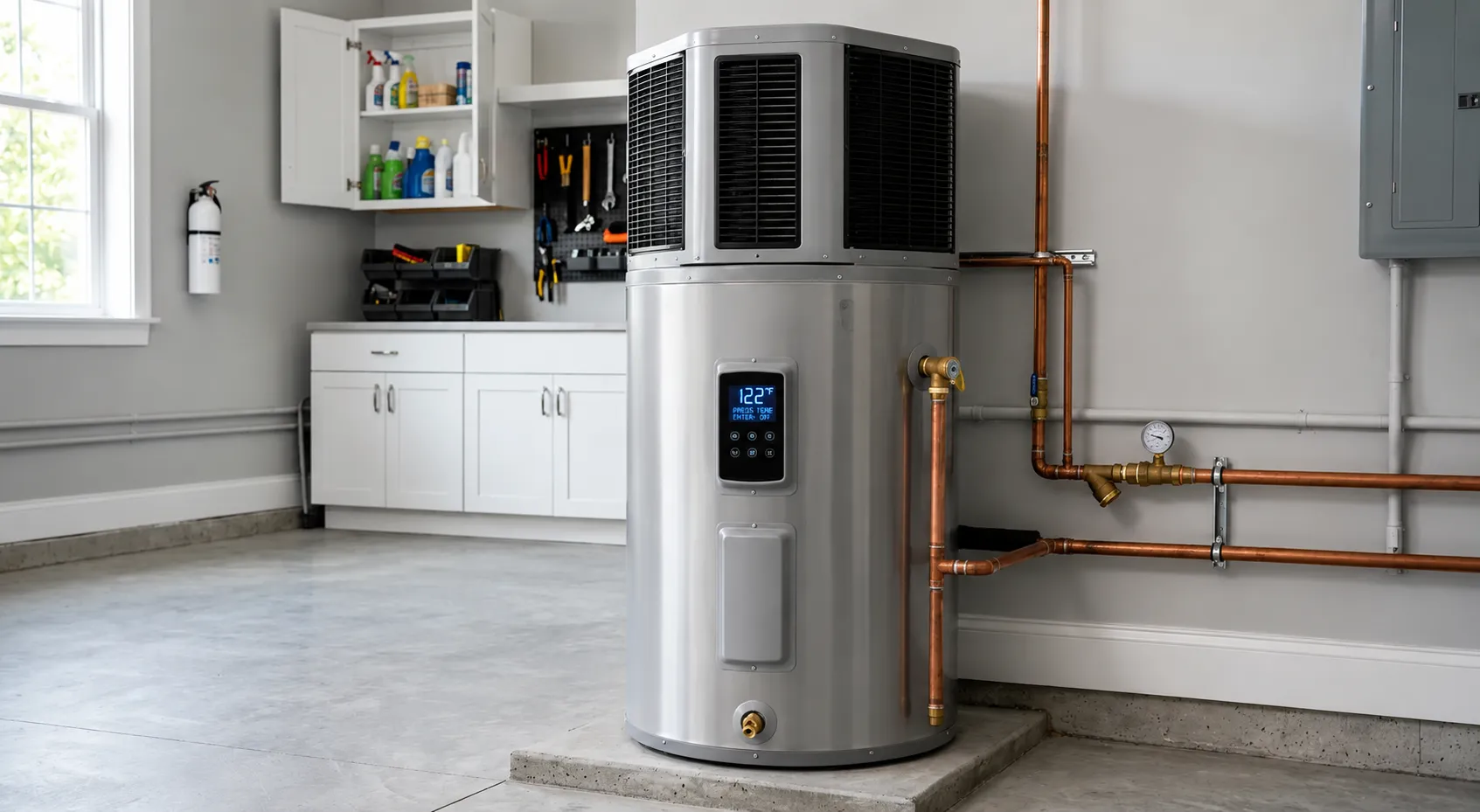
A heat pump water heater is an advanced residential appliance that extracts heat from the surrounding air and transfers it to water stored inside an insulated tank. Unlike traditional electric resistance water heaters that generate heat directly using heating elements, a heat pump unit relies on a highly efficient thermal transfer process. This fundamental difference is why plumbing experts refer to these systems as “hybrid” water heaters. They combine an air-source heat pump compressor with backup electric heating elements to ensure you always have hot water, even during times of exceptionally high demand.
When you look at the landscape of modern water heating technology, deciding which system fits your home can feel overwhelming. Many homeowners struggle when choosing between gas and electric water heaters, or deciding between tankless and tank models. Heat pump water heaters occupy a unique space. They run entirely on electricity but deliver the operating cost advantages typically associated with natural gas. They provide the familiar storage capacity of a traditional tank while using a fraction of the energy.
To help you understand where this technology fits, we have compared the most common residential water heating systems across several key performance metrics. This comparison highlights the operational costs, longevity, and ideal use cases for each option.
| Technology Type | Average Annual Operating Cost | Typical Lifespan | Best Suited For |
|---|---|---|---|
| Heat Pump (Hybrid) | $100 – $200 | 10 – 15 Years | Electric homes with high hot water usage and adequate installation space |
| Standard Electric Tank | $400 – $600 | 8 – 12 Years | Budget-conscious installations, tight spaces, or low-occupancy homes |
| Standard Gas Tank | $250 – $400 | 8 – 12 Years | Homes with active natural gas connections and standard ventilation |
| Gas Tankless | $150 – $300 | 20+ Years | Large families with high concurrent water use and limited floor space |
How Does a Heat Pump Water Heater Work to Save Energy?
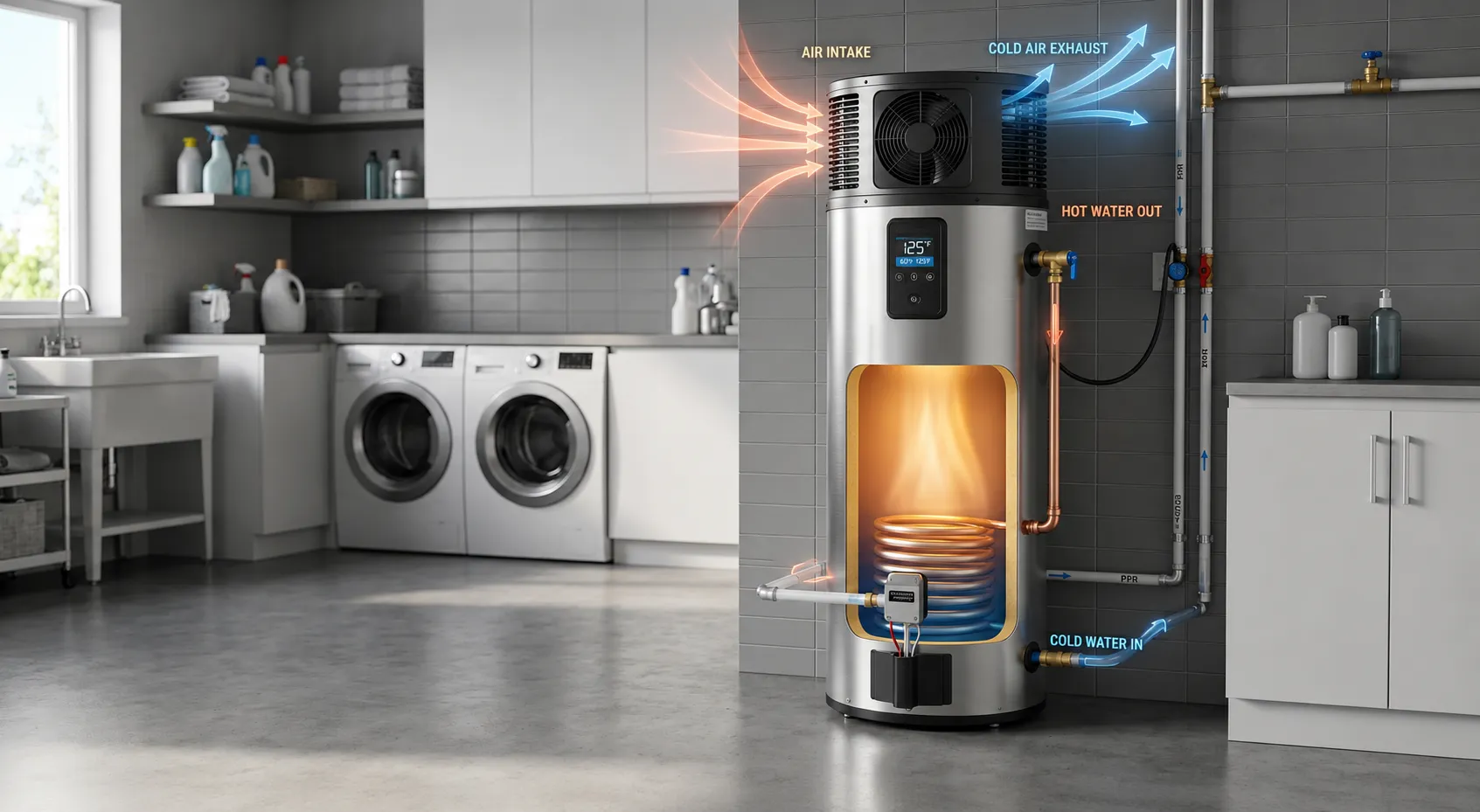
A heat pump water heater operates on the same basic thermodynamic principles as a residential air conditioner or refrigerator, but it runs the process in reverse. Instead of expelling heat from inside a space to the outdoors, it pulls heat from the surrounding indoor air and concentrates it inside the water tank. This clever engineering allows the system to deliver an incredible amount of thermal energy without relying on high-wattage electrical resistance elements.
The entire operation follows a continuous, closed-loop cycle that maximizes every watt of electricity consumed. This cycle consists of four distinct stages:
- Air Intake: A fan located at the top of the water heater draws in warm ambient air from the surrounding room. This air passes over an evaporator coil containing a specialized refrigerant liquid.
- Heat Absorption: The low-pressure refrigerant inside the evaporator coil absorbs heat from the air. Because the refrigerant has an extremely low boiling point, the absorbed ambient heat causes it to vaporize into a low-temperature gas.
- Compression: The gaseous refrigerant travels into an electric compressor. The compressor squeezes the gas, which dramatically increases both its pressure and its temperature, turning it into a hot, high-pressure vapor.
- Heat Transfer: This hot gas flows through a condenser coil that wraps around the outside of the water tank. The heat from the refrigerant transfers through the tank wall and into the domestic water supply. As it cools, the refrigerant condenses back into a liquid, passes through an expansion valve to drop its pressure, and restarts the cycle.
Because the electrical energy is used only to run the fan and the compressor, the system is incredibly efficient. According to the U.S. Environmental Protection Agency (EPA), Energy Star certified hybrid water heaters can save a household of four approximately $330 per year on their electric bills. That translates to thousands of dollars in cumulative savings over the unit’s operating life.
Is a Heat Pump Water Heater Worth It for Middle Tennessee Homes?
A heat pump water heater is absolutely worth the investment for the vast majority of homeowners in the Middle Tennessee region. While the upfront purchase and installation cost is higher than a standard electric tank, the long-term economic advantages are undeniable. A standard electric water heater might cost between $800 and $1,500 to purchase, whereas a premium hybrid heat pump unit generally ranges from $1,800 to $3,200 depending on the tank size and brand. However, looking only at the initial price tag is a common homeowner mistake.
The true value of a hybrid system becomes clear when you calculate the return on investment. With electricity rates across the region, a family of four will typically recoup the price difference within three to five years. After that payback period, the ongoing monthly savings go straight back into your pocket. Additionally, these savings accumulate over the average water heater lifespan, which typically reaches 10 to 15 years when the system receives proper professional care.
The financial math is even more appealing when you factor in current financial incentives. Under Section 25C of the Energy Efficient Home Improvement Credit, verified by the Internal Revenue Service (IRS), homeowners can claim a federal tax credit of up to 30% of the total installation cost, capped at a maximum of $2,000. When you combine this federal tax credit with local utility rebates and the daily operational savings, the decision to upgrade becomes an easy financial choice.
Where to Install a Heat Pump Water Heater in Your Home
Finding the correct location for your hybrid water heater is critical to ensuring it operates at peak efficiency. Because these units extract heat from the surrounding air and discharge cool, dry air back into the room, they cannot simply be dropped into a tiny, unvented closet like a traditional electric tank. If you place a heat pump system in too small a room, it will quickly chill the air around it, forcing the unit to drop out of its highly efficient heat pump mode and rely on expensive backup electric elements.
To prevent this drop in efficiency, professional installers follow strict spatial and environmental guidelines. A standard hybrid water heater requires approximately 1,000 cubic feet of unconfined air space surrounding the unit. This is roughly equivalent to a 10-foot by 10-foot room. If you must install the unit in a smaller space, you must install louvered doors or dedicated ducting kits to ensure a continuous supply of fresh air.
The ideal installation locations in Middle Tennessee homes include:
- Unconditioned Garages: The garage is often the perfect spot. It provides plenty of air volume and stays warm for most of the year, which maximizes the heat pump’s efficiency.
- Unfinished Basements: Basements offer ample space and stable temperatures year-round. An added bonus is that the heat pump will naturally dehumidify your damp basement air.
- Large Utility Rooms: A spacious utility room or dedicated mechanical space works beautifully, provided it meets the minimum cubic-foot requirements.
Additionally, you must consider condensate management. Because the evaporator coil pulls moisture out of the air as it extracts heat, the unit produces condensation. Your installer must route a condensate drain line to a nearby floor drain, a utility sink, or install a dedicated condensate pump to move the water outdoors. If you are planning an upgrade, scheduling a professional hybrid water heater installation ensures all space, venting, and drainage logistics are handled safely and correctly.
The Real-World Benefits of Upgrading to a Hybrid Water Heater
Beyond the incredible financial savings, living with a hybrid water heater brings several practical, daily benefits to your household. One of the most noticeable side benefits is localized dehumidification. During hot, humid Tennessee summers, the heat pump naturally extracts excess moisture from the air in your garage, basement, or utility room. This helps prevent mold growth, protects stored items, and makes your home feel much more comfortable.
Modern hybrid water heaters also feature highly customizable operating modes. Homeowners can adjust these settings using digital control panels or smartphone apps to match their daily routines. The most common operating modes include:
- Hybrid Mode: This is the default setting. It prioritizes the highly efficient heat pump compressor but will automatically engage the electric elements if there is a sudden, heavy demand for hot water.
- Heat Pump Only: This mode completely disables the backup electric resistance elements. It is the most energy-efficient setting and is perfect for households with moderate, predictable water usage.
- High Demand Mode: This setting utilizes both the heat pump and the electric elements simultaneously to maximize hot water recovery times. It is ideal when you have houseguests or back-to-back laundry cycles.
- Vacation Mode: This mode drops the tank temperature to a safe minimum while you are away, preventing unnecessary standby energy losses and saving you money.
From an environmental perspective, switching to a hybrid system is one of the most impactful upgrades a homeowner can make. According to the U.S. Department of Energy, heating water accounts for roughly 18% of the average home’s utility energy consumption. By slashing that energy demand by up to 70%, you drastically reduce your home’s overall carbon footprint, especially when the unit is paired with a residential solar system.
Common Mistakes to Avoid and Expert Recommendations
While heat pump water heaters are highly reliable, improper installation or poor maintenance can lead to premature failure and disappointing energy savings. One of the most common professional mistakes we see is homeowners attempting a DIY installation. Hybrid units are much heavier than standard electric tanks. They feature sensitive onboard electronics, require precise condensate drainage lines, and must be wired to dedicated high-voltage electrical circuits. Cutting corners on installation can void the manufacturer’s warranty and pose serious safety hazards.
Another frequent error is neglecting the air filter. Because the unit pulls in ambient air to extract heat, it features a reusable air filter designed to protect the evaporator coils from dust, pet dander, and airborne debris. If this filter becomes clogged, airflow is restricted, forcing the compressor to work harder and reducing the unit’s efficiency. Homeowners should inspect and clean this filter every three to six months to maintain optimal performance.
Finally, avoid placing the unit directly next to living spaces if you are highly sensitive to noise. While modern hybrid systems operate quietly (usually under 60 decibels), they do contain a compressor and a fan that emit a low hum during operation. Proper placement in a garage, basement, or insulated utility closet easily mitigates this minor issue. Working with an experienced local plumbing professional ensures that your system is sized perfectly, positioned correctly, and tuned for maximum efficiency from day one.
Need Help Upgrading? Contact Our Professional Team Today
Upgrading to a heat pump water heater is an investment that pays major dividends, but achieving maximum savings and reliability requires professional expertise. Dealing with heavy equipment, high-voltage electrical connections, and intricate condensate drainage systems is not a job for a weekend DIY project. A single mistake can compromise your system’s efficiency, damage the delicate compressor, or even void your manufacturer’s warranty.
By trusting our team of certified hot water specialists, you ensure your new system is sized perfectly for your family’s needs and installed to the highest industry standards. We handle every step of the process, from selecting the right hybrid model and navigating local utility rebates to setting up seamless drainage and testing the electrical connections. If you are ready to take control of your energy bills and enjoy dependable, eco-friendly hot water, contact The Hot Water Heater Pros today to schedule a professional water heater service and get your free, upfront estimate.
