
To safely turn off a water heater during an emergency or scheduled maintenance, you must isolate its energy source first—by switching off the dedicated breaker for electric models or turning the gas control knob to the “Off” position for gas systems—and then close the cold water inlet valve by turning it clockwise. If your tank has sprung a major leak, you should immediately shut off the main water valve to your home to prevent catastrophic property damage. While executing these emergency shut-off steps is a smart way to protect your home, you should never attempt to repair, drain, or dismantle the system yourself. At The Hot Water Heater Pros, we always recommend contacting a licensed technician to handle repairs once the system is safely powered down. Understanding how to manage these shutoff procedures correctly prevents dangerous situations like dry firing, electrical shocks, or severe system damage in your Middle Tennessee home.
Key Takeaways
- Always shut off the power or gas supply before turning off the water supply to prevent dangerous overheating and element damage.
- Electric water heaters require you to switch off the dedicated double-pole circuit breaker, which is typically a 30-amp switch.
- Gas units can be set to the “Pilot” position to save energy temporarily, or completely shut down by turning the control valve to “Off” and closing the dedicated gas line valve.
- If the cold water inlet valve on top of your water heater is stuck or leaking, you must locate and close your home’s main water shut-off valve.
- Never attempt to drain or repair a disabled system yourself; always contact a professional to avoid severe burn injuries and warranty voids.
How to Turn Off Hot Water Heater Safely
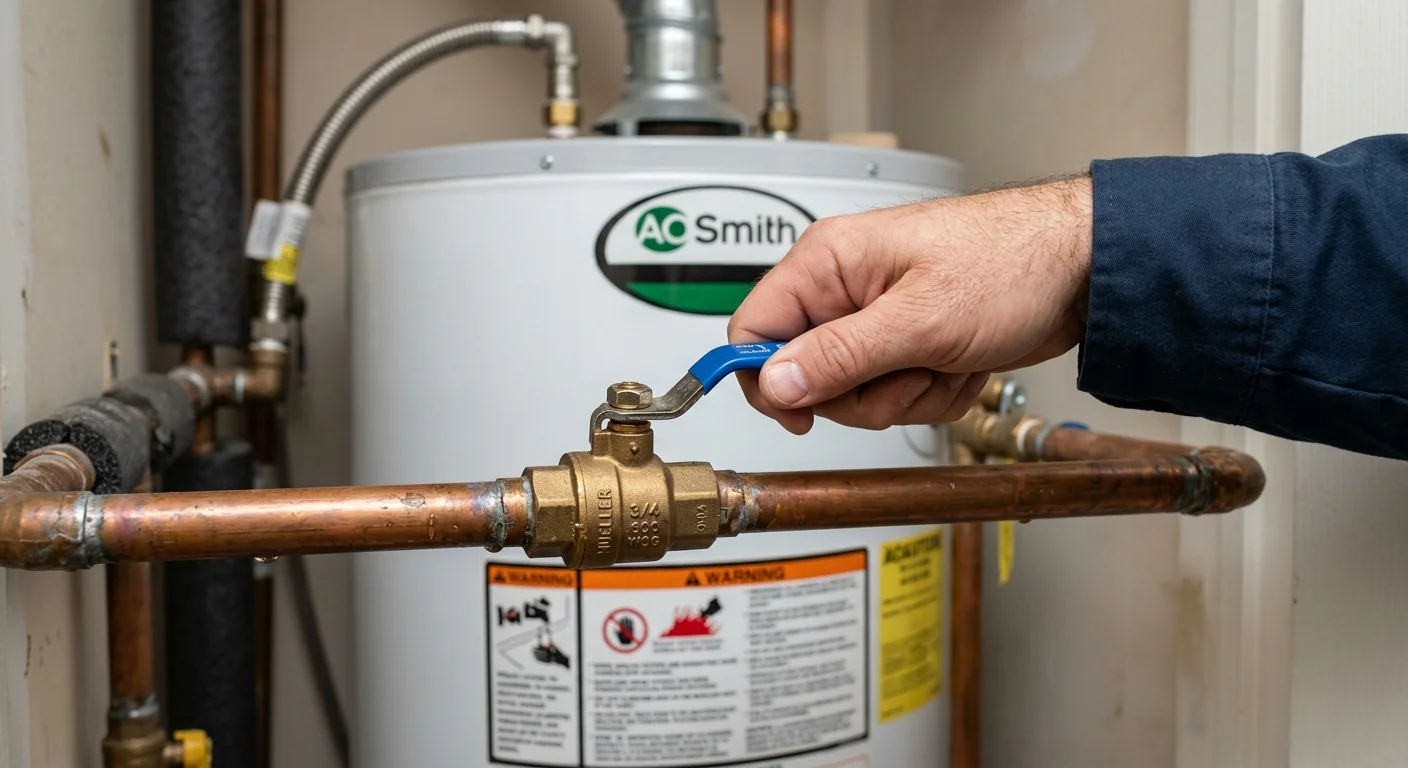
Shutting off the power source is the absolute first step you must take before touching any water valves or attempting to service your water heater. If you turn off the water supply while the heating elements or gas burners are still active, the tank can quickly overheat, melt internal components, or build up dangerous levels of pressure. For homeowners in the Franklin and Nashville areas, knowing how to safely cut this power protects both your property and your physical safety.
How To Turn Off Electric Water Heater
Learning how to turn off electric water heater systems requires a quick trip to your home’s main electrical service panel. Electric water heaters do not typically have a simple on/off switch on the tank itself, meaning you must disconnect the power at the source. Follow these steps to ensure the system is completely dead before proceeding with any other actions:
- Locate your home’s main circuit breaker panel, which is usually found in the garage, basement, utility room, or an exterior wall.
- Open the panel door and look for the directory index or the labels next to the individual breakers.
- Search for a double-pole breaker labeled “Water Heater,” “WH,” or “Hot Water.” This breaker is typically a larger, double-width switch rated for 30 amps.
- Flip the switch firmly to the “Off” position. You should feel a distinct click, and the switch may display a red or orange indicator showing it has been disconnected.
- If you want to be absolutely certain the power is off, you can use a non-contact voltage tester at the water heater’s upper access panel, though we highly recommend leaving electrical testing to a licensed technician.
Regularly scheduling professional water heater maintenance keeps these electrical connections and safety breakers in top working order.
How To Turn Off Gas Water Heater
If you need to know how to turn off gas water heater units, the process involves turning off the gas flow rather than flipping an electrical breaker. Gas systems use a continuous pilot light or an electronic ignition system paired with a gas control valve. Disconnecting the gas supply prevents fuel from entering the burner chamber. To shut down a gas system safely:
- Locate the thermostat control box, which is the box-like mechanism attached to the lower front portion of your water heater tank.
- Find the dial on top of this box, which usually has markings for “On,” “Pilot,” and “Off.”
- Turn this dial clockwise to the “Pilot” setting if you only need to shut down the main burner temporarily, or turn it all the way to “Off” to extinguish the pilot light and shut down the system completely.
- Locate the dedicated gas shut-off valve on the yellow or black gas pipe leading into the control box. This is typically a small lever handle.
- Turn the lever ninety degrees so that it sits perpendicular to the gas pipe, which physically blocks any gas from entering the appliance.
Is It Safe to Turn Off Water to Water Heater Systems?
Yes, it is entirely safe to turn off the cold water supply to your water heater, but only if you have already turned off the heating power source first. If you close the water valve while the unit is still powered on, the heating elements in an electric unit or the burners in a gas unit will continue to generate intense heat. Without cold water circulating through the tank to absorb this energy, the water inside will quickly boil, creating extreme pressure and potentially causing the tank to rupture or the heating elements to burn out instantly. This catastrophic event is known in the industry as “dry firing.”
According to safety reports compiled by the National Fire Protection Association, heating equipment malfunctions, including water heater issues, contribute to thousands of home structure fires every year, which underscores the critical importance of shutting off the power source first. Additionally, statistical data from the Insurance Institute for Business & Home Safety indicates that water heater failures are among the leading causes of residential water damage, with average clean-up and repair claims often exceeding $4,400 per incident. By turning off both the power and the water in the correct order, you can prevent these expensive emergencies from spiraling out of control.
If you are facing an active emergency, such as a ruptured tank or a major electrical short, attempting a DIY repair is never recommended. Shutting off the system is a temporary safety measure. Once the system is secure, you should immediately contact a professional water heater plumber to evaluate the unit, pinpoint the root cause of the failure, and perform the necessary repairs or water heater replacement safely.
For more details on when you should turn off your water heater, read our article “When Should You Turn Off Your Water Heater?”
Locating and Closing the Water Shutoff Valve
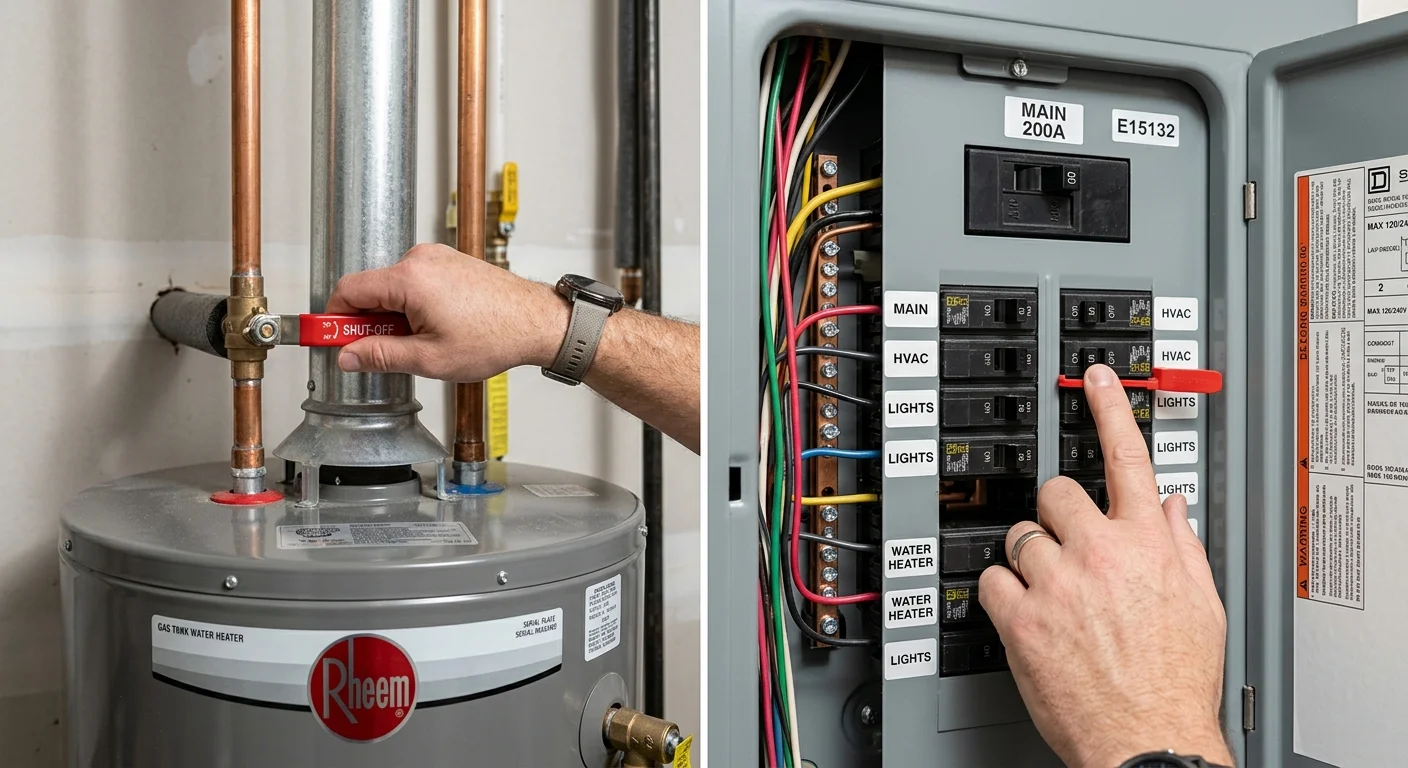
Once you have successfully cut the power or gas supply, you can proceed to shut off the water supply to the unit. This step is essential if you are dealing with a leak, preparing for a system flush, or waiting for a technician to replace an old tank. There are two primary ways to stop water from entering your water heater: using the dedicated unit valve or turning off your home’s main water supply.
To turn off the water directly at the water heater, look at the pipes connected to the top of the tank. You will see two pipes: one is the cold water inlet (often marked with a blue ring or cap) and the other is the hot water outlet (often marked with a red ring). You need to locate the valve on the cold water inlet pipe. This valve will generally be one of two types:
- Ball Valve: This modern valve features a single lever handle. To close it, turn the lever ninety degrees until it is perpendicular to the pipe. When the handle points across the pipe, the water flow is completely blocked.
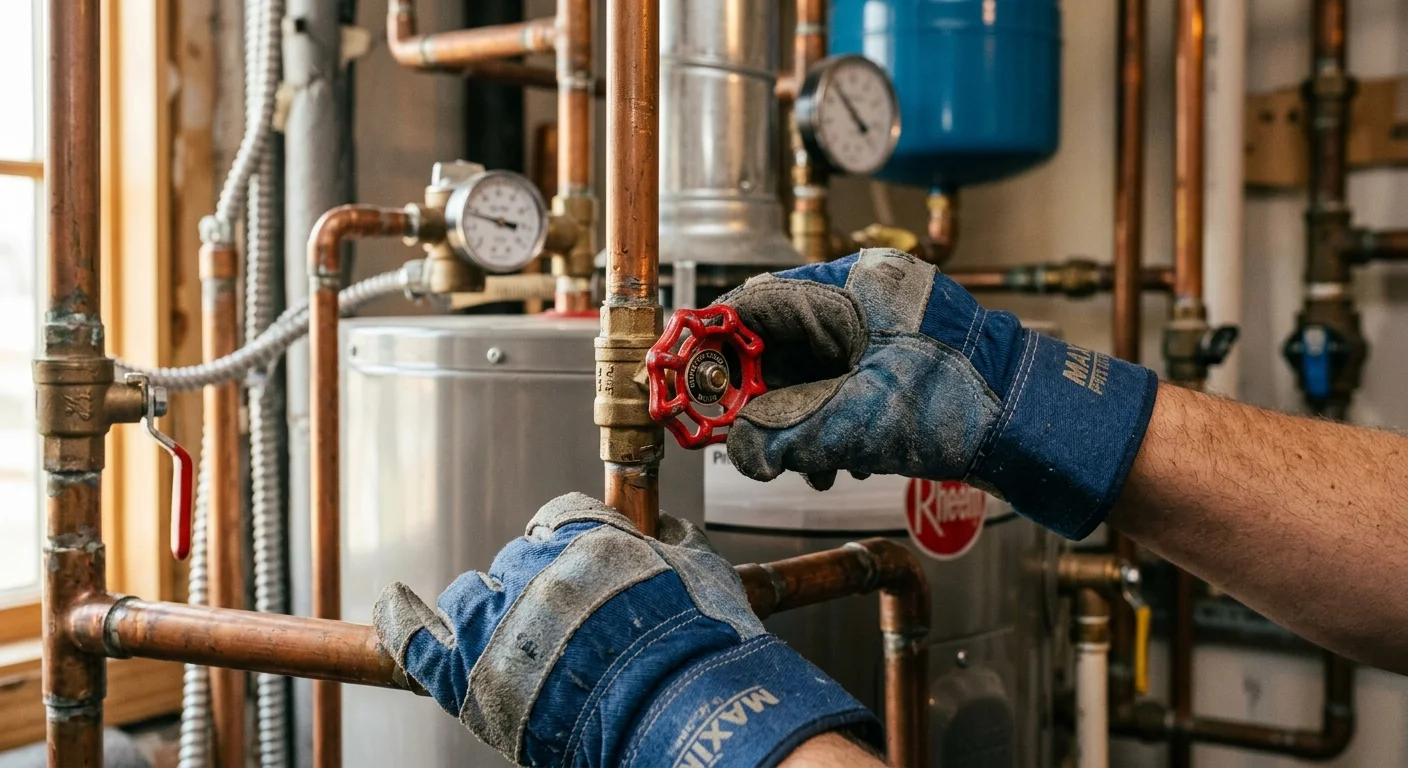
- Gate Valve: This older style of valve features a round, wheel-like handle. To close a gate valve, turn the wheel clockwise (to the right) as far as it will go. It may require several full rotations to close completely. Be gentle, as older gate valves can easily snap or seize if they have not been turned in years.
If the local valve on your water heater is corroded, stuck, or leaking itself, you must shut off the water to your entire house. In Middle Tennessee homes, the main water shut-off valve is typically located in the basement, crawl space, utility closet, or near the water meter in your front yard inside a plastic ground box. Turning this main valve clockwise will cut off water to your entire home, stopping the leak at the water heater immediately.
Comparing Shutoff Steps for Different Water Heater Types
Different types of water heating systems require slightly different approaches when you need to shut them down. A standard gas tank behaves differently than a modern tankless unit or a high-efficiency hybrid heat pump. To help you navigate these differences, the table below outlines the primary shut-off actions and safety risks associated with each main type of system.
| Water Heater Type | Primary Power Shutoff Action | Water Valve Location & Action | Key Safety Risk to Avoid |
|---|---|---|---|
| Standard Electric Tank | Flip the double-pole 30-amp breaker in the main electrical panel. | Turn the cold water inlet valve clockwise (on top of the unit). | Dry firing, which destroys the heating elements if power remains on without water. |
| Standard Gas Tank | Turn the gas control dial to “Off” and close the manual gas line valve. | Turn the cold water inlet valve clockwise (on top of the unit). | Gas leaks or dangerous gas buildup if the pilot light is extinguished without turning off the fuel. |
| Tankless Gas Unit | Unplug the electrical power cord and turn off the gas supply line valve. | Close both the cold water inlet and hot water outlet isolation valves. | Freezing damage if water is shut off but the unit is left exposed to winter temperatures. |
| Hybrid Heat Pump | Flip the dedicated double-pole breaker in the main panel. | Turn the cold water inlet valve clockwise (on top of the unit). | Compressor damage or electrical shock from integrated electronic control boards. |
Why Professional Assistance Matters for Water Heater Shutoffs
While learning how to turn off a water heater is an excellent emergency skill for every homeowner, executing repairs or attempting to drain the tank yourself is highly dangerous. Water heaters operate under intense thermal and electrical pressures. One wrong move can result in severe injuries, permanent property damage, or costly code violations that could impact your home insurance coverage. Understanding why your water heater is leaking is vital, but fixing it requires professional training.
A common mistake homeowners make is attempting to drain a hot water heater immediately after turning off the power. The water inside a residential tank can reach temperatures well above 120 degrees Fahrenheit. Tap water heated to 140 degrees Fahrenheit can cause third-degree burns in just six seconds. If you open the drain valve without allowing the tank to cool for several hours, or without using specialized professional equipment, you run a severe risk of suffering painful scald injuries. Additionally, sediment blockages can cause the drain valve to get stuck in the open position, turning a minor drip into an uncontrollable flood of boiling-hot water inside your home.
Working on these systems also involves complex electrical and gas line interactions. For electric models, touching live 240-volt wires can be fatal. For gas models, improper handling of the gas line or burner assembly can lead to silent carbon monoxide leaks or explosive gas buildups. Standard professional diagnostic and minor repair services typically cost between $150 and $450, while complete system replacements range from $1,200 to $4,500 depending on the model and efficiency rating. Paying for a professional water heater service ensures that the job is done safely, up to current building codes, and backed by a robust warranty.
Need Professional Water Heater Assistance? Contact Us Today
If your water heater is leaking, making strange noises, or failing to deliver hot water, don’t take risks with DIY repairs. The Hot Water Heater Pros are here to provide fast, reliable, and professional hot water solutions across Franklin, Brentwood, Nashville, and the surrounding Middle Tennessee communities. Our team of certified water heater experts specializes exclusively in hot water systems, ensuring you receive the highest level of care, honest upfront pricing, and clean, professional service. Let us handle the heavy lifting and keep your home safe. Contact The Hot Water Heater Pros today to schedule your service or request a free quote.
