
For maximum safety and lower utility bills, set your water heater temperature to 120 degrees Fahrenheit. For households with immunocompromised residents or older dishwashers without built-in booster heaters, a setting of 140 degrees Fahrenheit is a safer choice. Adjusting your hot water heater temperature setting requires balancing the risk of skin scalding against the risk of harmful bacterial growth. Gas units are relatively simple to adjust using an external dial located near the bottom of the tank. Electric units require opening electrical access panels to adjust dual internal thermostats. Because of the high voltage associated with electric models, you should always hire a professional water heater plumber to make internal adjustments safely. Striking the right balance keeps your family safe while keeping your monthly utility bills under control. Below, we examine safe operating ranges, detailed steps for gas systems, safety protocols for electric units, and when to call an expert.
Key Takeaways
- The standard recommended water heater temperature for most homes is 120 degrees Fahrenheit.
- Setting your heater to 120 degrees Fahrenheit reduces standby energy loss and prevents accidental tap-water scalding.
- Adjusting gas water heaters involves a simple external dial, while electric models feature internal thermostats with high-voltage hazards.
- Never set your water heater temp below 120 degrees Fahrenheit to prevent the growth of pathogens like Legionella.
- If you have a stuck gas dial or need an electric thermostat calibrated, hiring a certified technician is the safest choice.
What Temperature Should a Water Heater Be Set At?
Setting your water heater to 120 degrees Fahrenheit is the optimal baseline for safety, comfort, and energy efficiency. Keeping your tank at this level helps reduce the risk of burns while still providing plenty of heat for everyday household use. Many manufacturers ship new units with a default setting of 140 degrees Fahrenheit, which is hotter than necessary for the average household. Sticking with this factory default can quietly inflate your monthly energy costs without adding any real benefit to your daily routine.
The U.S. Department of Energy reports that water heating accounts for roughly 18% of the average home’s utility bills. Lowering the temperature from 140 degrees to 120 degrees Fahrenheit can save you up to $400 annually in standby heat loss. It also slows down mineral buildup inside your tank, which is a major factor in extending the overall average water heater lifespan in Franklin, TN. Reducing scale accumulation protects your heating elements and keeps your system running quietly for years to come.
While 120 degrees is the standard recommendation, you must consider the specific needs of your household. Homes with specialized sanitizing appliances or specific health requirements might require a different approach. If you notice your hot water running out too quickly, the solution might not be turning up the heat. Often, a professional system flush or a larger tank capacity is the correct fix for hot water shortages.
Finding Your Ideal Hot Water Heater Temperature Setting
Finding the perfect balance for your hot water heater temperature setting involves assessing your home’s unique health, safety, and mechanical needs. While 120 degrees Fahrenheit is ideal for most, certain circumstances make a higher temperature setting necessary. For example, the Occupational Safety and Health Administration recommends keeping water stored at 140 degrees Fahrenheit in facilities where vulnerable populations reside. This higher temperature is highly effective at preventing the growth of Legionella bacteria.
Legionella bacteria thrive in stagnant water between 68 and 122 degrees Fahrenheit. If someone in your home has a compromised immune system or chronic respiratory issues, setting the temperature to 140 degrees is safer. However, storing water at 140 degrees increases the risk of severe burns. To mitigate this risk, you can have a professional install thermostatic mixing valves at your faucets. These valves mix cold water with the hot water before it leaves the tap, keeping the output at a safe 120 degrees.
Installing mixing valves usually costs between $150 and $350 depending on your plumbing layout. This investment keeps your water safely sanitized in the tank without risking immediate skin burns. It also effectively increases your usable hot water capacity. By storing hotter water and mixing it at the tap, you use less water from the tank during a shower. This simple upgrade is a great way to maximize a smaller tank’s performance.
How to Adjust Temperature on Gas Water Heater Safely
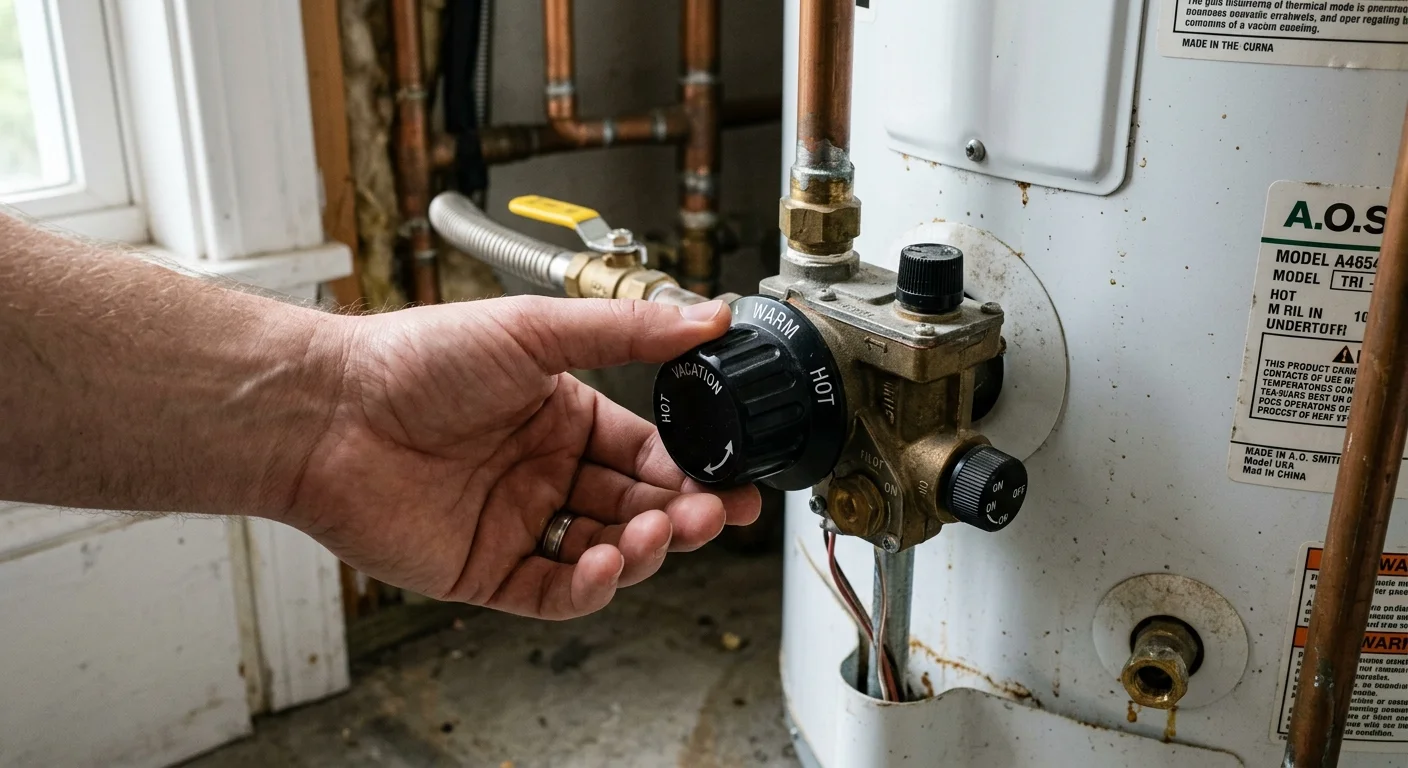
Adjusting your gas water heater temperature is usually a quick process because the control mechanism is accessible on the outside of the tank. The gas control valve sits near the bottom of your tank, featuring a dial with temperature indicators. Some dials display numbers, while others use markings like Low, Hot, A, B, C, and Very Hot. On most standard gas valves, each letter represents a 10-degree increment above 120 degrees Fahrenheit.
To adjust the temperature, simply turn the dial clockwise to make the water hotter or counterclockwise to make it cooler. Always make small adjustments, wait 24 hours, and then test the water temperature at a nearby faucet with a thermometer. This waiting period allows the entire volume of water in the tank to stabilize. Testing too soon can give you an inaccurate reading and lead to over-adjustment.
If your gas dial is stuck, cracked, or leaking water, do not force it. A stuck dial often indicates a failing gas control valve. Forcing a broken valve can lead to gas leaks or erratic heating behavior. Contact an experienced water heater service professional immediately to diagnose the issue and replace the control valve safely. This keeps your home safe from gas leaks and carbon monoxide hazards.
Why You Should Not DIY an Electric Water Heater Temperature Setting
We strongly advise against attempting to adjust the temperature on an electric water heater yourself due to severe electrical hazards. Unlike gas models, an electric unit does not have an external control dial. The thermostats are hidden behind metal access panels on the side of the tank, sitting directly next to live 240-volt electrical wiring. Even minor mistakes can result in a lethal electric shock.
When a professional technician adjusts an electric water heater, they must first shut off the power at the main circuit breaker. They then use a voltage tester to verify the power is completely off. Electric water heaters typically have two thermostats, one behind the upper access panel and one behind the lower panel. Both thermostats must be adjusted to the exact same temperature to prevent one element from burning out prematurely.
Because this task requires handling raw insulation, working near high-voltage terminals, and calibration, it is best left to a certified professional. A technician will ensure the panels are sealed correctly and that the electric water heater temperature setting is uniform. This professional touch prevents electrical shorts, protects your heating elements, and ensures your system operates safely.
Comparison of Water Heater Temperature Ranges
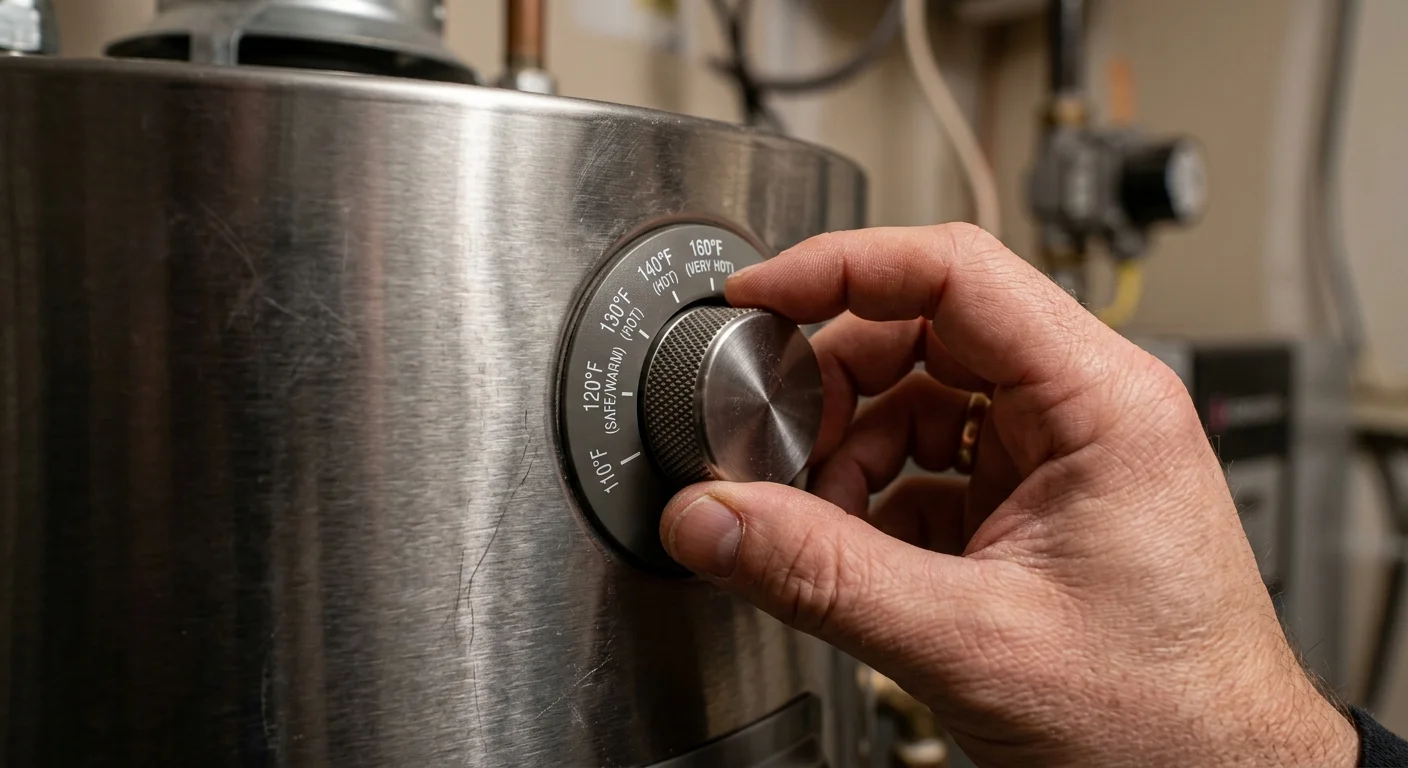
Different temperature settings offer distinct trade-offs between household safety, energy consumption, and bacterial control. Understanding these ranges helps you determine which setting matches your family’s daily habits and physical needs. The table below compares the most common temperature settings found on residential water heaters.
| Temperature Setting | Burn Risk Level | Energy Efficiency | Bacterial Prevention |
|---|---|---|---|
| 110 degrees Fahrenheit | Very Low (No burn risk) | Excellent (Saves most money) | Poor (Bacteria can multiply) |
| 120 degrees Fahrenheit | Low (Safe for children) | Very Good (Recommended baseline) | Good (Sufficient for most homes) |
| 130 degrees Fahrenheit | Moderate (Burns in 30 seconds) | Moderate (Slightly higher bills) | Excellent (Kills most pathogens) |
| 140 degrees Fahrenheit | High (Burns in 5 seconds) | Poor (High standby heat loss) | Outstanding (Eliminates Legionella) |
Choosing the correct level is not just about avoiding high utility bills. Storing your water at 110 degrees Fahrenheit to save money is a common mistake. This low temperature creates a warm breeding ground for pathogens in your tank. For the safety of your family, keep the tank at a minimum of 120 degrees Fahrenheit, and manage any high-temperature needs with mixing valves.
The Risks of an Incorrect Water Heater Temp
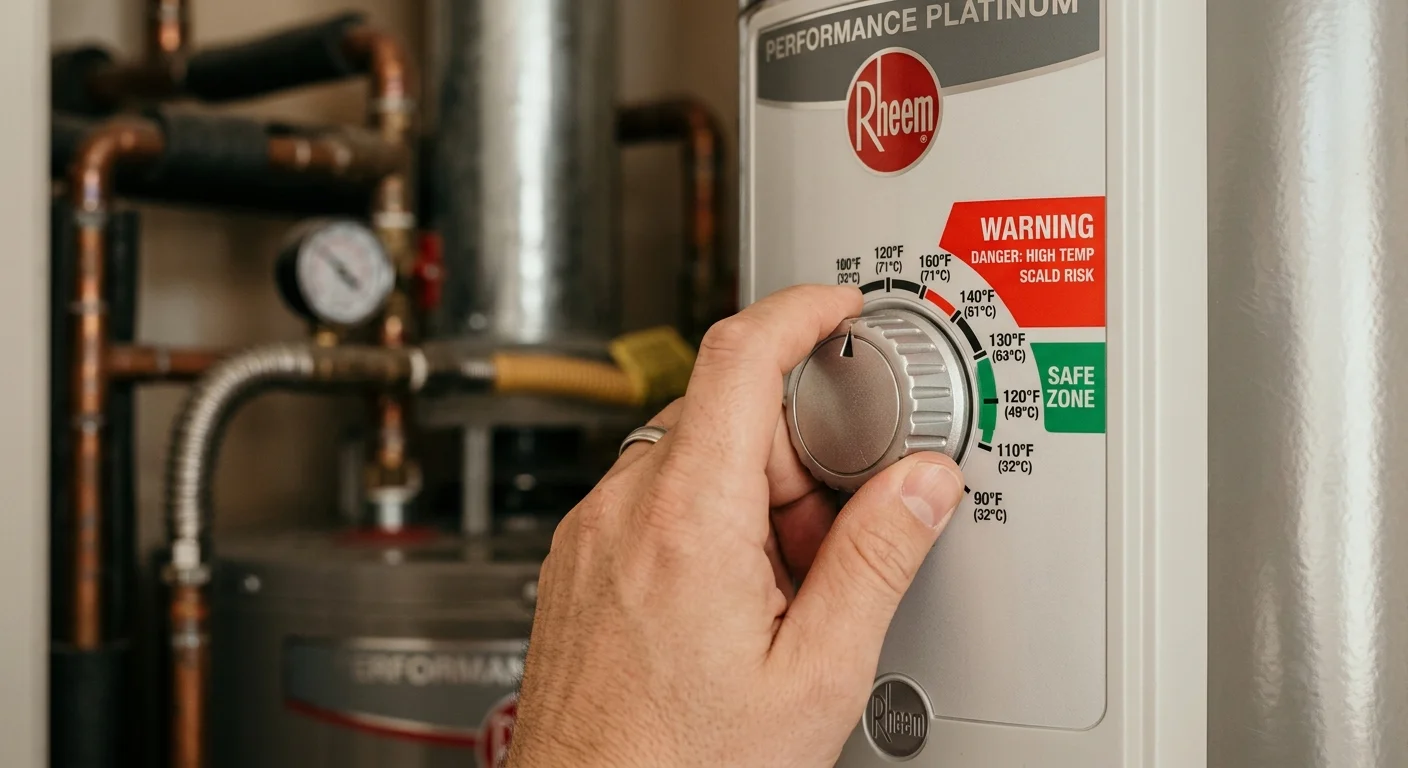
Setting your water heater to the wrong temperature can lead to serious physical injuries or unexpected health issues. If the temperature is set too high, the danger of severe scalding increases dramatically. If the temperature is set too low, harmful microorganisms can grow in your water supply. Let us look at the specific risks of setting your water temperature incorrectly:
- Severe Scalding and Burns: Water at 140 degrees Fahrenheit can cause a serious second-degree or third-degree burn in less than five seconds. This risk is especially high for toddlers, young children, and elderly family members who have thinner skin and slower reaction times.
- Bacterial Contamination: Storing water below 120 degrees Fahrenheit allows Legionella bacteria to thrive. Inhaling mist from contaminated water can lead to Legionnaires’ disease, which is a severe form of pneumonia.
- Dishwasher Inefficiency: Many dishwashers require water to be at least 120 degrees Fahrenheit to sanitize dishes and dissolve detergent properly. If your water is too cold, your dishes will not get clean.
- Accelerated Mineral Scaling: High temperatures speed up the precipitation of minerals like calcium and magnesium. This scaling coats the heating elements and reduces the overall efficiency of your system.
To avoid these issues, regular monitoring is essential. Testing the temperature at your kitchen tap with a thermometer is a simple way to verify your water heater’s performance. If the reading is significantly higher or lower than your thermostat setting, it is time to call a professional. A certified technician can identify if a faulty sensor or broken heating element is causing the temperature drift.
Professional Maintenance and Safety Checkups
To ensure your water heater operates safely and efficiently, schedule regular professional water heater maintenance. Over time, sediment builds up at the bottom of your water heater tank, insulating the heating elements and distorting your thermostat readings. This sediment can make your system run constantly, driving up your energy bills and causing the water to fluctuate between freezing cold and scalding hot.
During a standard maintenance visit, a technician will flush your tank to remove sediment and test your pressure relief valve. They will also inspect your heating elements and verify that your thermostats are calibrated correctly. Routine care is the best way to prevent sudden breakdowns and avoid a costly water heater repair. Having a professional inspect your system once a year ensures that your family always has access to safe, reliable hot water.
A professional checkup also includes inspecting the anode rod, which protects your tank from rusting. If the anode rod is depleted, your tank will begin to corrode from the inside out, leading to leaks. Keeping up with this maintenance can add years to your system’s life. It also keeps your operating costs low, making it a highly cost-effective home service.
Professional Help for Water Heater Adjustments
Adjusting your water heater temperature might seem simple, but handling electrical panels, gas lines, and high-pressure water systems carries real risks. If your electric water heater needs a temperature adjustment, or if your gas valve is stuck, do not take unnecessary chances. The Hot Water Heater Pros are here to provide fast, professional assistance across Franklin, Brentwood, Nashville, and Middle Tennessee.
Our team of certified water heater experts can safely calibrate your thermostats, flush your tank, or install anti-scald mixing valves to keep your family safe. We believe in honest guidance, upfront pricing, and a customer-first experience. Contact us today to schedule a safety inspection or get a free quote on our specialized water heater services.
