
A gas water heater operates through a continuous cycle of ignition, thermal heat transfer, natural water convection, and exhaust venting. When cold water enters the steel storage tank through a dip tube, the internal thermostat detects the drop in water temperature and signals the gas control valve to open. Natural gas or liquid propane flows to the burner assembly beneath the tank bottom, where a pilot light or electronic spark igniter lights the burner. Heat from the flame warms the heavy steel tank base and travels up an internal hollow flue baffle, transferring thermal energy directly into the surrounding water. As the water heats up, its density decreases, causing warm water to rise naturally to the top of the tank for immediate household distribution while combustion gases vent safely outside. Standard gas storage units maintain ready-to-use hot water continuously, whereas gas tankless models heat water instantaneously on demand using high-output burners.
Key Takeaways
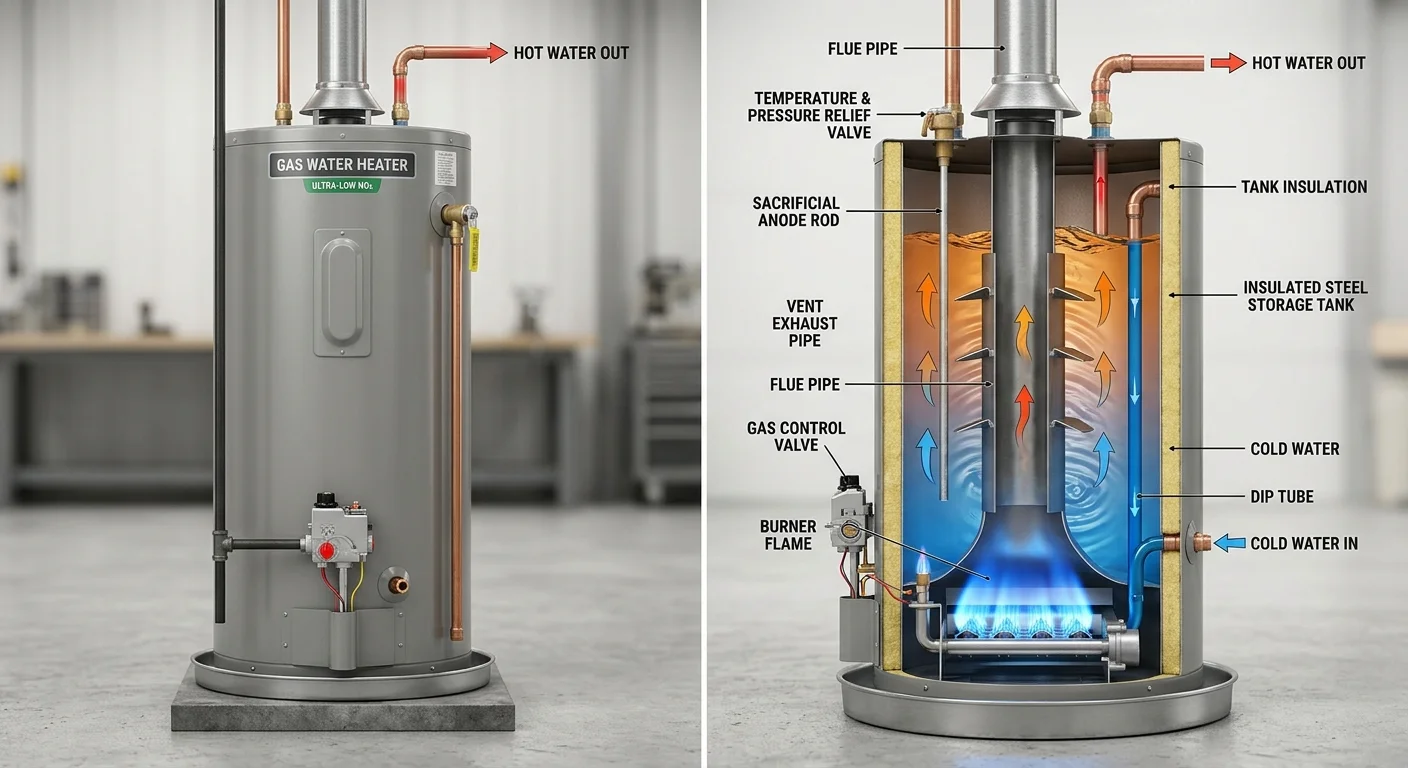
- Gas water heaters burn natural gas or liquid propane underneath a steel tank or copper heat exchanger to rapidly heat domestic water.
- Cold incoming water is directed to the bottom of the tank via a dip tube, while heated water rises to the top due to thermal stratification.
- Proper combustion venting via gravity draft, electric power venting, or direct venting is vital to vent hazardous exhaust gases outside.
- Standard gas storage tank water heaters last between 8 and 12 years, whereas tankless gas units can operate for 15 to 20 years with routine maintenance.
- Gas connections, safety controls, and exhaust venting require expert installation and service by a licensed technician to prevent carbon monoxide poisoning and gas leaks.
What Is a Gas Water Heater and Its Core Components?
Understanding what is a gas water heater begins with recognizing how its mechanical parts coordinate fuel flow, ignition, and water circulation. Unlike electric models that rely on upper and lower resistance elements, a gas heater uses a burning flame as its primary heat source. These systems are available as standard storage tank units or modern tankless on-demand models. Comparing a gas vs electric water heater comparison shows that gas models recover hot water much faster due to their higher BTU heat output.
Every standard tank-style gas hot water heater relies on several interconnected mechanical and safety components to function efficiently:
- Steel Storage Tank: A heavy-gauge steel vessel lined with a glass-like porcelain enamel that holds domestic water under household supply pressure.
- Dip Tube: A rigid plastic pipe running down the interior of the tank. It drops cold incoming city water directly at the bottom near the gas burner.
- Gas Control Valve and Thermostat: The command center mounted on the exterior tank wall. It senses water temperature, controls gas flow, and houses the temperature selection dial.
- Burner Assembly and Igniter: Positioned underneath the tank floor inside a sealed combustion chamber. It mixes gas with air and ignites it using a standing pilot light or electronic spark.
- Thermocouple or Thermopile: A thermo-electric sensor placed inside the pilot flame. It generates a small millivolt current to keep the gas valve open only when a active flame is verified.
- Internal Flue Baffle: A metal chimney running vertically through the center of the tank. It incorporates a twisted metal baffle that slows rising hot combustion exhaust to maximize heat absorption into the surrounding water.
- Sacrificial Anode Rod: A magnesium or aluminum rod suspended inside the water tank. It oxidizes intentionally to protect the internal steel tank from rusting out prematurely.
- Temperature & Pressure Relief Valve (T&P Valve): A essential safety mechanism that opens automatically if internal tank temperature or pressure exceeds factory safety thresholds.
Step-by-Step Breakdown: How Does a Gas Hot Water Heater Work?
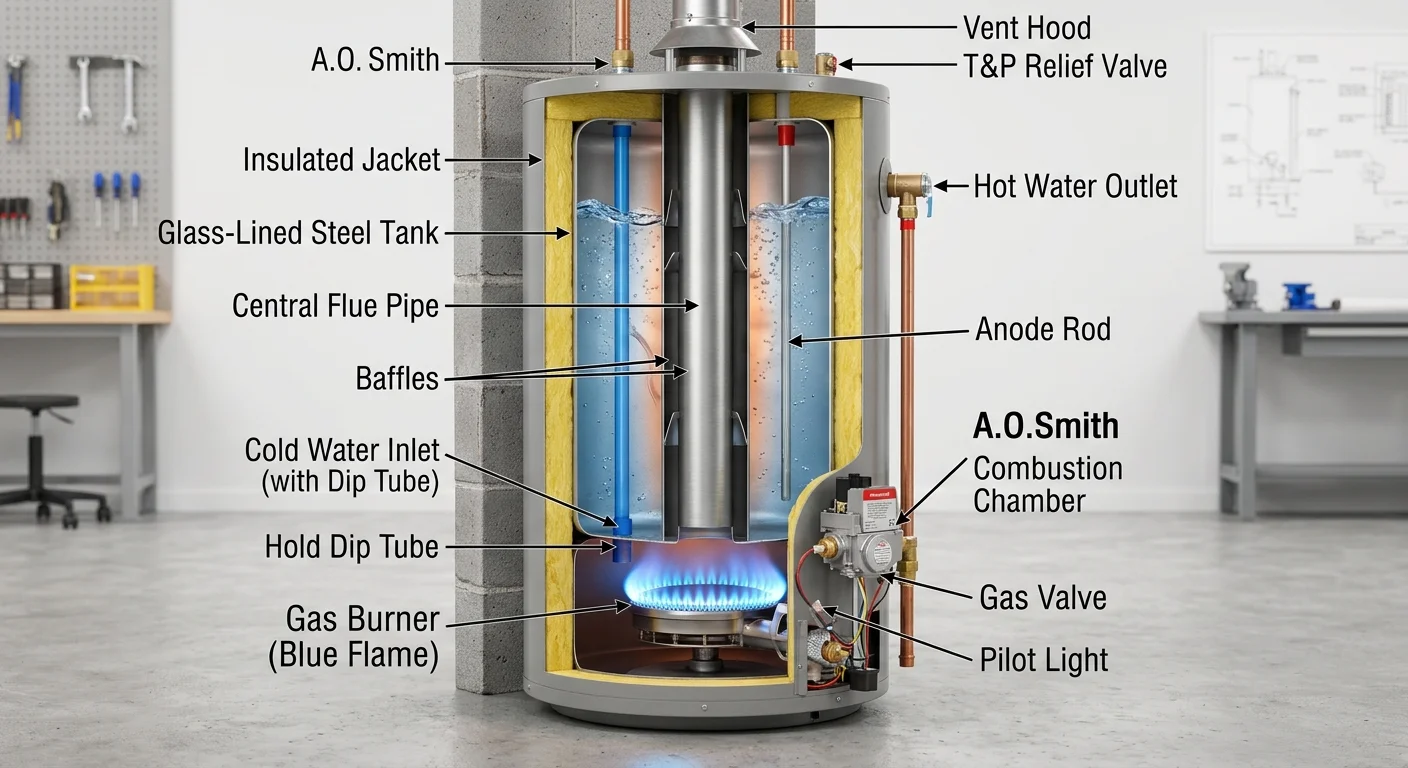
To understand how does a gas hot water heater work during daily household use, it helps to track the exact mechanical sequence from the moment a tap opens to the shutdown of the main burner. Gas storage water heaters rely on physics, thermal convection, and mechanical pressure to deliver consistent hot water throughout your home.
- Cold Water Inlet: When you open a hot water faucet inside your home, pressurized cold water flows into the top inlet pipe of the water heater. The cold water travels straight down the dip tube to the bottom of the tank.
- Thermostat Activation: As cold water collects at the bottom, it cools the water surrounding the thermostat probe attached to the gas control valve. Once the temperature drops below the set point (typically 120 degrees Fahrenheit), the thermostat signals the gas valve to release fuel.
- Burner Ignition: The gas control valve feeds gas into the main burner orifice. The standing pilot light or electronic igniter ignites the gas, producing a steady flame inside the combustion chamber beneath the tank.
- Heat Transfer & Convection: The flame heats the thick steel base of the tank. Simultaneously, scorching exhaust gases rise through the central flue. The internal flue baffle absorbs this heat energy and radiates it into the surrounding water.
- Thermosiphon Stratification: As water at the bottom of the tank heats up, its molecules expand and become lighter than the surrounding cold water. This warm water naturally rises to the top of the tank in a process called thermal convection or thermosiphon stratification.
- Hot Water Delivery: The hottest water always sits at the very top of the tank. When hot water is drawn from any sink, shower, or appliance, supply pressure forces this top layer out through the hot outlet pipe into your home plumbing.
- Burner Shutdown: Once the cold water at the bottom reaches the calibrated set point on the control valve dial, the internal thermostat opens its electrical circuit. The gas valve shuts off fuel to the main burner, leaving only the pilot light or standby system active.
Venting Systems: How Gas Exhaust Is Safely Removed
Because burning natural gas or propane produces carbon monoxide, water vapor, and nitrogen dioxide, proper venting is a mandatory feature of every gas water heater installation. Exhaust gases must be expelled completely outside your home to keep your indoor air safe and breathable.
Plumbing professionals work with three primary gas water heater venting configurations depending on home construction and layout:
- Atmospheric Venting (Standard Gravity Venting): Uses natural thermal buoyancy to exhaust gases. Hot exhaust naturally rises through a vertical metal B-vent chimney pipe terminating above your roofline. It requires no electricity but relies on proper room makeup air to prevent chimney backdrafting.
- Power Venting: Employs an electrically driven fan blower mounted on top of the water heater. The fan mechanically pushes cool exhaust gases horizontally through plastic PVC, CPVC, or ABS piping out a side wall of the home.
- Direct Venting: Draws fresh air for fuel combustion directly from outside through a dedicated intake pipe, while venting exhaust gases through a parallel horizontal exhaust pipe. This sealed-combustion system isolates indoor living spaces completely from fuel gases.
Improperly installed or clogged venting poses severe health risks. Professional verification of proper draft performance, flue clearance, and carbon monoxide detector installation is critical for every household relying on gas appliances.
How Long Does a Gas Water Heater Last and What Factors Affect Its Lifespan?
Homeowners planning system maintenance or budgeting for water heater replacement frequently ask how long does a gas water heater last under realistic operating conditions. A standard storage-tank gas water heater generally lasts between 8 and 12 years. In contrast, a tankless gas system can serve a home for 15 to 20 years or more when maintained according to manufacturer specifications.
Several local and operational factors dictate whether your gas hot water heater reaches the upper end of its expected service life:
- Water Mineral Hardness: In Middle Tennessee, municipal water supplied across Franklin, Brentwood, and Nashville contains elevated levels of dissolved calcium and magnesium mined from regional limestone bedrock. When water is heated, these minerals precipitate out as hard scale sediment that settles at the tank bottom.
- Sediment Accumulation: Sediment builds a thick insulating barrier over the gas burner. This forces the burner to run longer and hotter to heat the water above, creating thermal stress that scorches the glass tank lining and leads to metal fatigue and tank cracking.
- Sacrificial Anode Degradation: Once the internal anode rod corrodes completely, aggressive water chemicals turn their corrosive action directly onto the steel tank wall. Routine inspection and timely replacement of the anode rod can add years to a tank’s life.
- Operating Pressure and Thermal Expansion: Unchecked water pressure spikes above 80 PSI or the absence of an operating thermal expansion tank stretches steel welds every time water heats up and expands, causing premature seam failures.
- Routine Preventative Maintenance: Scheduling annual maintenance, including professional system flushing, gas burner cleaning, and safety relief valve testing, directly extends equipment life.
Research published by the U.S. Department of Energy highlights that unchecked sediment buildup can decrease water heating energy efficiency by up to 25 to 30 percent while accelerating structural tank failure. For localized regional timelines, review our detailed guide on the average water heater lifespan in Middle Tennessee to evaluate your current system’s age.
To preserve system efficiency and prevent sudden structural failures, homeowners should schedule annual professional gas water heater maintenance with qualified technicians.
Comparing Gas Water Heater Types: Atmospheric, Power Vent, and Tankless
Choosing the right replacement unit requires understanding how different gas heater designs perform, vent exhaust, and consume energy. Operating costs, equipment complexity, and initial installation pricing vary significantly across model categories.
| Gas Water Heater Type | Operation & Venting Method | Typical Efficiency Range (UEF) | Estimated Equipment & Installation Cost |
|---|---|---|---|
| Standard Atmospheric Tank | Gravity draft exhaust, continuous 40-50 gal storage, standing pilot or spark ignition | 0.58 – 0.64 UEF | $1,400 – $2,400 |
| Power Vent Tank | Electric blower fan pushing exhaust through horizontal PVC vents out side wall | 0.67 – 0.73 UEF | $2,400 – $3,600 |
| Condensing High-Efficiency Tank | Extracts extra heat from exhaust moisture using dual heat exchangers; power vent | 0.80 – 0.90 UEF | $3,000 – $4,500 |
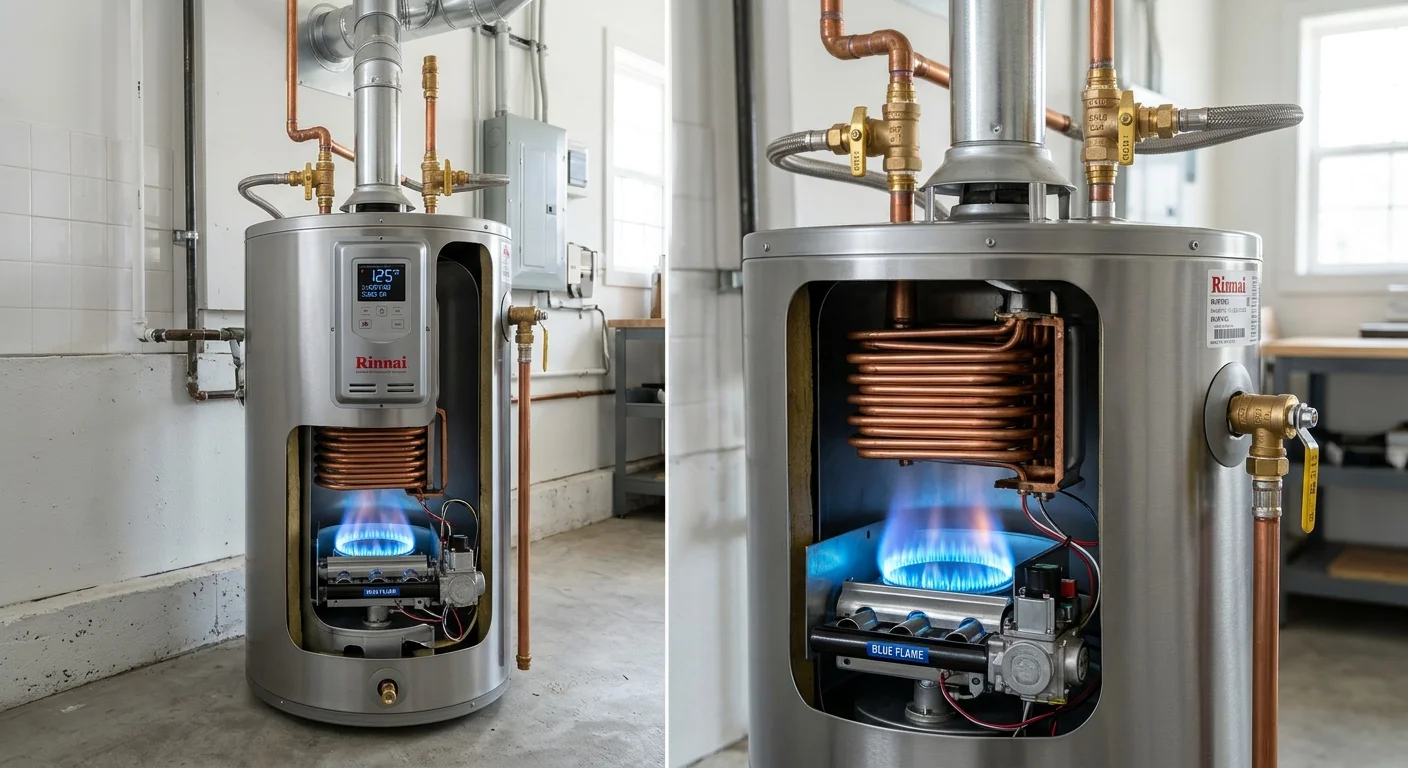
| Tankless On-Demand Gas Unit | Instantaneous high-BTU burner heating water through copper/stainless heat exchanger on demand | 0.81 – 0.96 UEF | $3,200 – $5,800 |
While standard atmospheric models offer lower initial purchase costs, high-efficiency power vent and tankless systems yield significantly lower monthly utility bills over their operating life. Tankless systems also provide endless hot water delivery while freeing up valuable square footage inside utility closets or garages.
Common Failure Points and Why DIY Repairs Are Dangerous
Over time, mechanical components within a gas hot water heater wear down due to constant heat exposure, vibration, and water corrosion. Recognizing early warning signs of system failure helps homeowners seek timely assistance before facing major water flooding or safety hazards.
Common mechanical issues affecting gas units include:
- Defective Thermocouple or Flame Sensor: Causes the pilot light to extinguish repeatedly or prevents the main burner from igniting when hot water is requested.
- Failing Gas Control Valve: Leads to inconsistent water temperatures, erratic burner cycles, or complete failure to heat.
- Heavy Sediment Build-Up: Causes rumbling, popping, or banging noises during heating cycles as trapped moisture boils beneath mineral crusts.
- Leaking Temperature & Pressure Valve: Indicates excessive internal tank pressure, dangerous water overheating, or a worn safety valve seat.
- Corroded Tank Base: Results in moisture pooling around the bottom of the heater, signaling irreversible steel tank rust and imminent structural rupture.
While minor household projects can be satisfying weekend tasks, gas water heater repair should always be left to qualified professionals. Attempting to repair, install, or troubleshoot gas lines, control valves, or exhaust pipes without certified training poses severe health and safety risks. Improper gas connections can cause fuel leaks that accumulate unnoticed, creating immediate fire and explosion hazards.
System reports compiled by the National Fire Protection Association confirm that improper installation and servicing of fuel-burning heating equipment contribute directly to thousands of residential structure fires each year. Furthermore, incorrect venting pipe slope, improper draft clearances, or loose flue joints can cause deadly carbon monoxide to leak into bedrooms and living spaces. Modifying or disassembling gas valves or relief systems also voids manufacturer warranties and violates local Middle Tennessee building codes. Always trust a certified water heater service expert to handle all testing, diagnostics, and repairs safely.
Why You Should Call a Professional Water Heater Service Specialist
Gas water heaters require specialized knowledge spanning plumbing hydraulics, natural gas piping code, electrical controls, and mechanical venting. When your hot water system shows signs of age, loss of heating capacity, strange noises, or active water leakage, calling a licensed professional ensures your home remains safe, compliant, and well-supplied with hot water.
Working with dedicated water heater technicians provides significant advantages:
- Safety Assurance: Certified technicians conduct thorough combustible gas leak checks, carbon monoxide safety tests, and proper draft measurements following every water heater repair or replacement.
- Precise System Sizing: Specialists accurately calculate your household’s peak hour hot water demand to match you with the right tank size or tankless flow rate.
- Local Code Compliance: Professional plumbing companies secure necessary local municipal permits and verify that installation details—including expansion tanks, drip pans, safety shutoff valves, and code-approved venting—meet strict regional standards.
- Warranty Protection: Certified water heater installation preserves factory warranty coverage on tank vessels, heat exchangers, and mechanical control valves.
- Efficient Service: Experienced technicians stock essential diagnostic tools and factory replacement parts to complete repairs quickly and minimize downtime for your household.
At The Hot Water Heater Pros, our team specializes strictly in hot water systems. Whether you need fast emergency repairs, preventative tune-ups, or a seamless energy-efficient upgrade, our technicians deliver upfront pricing, clean craftsmanship, and fast local service across Franklin, Brentwood, Nashville, and surrounding Middle Tennessee communities. Contact us today to schedule your expert gas water heater service.
