
If your water heater is leaking, the best course of action depends entirely on where the water is pooling. A leak coming from the top or sides of the unit usually indicates a loose plumbing connection or a failing valve, both of which can be repaired by a professional technician. However, a water heater leaking from bottom of the tank almost always points to an internal tank crack caused by corrosion, which requires a complete water heater replacement. To protect your home from sudden flooding and costly structural damage, immediately shut off the unit’s power supply, turn off the cold water inlet valve, and contact a professional. Attempting to ignore even a minor puddle can quickly escalate into a catastrophic failure, ruined flooring, and mold growth. For homeowners in Franklin, Brentwood, and the surrounding Middle Tennessee area, scheduling an expert diagnostic visit is the safest way to determine whether a quick component repair or a total system replacement is necessary.
Key Takeaways
- Top leaks are usually repairable: Moisture pooling at the top of the tank is often caused by loose pipe fittings or a failing temperature and pressure (T&P) relief valve, which a professional can resolve.
- Bottom leaks indicate tank failure: A water heater leaking from the bottom typically means the inner glass-lined steel tank has fractured, requiring a full replacement.
- Immediate shut-off is critical: Turning off the power supply (breaker for electric, gas valve for gas) and the water supply limits active flooding and safety hazards.
- Hard water accelerates corrosion: The heavy limestone and calcium content in Middle Tennessee water supplies causes rapid sediment buildup, which is a primary driver of premature tank leaks.
- Professional diagnosis is essential: Because water heaters operate under intense pressure and high temperatures, all repairs and replacements must be handled by a certified technician to maintain safety and warranty coverage.
Identifying a Leaking Water Heater Versus Condensation
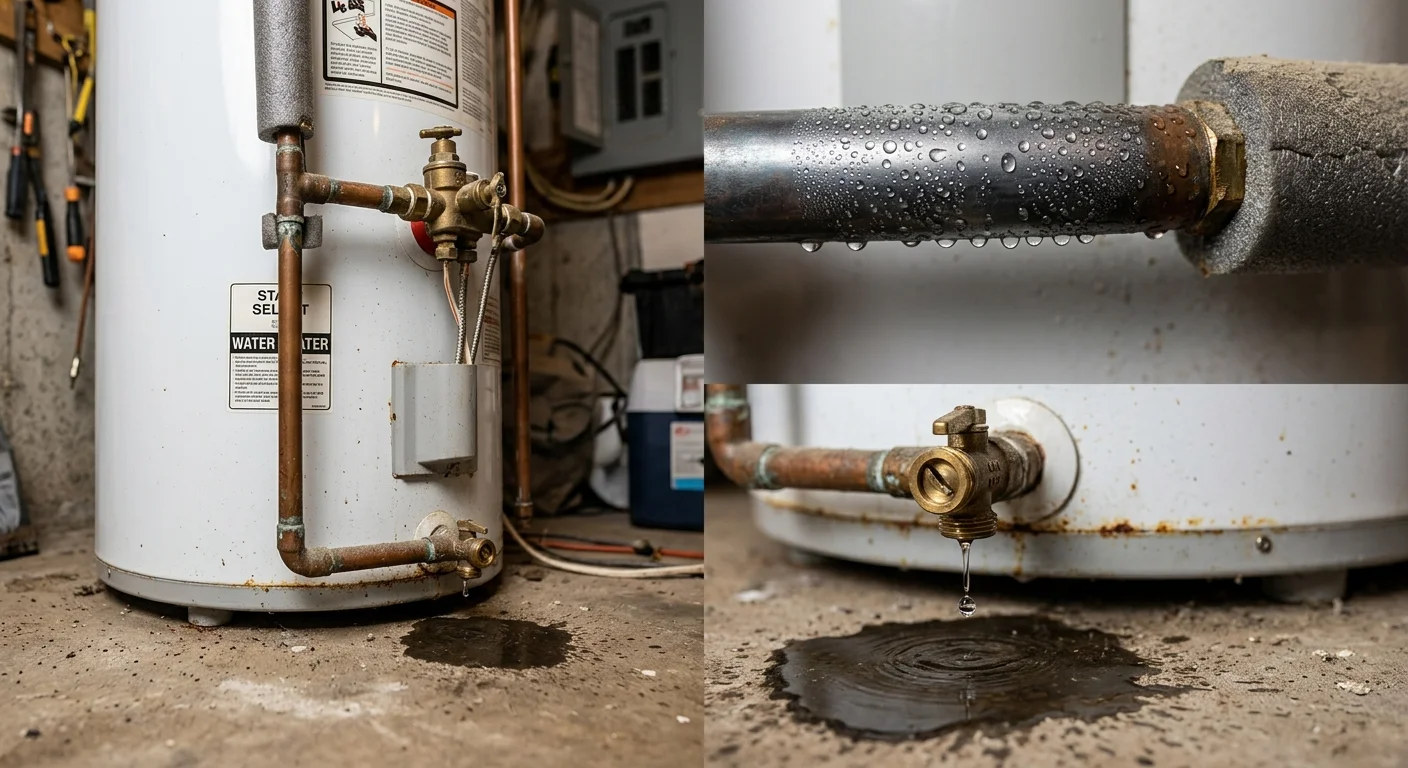
Determining whether you have an active leak or a simple case of condensation is the critical first step in protecting your home. When cold water fills an empty or heavily used tank, the temperature difference between the cold tank surface and the warm, humid air in a basement, garage, or utility closet can cause moisture to bead up on the outer jacket. This moisture can eventually drip down and form small puddles on the floor, mimicking an active system failure. This phenomenon is particularly common during seasonal temperature swings in Middle Tennessee or after your household has exhausted its hot water supply during consecutive showers.
To distinguish between condensation and a genuine water heater leak, wipe the wet spots dry with a towel and monitor the area closely for several hours. If the moisture returns rapidly while the system is idle, or if the pooling continues to expand, you are dealing with an active water heater leak. According to data published by the Insurance Institute for Business & Home Safety, water heater failures stand as one of the top five sources of residential water damage claims, with average claims costing over $4,000 when left unchecked. If you notice persistent pooling, do not assume it is harmless condensation; contact an expert to evaluate the system immediately.
Why Is Your Water Heater Leaking from Top Connections?
Moisture accumulating on the upper surface of your tank typically points to an issue with the plumbing connections or control valves located at the top of the unit. The cold water inlet and hot water outlet pipes are connected to the tank via threaded fittings or dielectric nipples. Over time, the repeated heating and cooling of water causes these metal connections to expand and contract, which can gradually loosen the threads or degrade the plumbers tape and pipe dope sealing them. If these fittings weep, water will pool on the top cap of the water heater, sometimes trickling down the sides and hiding behind the insulation jacket.
Another common culprit for top-level moisture is a failing Temperature and Pressure (T&P) relief valve. This critical safety device is designed to release water if the internal temperature exceeds 210 degrees Fahrenheit or if the pressure surpasses 150 PSI. If the valve itself becomes weak, scales up with mineral deposits, or fails internally, it may begin to drip constantly. Addressing these issues promptly is vital; if water is allowed to run down the sides of an electric unit, it can easily penetrate the upper thermostat cover and short-circuit the electrical elements. Having a professional water heater service technician inspect and seal these top connections can prevent minor drips from turning into major electrical failures.
Understanding a Water Heater Leaking from Bottom of the Tank
When you discover water pooling directly beneath your unit with no signs of dripping from the top, you are likely facing a compromised internal storage tank. Standard tank water heaters feature a steel tank lined with a thin layer of protective glass. Over years of operation, thermal stress, fluctuating water pressure, and chemical reactions cause this glass lining to develop microscopic cracks. Once water reaches the underlying steel, rust begins to form, eating through the metal until a physical puncture occurs. Once the steel tank itself is breached, there is no way to patch or weld the metal back together.
This structural degradation is heavily influenced by the condition of the sacrificial anode rod. This magnesium or aluminum rod is suspended inside the tank to attract corrosive elements in the water, sacrificing itself so the steel tank does not rust. Once this rod completely dissolves—usually within three to five years—the corrosive elements attack the steel tank directly. If your unit has reached this stage of decay, understanding the average water heater lifespan in Franklin, TN can help you put the situation into perspective and prepare for a necessary system replacement rather than wasting funds on temporary, ineffective repairs.
Is a Leaking Water Heater Dangerous to Your Home and Family?
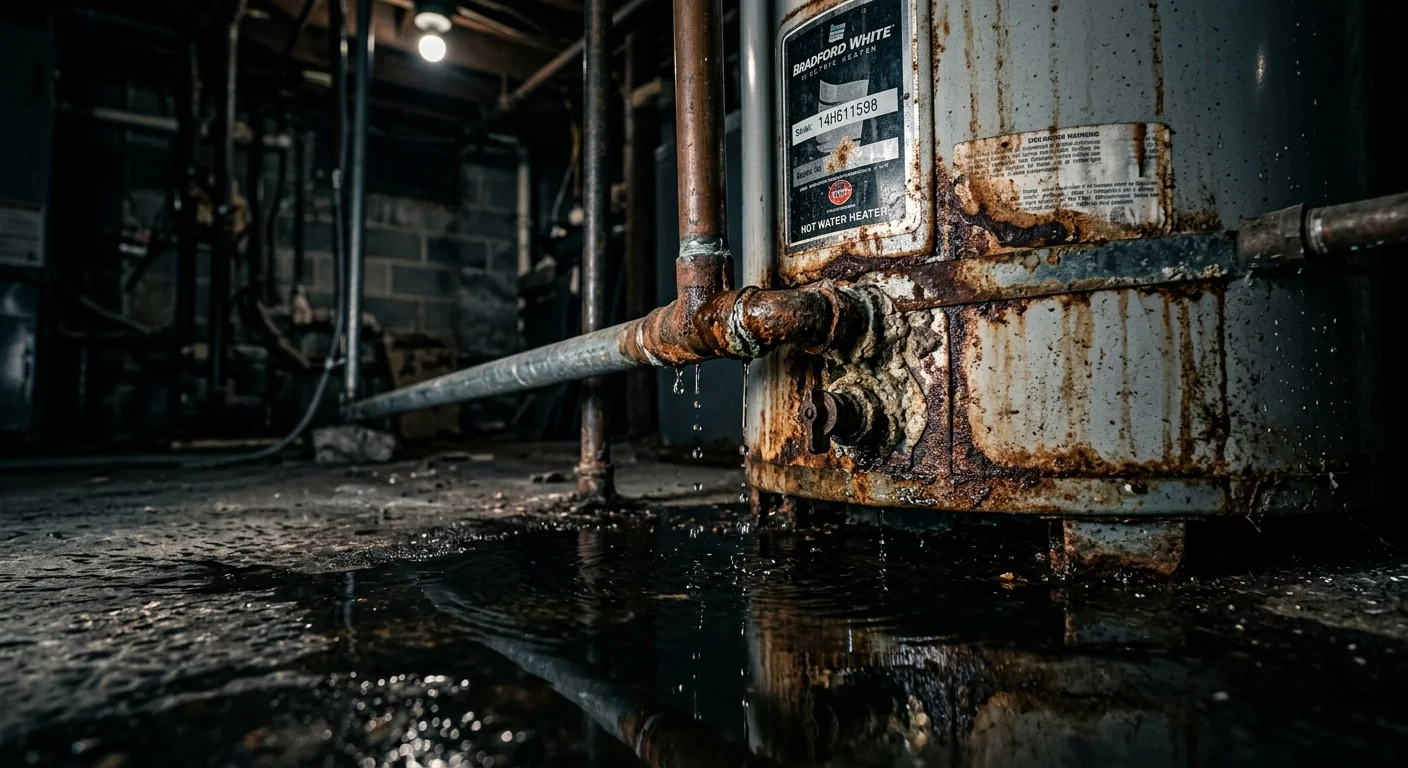
A leaking water heater is a significant safety hazard that extends far beyond the threat of ruined drywall and carpet. If you have an electric system, pooling water can make direct contact with open electrical terminals, thermostats, and heating elements, creating a severe risk of short circuits, electrical fires, or localized shock hazards. For gas-powered water heaters, a major leak can douse the burner assembly or pilot light, leading to gas leaks or improper combustion that releases dangerous levels of carbon monoxide into your home’s air supply.
The danger is even more pronounced if the leak is caused by a malfunctioning T&P relief valve that has been improperly capped or blocked. If pressure cannot escape and the tank’s structural integrity is compromised, the unit can theoretically experience a catastrophic pressure explosion. According to statistical reports from the National Fire Protection Association, heating equipment—which includes residential water heaters—remains a leading cause of home fires and structural hazards when electrical components or fuel lines are subjected to water exposure and neglect. Taking a leak seriously is not just about saving your floors; it is about ensuring the physical safety of your entire household.
Water Heater Leaking from Drain Valve and T&P Valve Issues
The drain valve, located near the very bottom of the tank, is used by technicians to flush out sediment during routine maintenance. Many manufacturer-standard water heaters come equipped with cheap, plastic drain valves that easily degrade over time due to constant heat exposure. These plastic valves can crack, or their internal rubber washers can warp, leading to a persistent, slow drip. Even high-quality brass drain valves can fail to seal completely if sediment gets trapped in the valve seat after a flushing service. A professional can easily swap out a faulty plastic drain valve for a heavy-duty brass replacement to stop this type of leak.
The T&P valve can also leak through its dedicated discharge tube if your home’s water pressure is running too high or if your thermal expansion tank has failed. When water heats up, it expands; if there is nowhere for this extra volume to go, the pressure inside the system spikes, forcing the T&P valve to open and drip. If a technician determines that the valve is dripping due to pressure issues rather than a faulty valve mechanism, they will need to install or adjust a pressure-reducing valve or replace the thermal expansion tank. This highlights why professional diagnostic work is so crucial, as simply replacing a dripping valve without addressing the root cause of high pressure will not solve the underlying problem.
Water Heater Leak Diagnostic and Action Comparison
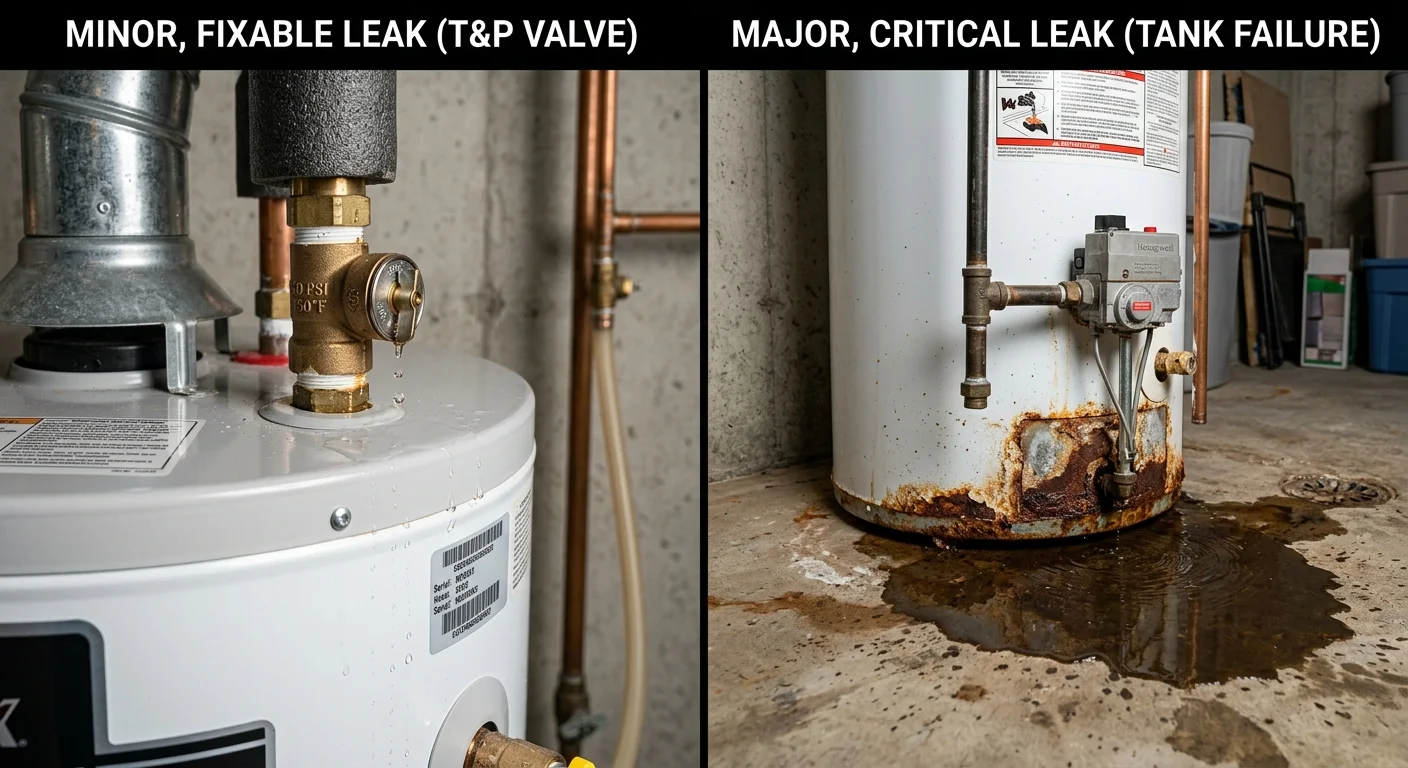
To help you understand the potential scale of the issue you are facing, the following table compares the most common leak locations, their primary causes, and the standard professional resolutions.
| Leak Location | Primary Root Cause | Typical Professional Action | Estimated Cost Range |
|---|---|---|---|
| Top Fittings / Dielectric Nipples | Loose threads, degraded sealant, thermal expansion | Reseal connections or replace nipples | $150 – $350 |
| T&P Relief Valve / Discharge Tube | Excessive pressure, failed expansion tank, or weak valve spring | Replace T&P valve, install or adjust expansion tank | $175 – $450 |
| Bottom Drain Valve | Damaged plastic valve, worn washer, or trapped sediment | Replace with a high-quality brass drain valve | $120 – $275 |
| Bottom of Tank (Internal) | Corroded steel shell, depleted anode rod, tank crack | Complete water heater replacement | $1,200 – $3,500+ |
When planning for these expenses, keep in mind that maintaining a fully operational, leak-free system pays dividends on your monthly utility bills. A report by the U.S. Department of Energy notes that water heating represents approximately 18% of the average home’s utility costs. When a water heater leaks or accumulates heavy scale, its heating efficiency drops dramatically, forcing the burners or elements to run longer and consume substantially more energy to heat the same volume of water.
How Hard Water Accelerates Leaking Water Heater Problems in Middle Tennessee
Homeowners living in communities like Franklin, Brentwood, Nashville, and Murfreesboro deal with some of the hardest water in the state. The municipal water supplies in these areas carry high concentrations of dissolved calcium and magnesium carbonate sourced from our local limestone shelf. When this hard water is heated inside your water heater, these minerals crystallize and settle to the bottom of the tank, forming a thick, rock-hard layer of scale. This scale acts as an thermal insulator between the gas burner or lower electric heating element and the water itself.
As a result, the bottom of the tank must get significantly hotter to transfer heat to the water, subjecting the steel and glass lining to extreme thermal stress. Over time, this localized overheating causes the glass lining to crack and flake off, leaving the bare steel vulnerable to rapid corrosion. Furthermore, as sediment builds up, it can cover the drain valve from the inside, causing the valve seal to fail and leak. If you are struggling to decide how to handle a failing system under these local conditions, reading our guide on how to decide: repair water heater or replace in Middle Tennessee can help you make a highly informed, cost-effective choice.
What to Do Immediately When You Spot a Water Heater Leak
If you discover that your water heater is actively leaking, taking immediate, organized safety steps is essential to prevent extensive water damage and eliminate physical hazards. Do not attempt to inspect the electrical parts or adjust valves without securing the area first. Follow this step-by-step emergency protocol to stabilize the situation before your service technician arrives:
- Cut the Power Supply: For an electric water heater, locate your main home electrical panel and switch off the dedicated double-pole circuit breaker labeled for the water heater. For a gas water heater, turn the gas control dial on the front of the unit to the “OFF” position, and close the dedicated manual gas shut-off valve on the incoming gas line.
- Shut Off the Water Supply: Find the cold water shut-off valve located on the piping directly above the water heater. Turn this valve clockwise (for gate valves) or pull the lever perpendicular to the pipe (for ball valves) to stop the flow of cold water into the tank.
- Keep the Hot Water in the Tank: Do not open any hot water faucets in your home, and do not attempt to drain the water heater yourself. Removing water from a hot tank without proper professional ventilation and tools can create dangerous vacuums or lead to severe accidental scalding.
- Document the Leak: Take clear photos or a short video of where the water is pooling and where it appears to be dripping from. This information is incredibly helpful for your technician, allowing them to bring the exact replacement parts needed for your specific scenario.
- Call a Professional Water Heater Specialist: Contact a licensed local expert to perform a code-compliant diagnosis and execute the necessary repairs or replacement safely.
Why You Need Professional Water Heater Service
Dealing with a leaking water heater is never a safe or practical project for a weekend DIY attempt. Water heaters are complex appliances that simultaneously handle high-voltage electricity, pressurized natural gas or propane, high-pressure water, and extreme temperatures. A single mistake during a valve swap or tank replacement can result in catastrophic gas leaks, electrical shorts, severe water damage, or physical injury. Furthermore, attempting to self-repair or install a water heater without the proper licensing can immediately void the manufacturer’s warranty, leaving you financially responsible for any future failures or installation mistakes.
By hiring a specialized technician, you gain peace of mind knowing that your home is fully protected. A professional service provider will arrive with the diagnostic equipment to pinpoint the exact root cause of your leak, ensuring you do not pay for a new tank when a simple valve replacement would suffice. If a replacement is unavoidable, they will perform a water heater installation, ensuring your new system is sized perfectly for your family’s hot water demands, meets all local Middle Tennessee plumbing codes, and is installed with the necessary safety features, such as expansion tanks and drain pans, to prevent future leak issues.
If you are dealing with a leaking water heater, do not wait for a small puddle to turn into a major home disaster. Contact the dedicated specialists at The Hot Water Heater Pros today. Our experienced team is ready to provide fast, honest, and expert diagnostic services to get your hot water system running safely and efficiently. Reach out to us now to schedule your appointment and protect your home from costly water damage.
