
Williamson County homeowners seeking to maximize a water heater rebate in 2026 should take advantage of current Tennessee Valley Authority (TVA) EnergyRight incentives and monitor upcoming state-administered rebate programs. While the Tennessee Department of Environment and Conservation (TDEC) continues to finalize the administrative launch of state-level federal programs, you do not have to wait to save money. Upgrading from a standard electric tank to an energy-efficient hybrid system can reduce energy use and may qualify for current utility incentives. Transitioning to a heat pump water heater delivers immediate monthly utility savings and substantial upfront financial relief when structured correctly with local professionals. Choosing a qualified water heater service ensures your installation meets all local codes, manufacturer standards, and utility pre-qualification requirements. By executing your upgrade with certified local installers, you may qualify for significant utility incentives, depending on your local power provider, equipment, and current program availability.
Key Takeaways
- Local TVA Incentives: Middle Tennessee homeowners may qualify for current TVA EnergyRight and local utility incentives for eligible heat pump water heater upgrades.
- Substantial Energy Savings: ENERGY STAR-certified heat pump water heaters can use about 70% less energy than conventional electric resistance water heaters, although actual utility-bill savings vary.
- TDEC Program Status: Tennessee’s HOMES and HEEHR rebate programs have not yet launched. TDEC’s proposed HEEHR program includes up to $1,750 for eligible heat pump water heaters, subject to income and final program requirements.
- Professional Standards: Some utility rebates require installation through an approved contractor network, while manufacturer warranty requirements vary by brand and model.
What Is the Tennessee Energy Efficiency Rebate Program?
The state-level framework for energy efficiency incentives is designed to help Middle Tennessee homeowners transition to clean, high-efficiency appliances that lower grid demand and reduce monthly utility bills. Administered by the Tennessee Department of Environment and Conservation, these initiatives receive federal funding to support long-term energy infrastructure goals across our local communities. This includes the implementation of the Home Energy Performance-Based, Whole-House Rebates (HOMES) and the High-Efficiency Electric Home Rebate (HEEHR) Program. As of 2026, Tennessee’s HOMES and HEEHR programs have not yet launched, and TDEC has not announced a confirmed public availability date.
Currently, the most accessible avenue to secure a heat pump water heater rebate in Middle Tennessee is through TVA EnergyRight and participating local utility programs. Local power distributors working alongside TVA provide structured rebate programs for qualifying energy-efficiency upgrades. If your current hot water tank is showing signs of age, it is crucial to understand how to decide whether to repair or replace your water heater before an emergency breakdown occurs. Taking a proactive approach allows you to plan your water heater installation carefully, choose the ideal equipment, and maximize every available dollar of financial relief.
State-level energy programs prioritize technologies that offer the highest return on investment for both the homeowner and the local electrical grid. Traditional water heaters rely on outdated energy-intensive resistance heating elements. In contrast, modern hybrid units leverage advanced heat pump technology, which aligns perfectly with state environmental and efficiency objectives. By upgrading now, you protect your home against rising utility rates while positioning your property to comply with evolving residential energy standards.
Active Utility Incentives and TVA EnergyRight Options in Williamson County
Williamson County residents can access immediate financial savings through localized utility rebates offered in coordination with the TVA EnergyRight program. These regional initiatives provide homeowners in Franklin, Brentwood, and surrounding areas with direct cash incentives for making the switch to high-efficiency systems. Rebate procedures vary by local power distributor. For MTE and TVA EnergyRight Home Rebates, qualifying projects must be completed by a contractor in TVA’s Quality Contractor Network, who submits the completed project for approval.
According to the U.S. Department of Energy, water heating accounts for approximately 18% of a typical home’s energy consumption, making it the second-largest utility expense for most families. To help combat this ongoing cost, TVA EnergyRight currently promotes a $900 instant discount on qualifying ENERGY STAR-certified hybrid electric water heaters at participating Home Depot locations, including stores in Franklin and Brentwood. Other utility incentives may also be available through local power distributors such as Middle Tennessee Electric. Each incentive has its own equipment and eligibility requirements, so homeowners should verify that a specific model qualifies before purchasing.
To ensure a seamless rebate approval process, you must verify that your local power distributor is actively participating in the energy-saving network. Homeowners in Middle Tennessee should always consult with their local utility representative or a qualified installer to confirm current funding levels, application deadlines, and pre-approval steps before purchasing any new equipment.
Comparing Water Heater Replacements: Efficiency, Costs, and Payback Times
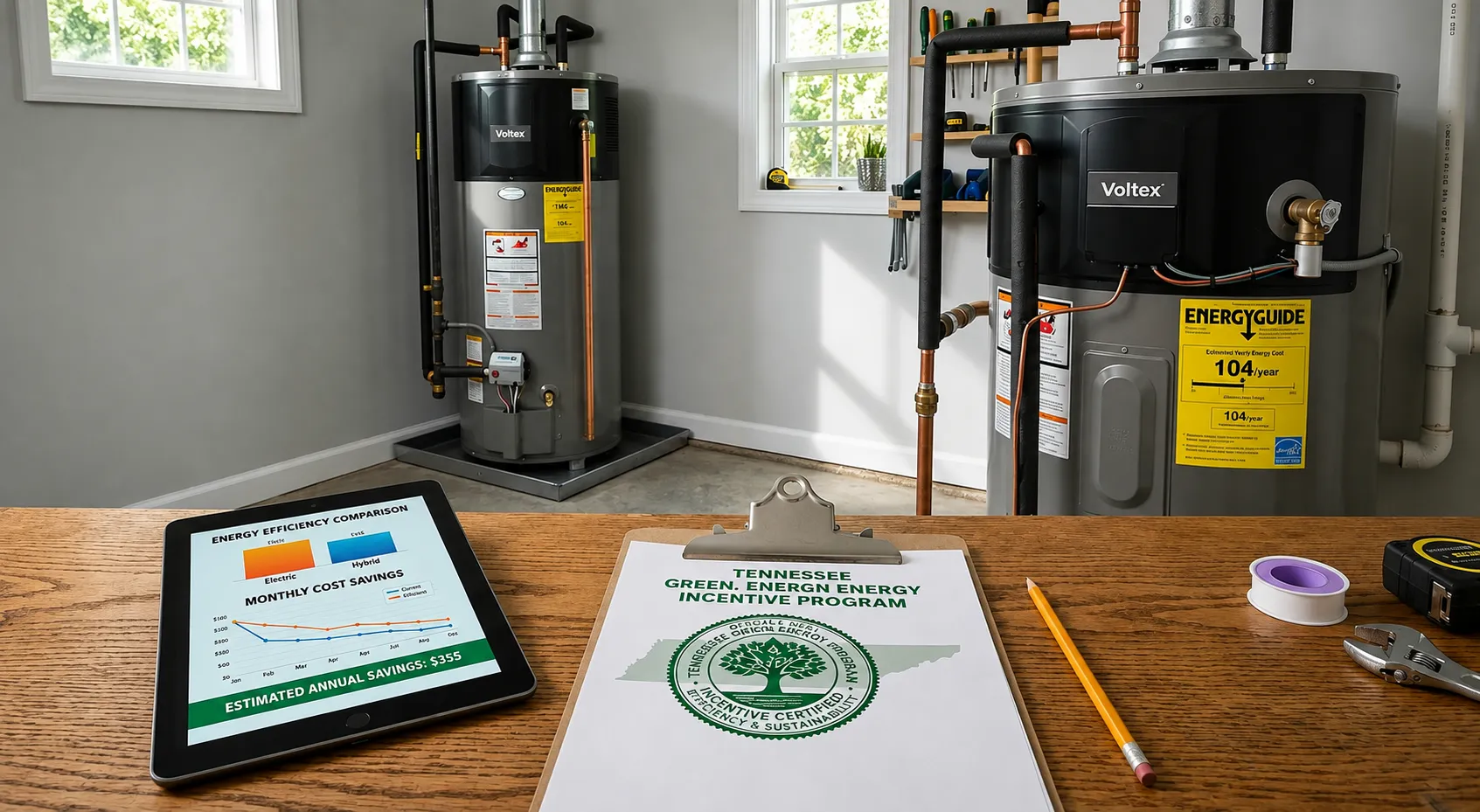
Analyzing the long-term financial performance of different water heating technologies shows that hybrid systems offer the fastest return on investment despite higher initial equipment costs. Standard electric tanks are cheap to purchase but extremely expensive to run over their typical operational lifespan. In contrast, hybrid systems utilize advanced thermal exchange technology to deliver unmatched efficiency, making them the most cost-effective option for long-term savings. The table below compares the key financial and performance metrics for the most common water heaters installed in Williamson County homes.
| Water Heater Type | Average Installed Cost (Range) | Annual Operating Cost | Available Incentives & Rebates (2026) | Expected System Lifespan |
|---|---|---|---|---|
| Standard Electric Tank | $1,500 – $2,500 | $500 – $650 | None | 8 – 12 Years |
| Standard Gas Tank | $1,800 – $2,800 | $350 – $450 | None | 8 – 12 Years |
| Gas Tankless System | $3,500 – $5,500+ | $200 – $300 | Check current local utility incentives | 15 – 20 Years |
| Hybrid Heat Pump Tank | $2,800 – $4,500 | $110 – $170 | TVA/local utility incentives may be available; proposed TDEC HEEHR rebate up to $1,750 is not yet available | 13 – 15 Years |
As illustrated, while a hybrid system may require a larger initial investment, available TVA EnergyRight and local utility incentives can help reduce the upfront cost. When you factor in the exceptionally low annual operating costs, a hybrid system typically pays for itself within three to five years of installation. Over its entire operational life, a certified hybrid unit can save you thousands of dollars in utility payments while providing reliable hot water for your household.
Why a Heat Pump Water Heater Rebate Makes Hybrid Systems the Smartest Choice
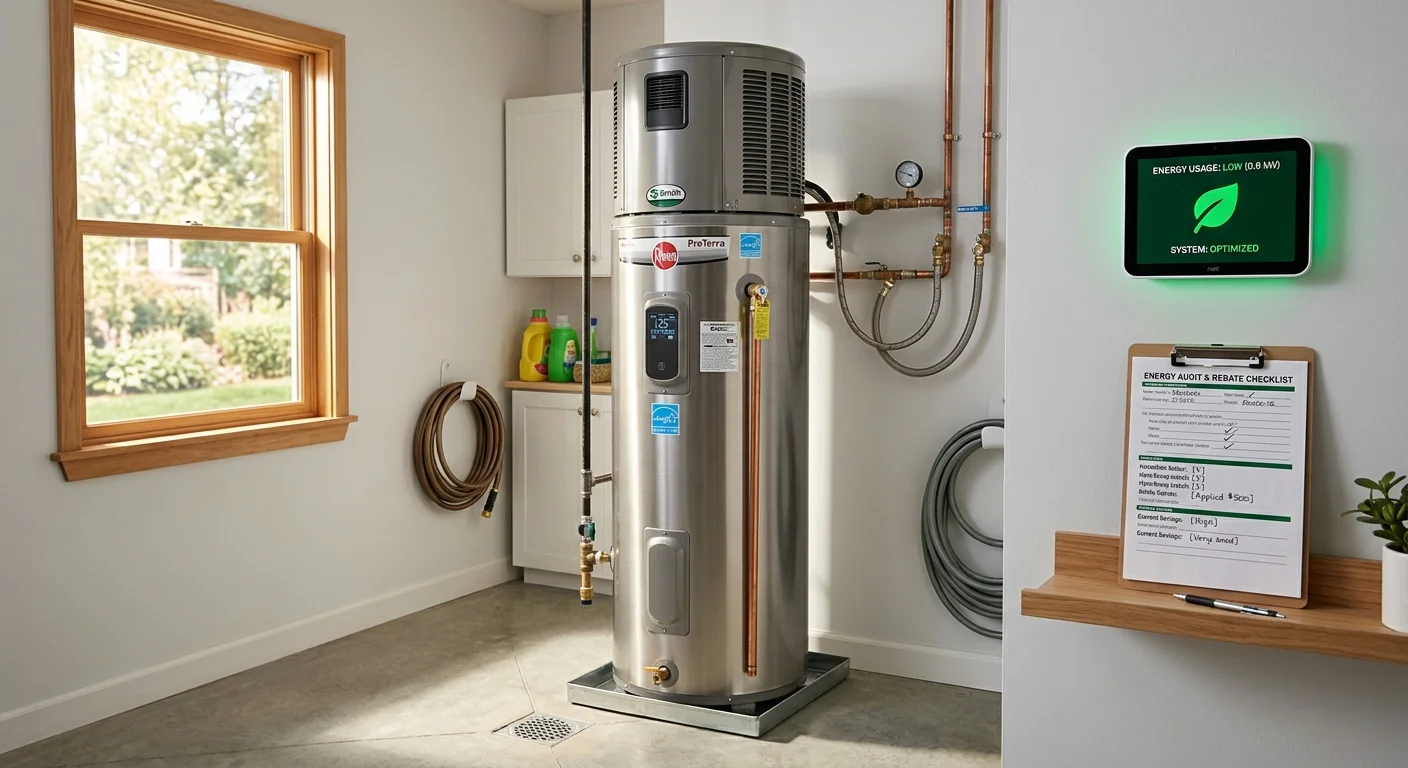
Upgrading to a hybrid water heater is one of the most impactful home improvement decisions you can make to lower your property’s carbon footprint and utility bills. These systems do not generate heat directly; instead, they move heat from one place to another. By drawing thermal energy from the surrounding air and transferring it to the water in the tank, they operate up to four times more efficiently than standard electric models. This high level of efficiency is why heat pump water heaters are included in TVA EnergyRight incentives and Tennessee’s proposed state-administered HEEHR rebate program.
In addition to unmatched energy savings, hybrid water heaters offer several practical benefits for Middle Tennessee homeowners. As they draw warmth from the surrounding air, they naturally cool and dehumidify the space where they are installed. This secondary benefit is particularly advantageous during our humid Tennessee summers, especially if your system is located in a basement, garage, or large utility room. The gentle dehumidification helps protect your home’s structural framing and reduces the overall load on your central air conditioning system.
To ensure your household enjoys a consistent, uninterrupted supply of hot water, modern hybrid units feature customizable operating modes. You can easily select “hybrid mode” for maximum daily efficiency, “electric-only mode” if the surrounding air temperature drops exceptionally low, or “vacation mode” to save energy while you are away from home. If you are ready to explore these highly efficient systems, scheduling a professional hybrid water heater installation ensures your new unit is optimized for your home’s specific layout and high-use demands.
Critical Professional Requirements for Your Hybrid Water Heater
Installing a hybrid water heater is a complex process that requires specialized technical knowledge to ensure safe, efficient, and code-compliant operation. Unlike standard water heaters, hybrid units require a precise volume of surrounding air to function correctly. Most traditional 240-volt heat pump water heaters require substantial surrounding air volume, often around 700 cubic feet, although some models can operate with as little as 450 cubic feet. Exact airflow and space requirements vary by manufacturer and model. If installed in a tight closet without proper louvered doors or active ducting, the system will struggle to draw enough heat from the air, reducing its efficiency and potentially conflicting with manufacturer installation requirements.
A common professional mistake to avoid is failing to plan for condensate management during the initial design phase. Because heat pump water heaters extract moisture from the air, they produce a continuous stream of condensation while running. This liquid must be routed safely to a nearby floor drain, a dedicated standpipe, or an external condensate pump. Improperly managed condensation can quickly lead to localized water damage, mold growth, or slippery floors in your garage or basement. A certified technician will install a reliable drainage path to prevent these issues entirely.
Furthermore, navigating the electrical requirements of a hybrid installation requires licensed expertise. While many hybrid models run on standard 30-amp, 240-volt circuits, some advanced low-amp models can operate on a standard 120-volt shared circuit. Selecting the wrong electrical configuration for your home’s current panel can lead to overloaded breakers or expensive wiring retrofits. Licensed professionals will carefully evaluate your home’s electrical panel, load capacity, and venting options to ensure your system operates safely from day one while maintaining eligibility for all state and local rebate programs.
Step-by-Step Plan to Upgrade Your Home Energy Efficiency in Williamson County
If you are ready to upgrade your home’s water heating system and claim all eligible financial incentives, following a structured path ensures you do not miss out on valuable rebates. Because many local utility programs require pre-installation verification or specific contractor credentials, taking the right steps in the correct order is vital. Below is the recommended sequence to guarantee a smooth transition to your new high-efficiency hybrid system:
- Contact a Licensed Specialist: Schedule an in-home assessment with a certified technician to evaluate your current system’s age, your electrical panel capacity, and the physical space available for a hybrid unit.
- Confirm Local Utility Eligibility: Work with your installer to verify current rebate requirements, funding availability, and pre-approval steps with your specific power distributor.
- Select an ENERGY STAR Certified Model: Choose a hybrid heat pump water heater tthat meets the eligibility requirements of the utility or rebate program you plan to use.
- Perform a Professional Installation: Have your licensed technician install the system, establish proper condensate drainage, and ensure adequate airflow ventilation around the unit.
- Submit Rebate Applications Promptly: Gather your professional invoice, model numbers, and purchase receipts, then submit your completed applications to your utility provider while keeping digital copies for your records.
- Keep Documentation: Save your invoice, model and serial numbers, ENERGY STAR documentation, and rebate approval records for future reference and any applicable incentive programs
Partner with the Hot Water Heater Pros for Expert Guidance
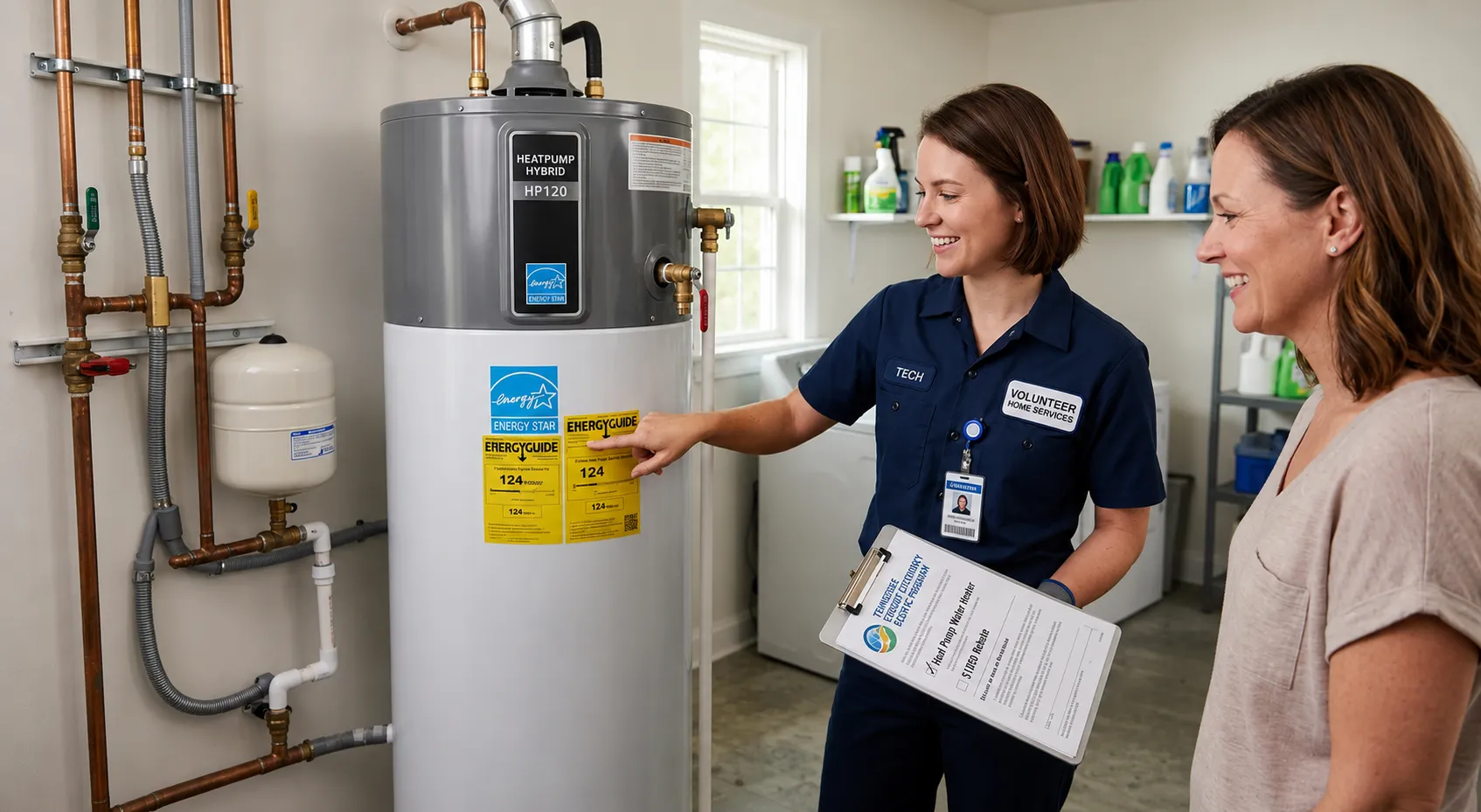
Navigating the complex world of utility rebates and state energy programs can feel overwhelming, but you do not have to handle it alone. At The Hot Water Heater Pros, we specialize exclusively in water heating solutions, ensuring you receive the highest level of expertise and dedicated service. We serve homeowners across Franklin, Brentwood, Nashville, and the surrounding Middle Tennessee communities with honest guidance, upfront pricing, and clean, professional installations.
Our experienced team will help you select the ideal ENERGY STAR certified system, ensure your installation complies with all local codes and manufacturer specifications, and help you understand current utility incentives and the documentation that may be required for eligible rebate programs. Do not wait for your old water heater to fail and cause expensive water damage to your home. Contact us today to schedule your professional consultation and take the first step toward a highly efficient, cost-saving hot water system.
