
Installing a tankless water heater in 2026 generally costs between $2,500 and $6,500, depending heavily on your selected fuel type, venting upgrades, and electrical capacity. For homeowners with existing natural gas lines and direct exterior venting access, a gas tankless upgrade offers the best combination of water flow performance and long-term utility savings. If you want to avoid expensive venting retrofits and have ample space in your breaker panel, a whole-home electric tankless unit provides a viable alternative with lower upfront labor costs. However, converting from a traditional tank to an on-demand system involves structural and utility modifications that directly impact the final installation price. Making the right choice requires looking past the equipment purchase price and analyzing how much your home infrastructure must change to support this modern technology. Below, we break down every cost factor to help you make an informed decision for your Middle Tennessee home.
Understanding the Cost of Tankless Water Heater Installation in 2026
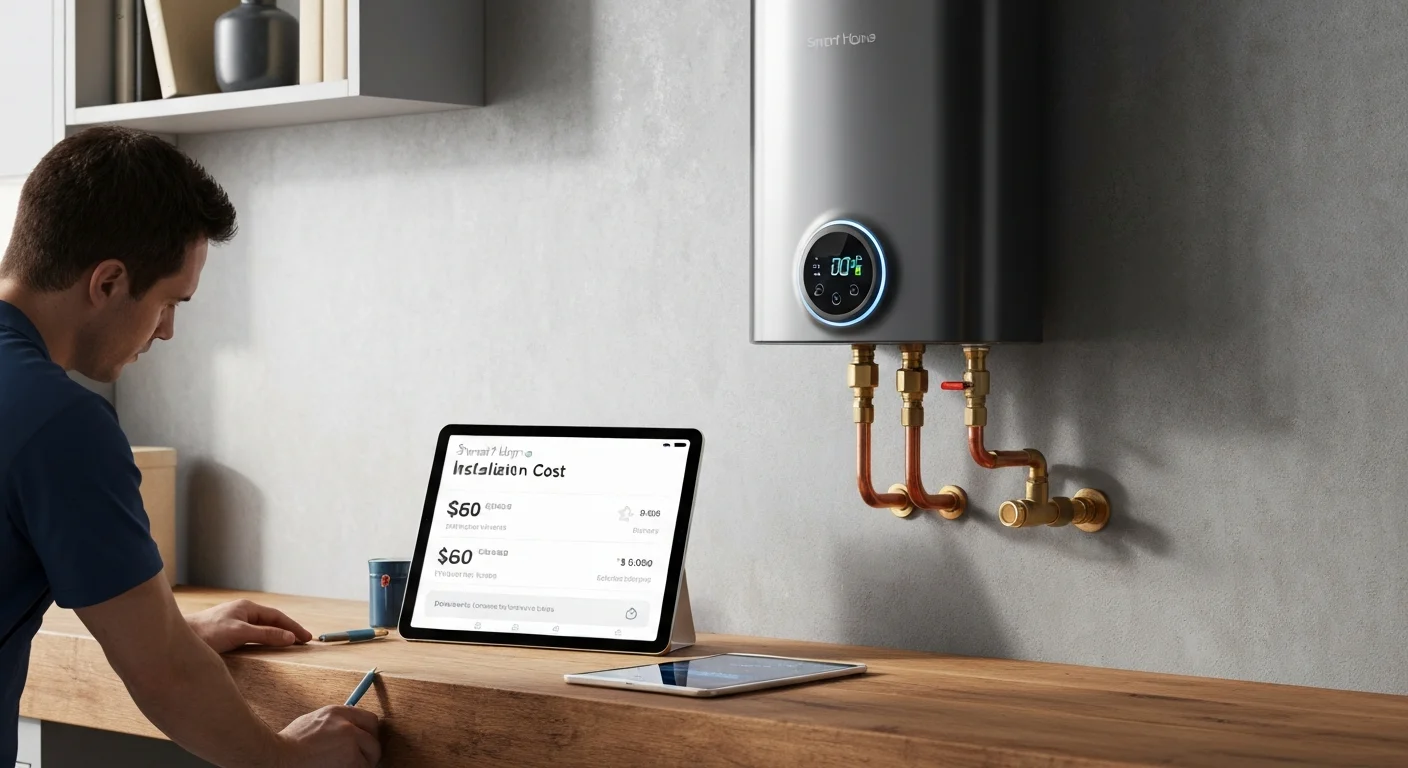
The total cost of tankless water heater installation in 2026 averages $3,800, though prices fluctuate based on your home’s unique layout and utility access. While you can purchase a standard retail unit for $600 to $2,200, professional labor and specialized installation materials comprise the rest of the investment. Many homeowners overlook the fact that these systems cannot simply be swapped into the same footprint as an old storage tank without modifications.
In Middle Tennessee, labor rates and local permitting requirements also influence your final invoice. A straightforward replacement of an existing tankless unit is the most economical scenario, usually running between $1,500 and $2,800. However, converting from a traditional tank to an on-demand system requires rerouting water lines, installing dedicated venting, and upgrading gas or electrical connections. If you are comparing your options, reviewing a tankless vs. tank water heaters comparison can help you evaluate if the upfront cost aligns with your long-term goals.
Additionally, material costs for copper piping, venting kits, gas valves, and mounting hardware add $300 to $800 to the project. Professional technicians must also pull local permits and perform safety inspections, which typically cost between $100 and $300 depending on your municipality. Investing in quality workmanship upfront prevents costly code violations and hazardous leaks down the road.
Comparing Electric Tankless Water Heater Installation Cost vs. Gas Systems
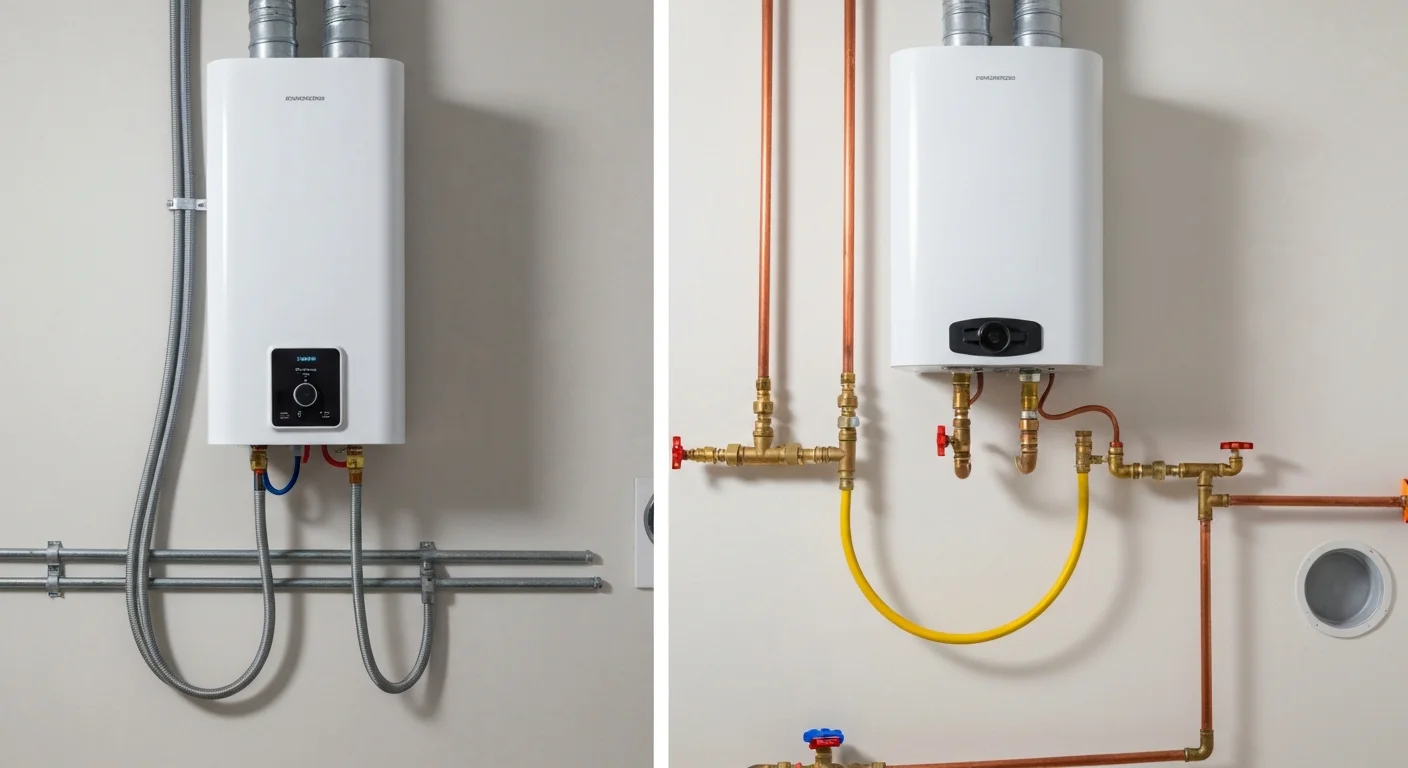
Choosing between gas and electric power sources is the single most significant factor in determining your overall project budget. An electric tankless water heater installation cost ranges from $1,800 to $4,200, while gas systems typically demand $3,200 to $7,000 for a complete setup. While electric units are cheaper to purchase and simpler to mount, they require immense electrical current to heat water instantly.
An electric system requires no exhaust venting, which dramatically reduces installation complexity. However, a whole-home electric model often demands 120 to 160 amps of dedicated power, requiring up to four double-pole 40-amp breakers. If your home still utilizes an older 100-amp electrical panel, you must upgrade to a 200-amp panel. This electrical upgrade adds an extra $1,500 to $3,500 to your total bill.
Gas systems, on the other hand, require dedicated intake and exhaust piping to vent combustion gases safely outside. The gas tankless water heater installation cost reflects these specialized venting materials and the skilled labor required to install them. Despite the higher upfront price, gas units deliver much higher flow rates, making them the preferred choice for larger families in Nashville, Franklin, and Brentwood.
| System Type | Average Equipment Price | Average Installation Labor | Key Infrastructure Needs |
|---|---|---|---|
| Electric Tankless | $500 – $1,500 | $1,000 – $2,500 | 200-amp electrical panel, multiple double-pole breakers |
| Non-Condensing Gas | $1,000 – $2,000 | $2,000 – $4,500 | 3/4-inch gas line, stainless steel category III venting |
| Condensing Gas | $1,500 – $3,200 | $1,800 – $3,800 | 3/4-inch gas line, PVC venting, condensate drain line |
| Point-of-Use Electric | $250 – $600 | $500 – $1,000 | Dedicated 240V or 120V outlet near the fixture |
Key Factors That Drive Your Gas Tankless Water Heater Installation Cost
Upgrading to a gas-powered system involves several highly technical variables that directly dictate your final installation estimate. The tankless gas water heater installation cost depends on your existing home infrastructure and how much retrofitting is required. To ensure peak performance, technicians must assess your gas pressure, line size, and exhaust pathways before mounting the unit.
First, traditional tank water heaters usually run on a 1/2-inch gas supply line. A powerful gas tankless water heater, however, requires up to 199,000 BTUs of energy instantly, which almost always necessitates an upgrade to a 3/4-inch gas line. Running new black iron or flexible gas piping from your meter to the water heater costs between $500 and $1,500 depending on the distance and accessibility.
Second, venting configuration plays a massive role in labor expenses. Non-condensing units produce extremely hot exhaust that requires expensive stainless steel venting. Condensing models cool the exhaust gases to extract more heat, allowing installers to use cheaper PVC pipe for venting. However, condensing models produce acidic wastewater, meaning you must install a condensate drain line and neutralizer, which costs about $150 to $350.
To give you a clear roadmap of the process, here is the typical order of operations for a gas tankless conversion:
- Shutting off primary gas, water, and electrical connections to the old system.
- Draining and removing the old storage tank water heater for proper eco-friendly disposal.
- Mounting the new, compact tankless unit onto a secure wall bracket.
- Installing or upgrading gas lines to meet the high BTU demand of the new burner.
- Running dedicated PVC or stainless steel venting pipes to the home’s exterior.
- Connecting water lines, installing a required bypass valve kit, and setting up the condensate drain.
- Testing gas pressure, checking for leaks, calibrating the gas valve, and firing up the unit.
Hidden Expenses in Tankless Hot Water Heater Installation Cost
Many homeowners are surprised by additional line items on their final invoice that go beyond the basic cost of tankless water heater installation. One of the most common hidden expenses in Middle Tennessee is managing hard water. High mineral content in municipal water can quickly cause scale to build up inside the narrow copper pipes of your new heat exchanger, severely reducing efficiency and risking system failure.
To protect your investment and maintain the manufacturer’s warranty, investing in a professional water softener installation alongside your tankless system is highly recommended. A water softener removes calcium and magnesium before they can bake onto your heating elements. Adding a whole-home filtration or softening system adds roughly $1,500 to $3,500 to your total project cost but doubles the lifespan of your water heater.
Another overlooked expense is the necessity of a dedicated service valve kit. These valves cost between $100 and $200 but are absolutely mandatory for performing annual maintenance. Without them, a technician cannot isolate the unit to flush out scale and sediment. If your installer attempts to cut corners by skipping these valves, you will face much higher labor costs when it comes time for routine maintenance.
Is Upgrading to an On-Demand System Worth the Initial Investment?
While the upfront financial commitment is undeniably higher than a traditional tank, the long-term returns make on-demand systems highly attractive. According to the U.S. Department of Energy, homes that use 41 gallons or less of hot water daily enjoy 24% to 34% greater energy efficiency with a tankless system compared to a conventional storage tank. For busy households with high consumption, the savings still hover around 8% to 14%.
Over time, these energy savings translate directly into lower monthly utility bills. The ENERGY STAR program estimates that a certified gas tankless water heater saves an average of $95 annually. Furthermore, these units outlast their tank counterparts by a significant margin. Data compiled by the National Association of Home Builders reveals that tankless systems boast a service life exceeding 20 years, whereas traditional glass-lined tanks routinely fail within 10 to 12 years.
In addition to monthly savings, you can offset your initial tankless hot water heater installation cost through federal tax credits and local utility rebates. Under current guidelines, high-efficiency systems often qualify for federal energy credits covering up to 30% of the total cost, up to a maximum of $600. Local gas and electric utilities in Middle Tennessee also offer direct rebates ranging from $100 to $500, making the transition much easier on your wallet.
Common Sizing Mistakes and Professional Recommendations
The single biggest mistake homeowners make when choosing a tankless water heater is sizing the unit based on the physical dimensions of their home rather than their actual hot water demands. Sizing a tankless heater requires calculating the peak Gallons Per Minute (GPM) your family will use simultaneously. If you undersize the unit, you will experience the dreaded cold water sandwich or find yourself taking lukewarm showers whenever the washing machine runs.
As experienced local professionals, we always calculate sizing based on our regional winter ground temperatures. In Franklin and Nashville, winter groundwater temperatures drop to around 45 degrees Fahrenheit. To reach a comfortable shower temperature of 105 degrees, your water heater must achieve a 60-degree temperature rise. A unit rated for 9 GPM in Florida might only deliver 5 GPM during a cold Tennessee winter, meaning a professional load calculation is absolutely vital.
Additionally, skipping regular servicing is a critical error that can void your warranty within just a few years. Most manufacturers require annual flushing to remove scale. If you fail to maintain the unit, the heat exchanger can overheat and crack, resulting in a costly replacement. We highly recommend signing up for professional tankless water heater maintenance to ensure your system operates at peak efficiency year after year.
Key Takeaways for Your Tankless Water Heater Budget
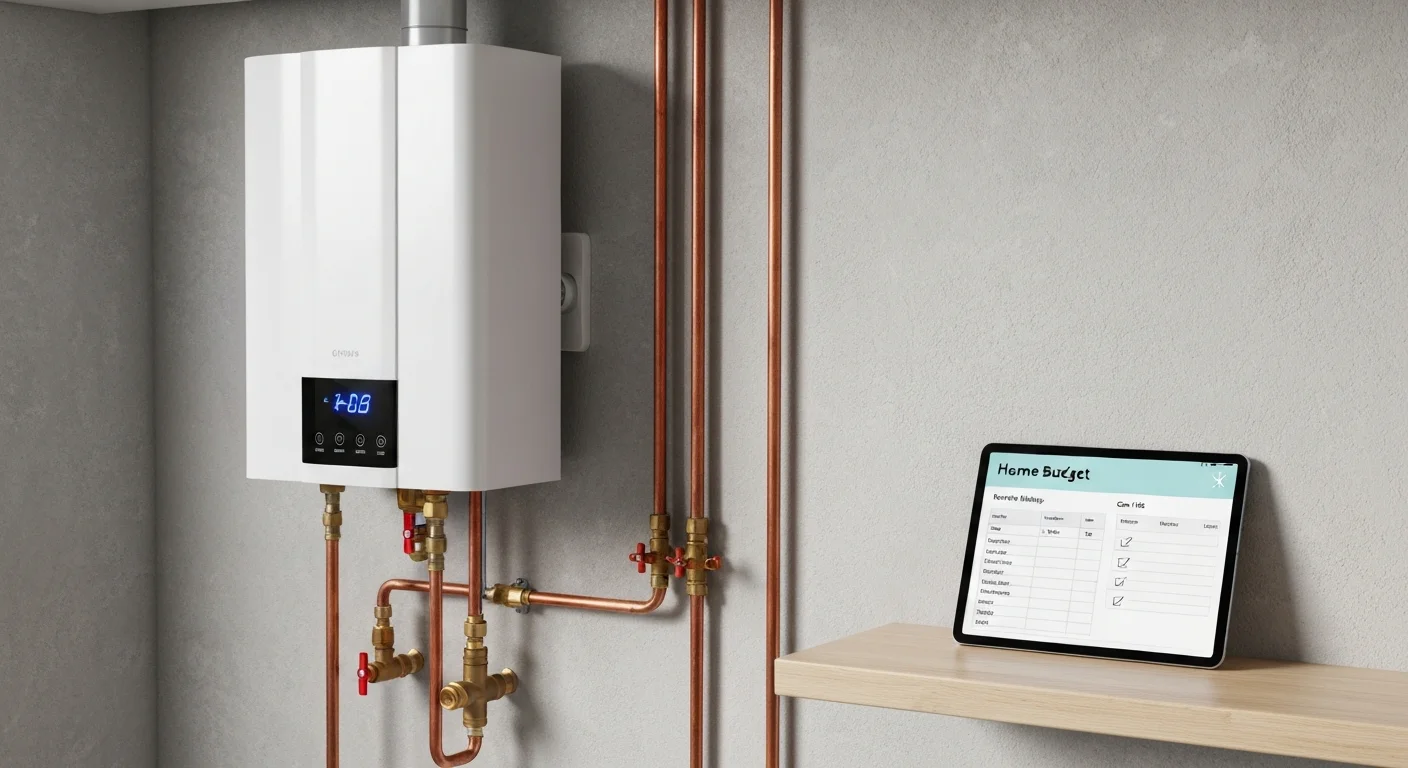
- Average Pricing Range: Most homeowners spend between $2,500 and $6,500 for a professionally installed tankless water heater, including permits and setup.
- Fuel Type Matters: Gas units cost more upfront due to venting and gas line requirements but offer superior heating capacity in colder climates.
- Infrastructure Upgrades: Retrofitting a home from tank to tankless often requires upgrading gas lines to 3/4-inch or increasing electrical panel capacity to 200 amps.
- Long-Term Savings: Upgrading to an energy-efficient tankless system can reduce water heating bills by up to 34%, offsetting the initial cost over its 20-year lifespan.
- Local Considerations: Middle Tennessee water hardness can cause scale buildup, making regular flushing or a water softener essential for maintaining your warranty.
