
For electric water heaters, always fill the tank completely with water before restoring power at the main circuit breaker panel to avoid instantly burning out heating elements. For gas water heaters, confirm the tank is full, open the manual gas shut-off valve, rotate the gas control knob to the pilot position, press down firmly, and engage the piezo igniter until the status light blinks green. If you ever smell natural gas or propane near the unit, stop immediately, do not attempt to light the pilot, shut off the fuel valve, and leave the home before requesting emergency assistance. Restoring hot water to your home after seasonal travel, routine maintenance, or an unexpected outage requires strict adherence to safety protocols based on your system type. Gas units demand careful handling of combustible fuel and standing pilot ignition, while electric units rely on correct voltage delivery and dry-fire prevention. Taking five extra minutes to inspect cold water valves, electrical switches, and ventilation pipes prevents costly component damage and safeguards your household.
Key Takeaways
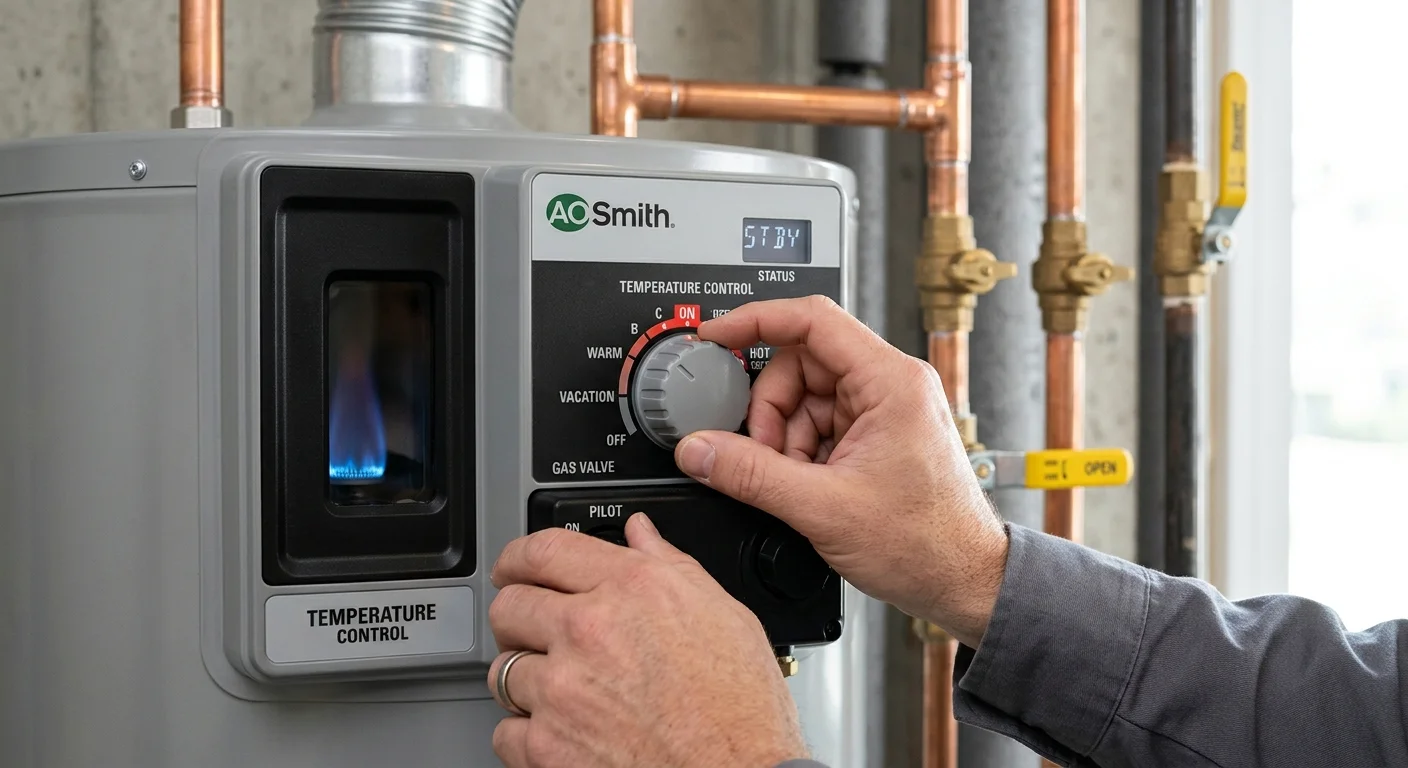
- Fill the tank first: Never turn on an electric water heater without fully purging air from the lines and filling the tank, or the upper heating element will burn out within seconds.
- Safety first with gas: Always perform a scent test for gas before lighting a gas water heater; if you smell sulfur or rotten eggs, leave immediately and call your utility provider.
- Patience during ignition: Hold the gas pilot knob down for 30 to 60 seconds after ignition to allow the thermocouple to warm up properly before switching to the ON setting.
- Bleed air from plumbing fixtures: Open a hot water faucet inside your home until water flows smoothly without sputtering before powering up any hot water tank.
- Know when to seek professional help: Persistent pilot light failures, tripped circuit breakers, or leaking tanks indicate underlying mechanical problems that require expert evaluation.
Gas vs. Electric Systems: What You Must Check Before Restoring Power
Before restoring power or fuel to any hot water unit, homeowners must verify that the cold water supply valve is fully open and that the storage tank is completely filled with water. Operating a dry or partially empty water heater leads to immediate internal failure, regardless of whether the system runs on natural gas, liquid propane, or 240-volt electricity. Establishing water pressure throughout the vessel is the fundamental prerequisite for any startup sequence.
For electric units, powering on an un-filled tank causes what plumbing professionals refer to as a “dry fire.” When dry firing occurs, the upper heating element reaches extreme temperatures in seconds without water to absorb the thermal energy, snapping the electric wire internally. Replacing a destroyed heating element typically costs between $150 and $350 in labor and parts, an easily avoidable expense by simply purging trapped air from indoor faucets first.
For gas units, pre-startup checks focus heavily on environmental safety and proper ventilation. Inspect the draft hood atop the heater to make sure the vent pipe is firmly attached without sag, corrosion, or disconnects. Ensure the combustion chamber cover is intact and that no combustible materials—such as paint cans, gasoline, cardboard boxes, or cleaning chemicals—are stored within three feet of the burner assembly. If you suspect an underlying mechanical fault before starting your unit, reviewing our guide on why your water heater is not working can help clarify whether a simple restart or a deeper repair is required.
How to Turn On Electric Water Heater Systems Safely
To turn on an electric water heater safely, you must purge all air from the tank and water lines before flipping the dedicated double-pole circuit breaker in your electrical panel to the ON position. Because electric units rely on submersed heating elements, establishing proper water pressure throughout the entire vessel is the single most critical step in the process.
Follow these sequential steps to safely energize a standard electric water heater:
- Close the tank drain valve: Ensure the brass or plastic hose bib at the bottom of the tank is fully closed tightly to prevent water leakage.
- Open the cold water supply line: Turn the handle on the cold water line entering the top of the tank counterclockwise until it aligns parallel with the pipe.
- Purge air from hot water lines: Turn on a hot water tap at your kitchen sink or bathroom tub. Allow the water to stream until all air sputtering stops and a smooth, continuous flow of water comes out for at least two minutes.
- Turn off the sink faucet: Shut off the indoor fixture once the air is purged and the tank is full.
- Inspect electrical connections: Confirm that access covers over the upper and lower thermostats are screwed securely in place with no exposed wiring.
- Flip the circuit breaker: Locate your home’s main electrical panel, find the double-pole breaker labeled “Water Heater” (usually 30-amp, 240-volt), and push the switch firmly from OFF to ON.
Once electric power is restored, standard tank units require roughly 60 to 90 minutes to bring a full volume of cold water up to normal household temperature. If your circuit breaker trips instantly upon being restored, do not attempt to force the switch back on repeatedly. Persistent breaker trips point to shorted heating elements, loose wiring connections, or faulty internal thermostats that demand professional attention.
How to Light a Gas Water Heater Step-by-Step
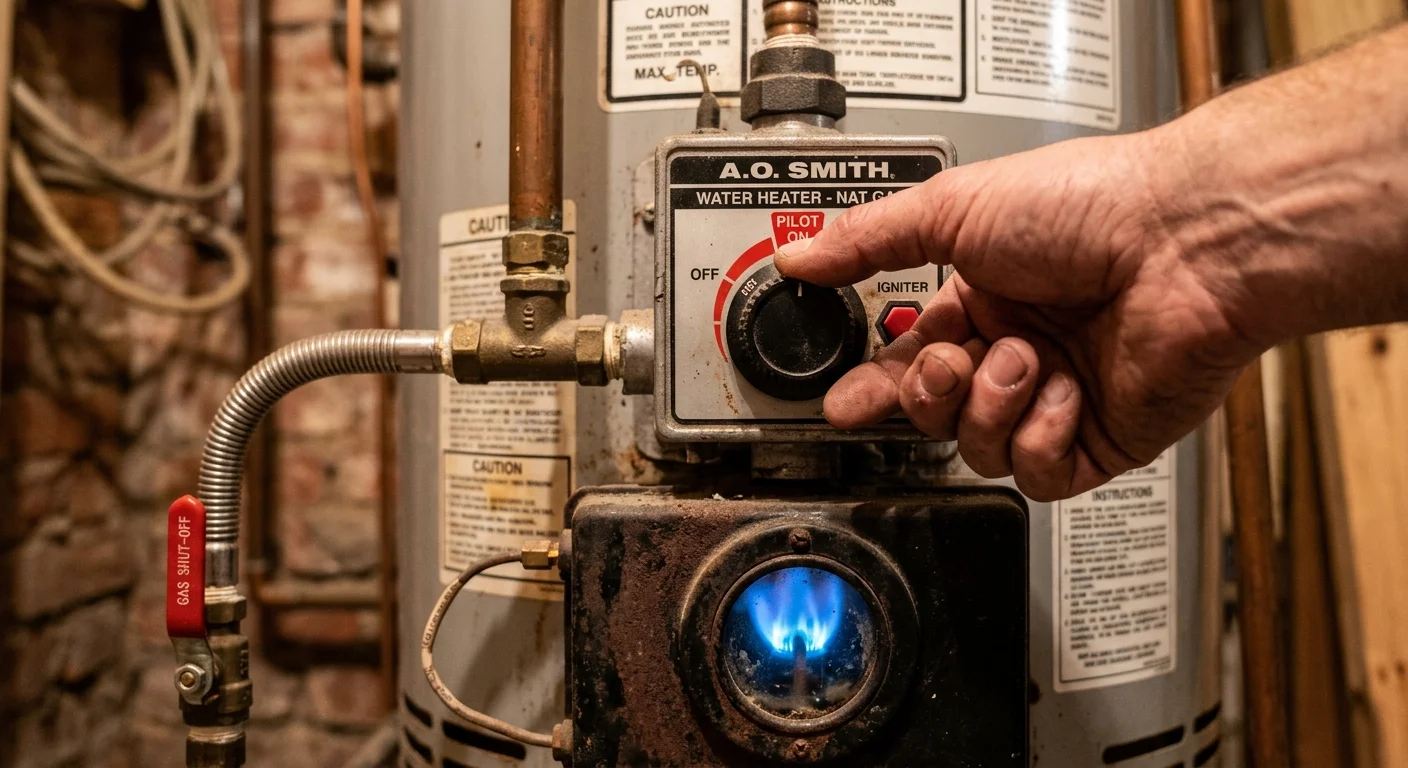
Lighting a gas water heater requires opening the main fuel supply valve, turning the gas control thermostat to the PILOT position, depressing the control knob, and pressing the piezo igniter button until the pilot flame catches. Modern gas tank units utilize either a manual igniter button with an electronic status indicator light or an automated user interface module, replacing the old-fashioned requirement of holding a long match near an open burner tray.
Before attempting to light the pilot, conduct a thorough smell test around the floor and base of the unit. Natural gas and propane companies add a chemical additive called mercaptan, which creates a distinct rotten-egg odor to alert occupants of fuel leaks. According to safety data published by the U.S. Consumer Product Safety Commission, water heater gas leaks represent a significant home safety hazard when improper lighting techniques or damaged gas lines are involved. If you smell gas at any point during this process, turn the gas valve to OFF, do not strike matches or operate electrical switches, evacuate your home immediately, and contact emergency services.
If no gas smells are present, proceed with these operational steps for standard gas models:
- Open the gas line valve: Turn the gas supply shut-off valve on the gas line so the handle runs parallel to the gas pipe.
- Set the thermostat knob to PILOT: Rotate the temperature dial on the front of the gas control valve until the word PILOT aligns with the indicator mark.
- Depress the control knob: Press the gas control knob inward continuously to release a small stream of gas to the pilot assembly.
- Push the spark igniter button: While holding the knob down, click the piezo igniter button repeatedly (usually every 1 to 2 seconds). Look through the sight glass window near the bottom of the tank to confirm a small blue pilot flame lights up.
- Hold for 30 to 60 seconds: Keep holding the control knob depressed for at least 30 to 60 seconds to allow the flame to heat the thermocouple sensor.
- Release and set temperature: Slowly release the knob. If the pilot light stays lit (or the green status light blinks every 3 seconds), rotate the dial from PILOT to your desired temperature setting, preferably “HOT” or 120°F.
If the pilot light extinguishes immediately after releasing the knob, wait 10 minutes for any residual gas to clear from the combustion chamber before attempting the cycle again. If three attempts fail to keep the flame lit, the thermocouple sensor or gas control valve may be contaminated or failing. If you are ever uncertain about system safety or encounter an unexpected electrical reset, our step-by-step walkthrough on how to reset a water heater offers additional context on system safety controls.
Key Differences in Water Heater Startup Requirements
Every water heater design features unique ignition sequences, electrical demands, and startup safety precautions depending on its primary fuel source and mechanical setup. Understanding the operational differences between standard gas units, electric tanks, tankless systems, and hybrid heat pump water heaters helps prevent unnecessary downtime and equipment wear.
The following comparison table outlines the core startup characteristics, critical pre-checks, and typical heating delays across primary residential water heating configurations:
| Water Heater Type | Ignition / Power Method | Pre-Startup Requirement | Typical Recovery Time | Primary Startup Risk |
|---|---|---|---|---|
| Standard Gas Tank | Piezo Igniter / Standing Pilot | Purge gas line & confirm ventilation | 45 – 60 Minutes | Gas accumulation / Thermocouple failure |
| Electronic Control Gas | Automatic Spark Ignition (UIM) | Check display codes & open gas line | 40 – 50 Minutes | Igniter sensor error / Control board lock |
| Electric Storage Tank | 240V Double-Pole Breaker | Must completely fill tank & purge air | 60 – 90 Minutes | Element dry-firing / Electrical short |
| Hybrid Heat Pump | 240V Breaker + Compressor Panel | Verify condensate drain & filter intake | 90 – 120 Minutes | Diagnostic mode delay / Duct obstruction |
Regardless of which system type heats your home, proper water temperature regulation remains vital for both household comfort and energy efficiency. The U.S. Department of Energy recommends setting your water heater thermostat to 120°F (49°C), which provides optimal hot water for daily domestic use while saving up to 15% on monthly utility bills compared to higher factory settings.
Troubleshooting Common Issues When Turning On Your Hot Water Tank
When a hot water heater fails to light or turn on properly, the issue typically stems from faulty safety components, clogged fuel lines, or electrical supply failures. Diagnosing these initial startup glitches promptly prevents frustration and protects the appliance from cumulative mechanical strain.
Common issues encountered during a water heater startup include:
- Unstable pilot flame: Dirt, soot, or oxidation on the tip of the thermocouple prevents it from detecting thermal energy, causing the gas control valve to shut off fuel for safety. Replacing a faulty thermocouple typically costs between $150 and $300.
- Igniter fails to spark: Moisture, loose wiring, or cracked porcelain on the igniter electrode prevents the spark from jumping to the burner.
- Breaker trips instantly: Short circuits in the upper or lower thermostat wiring, grounded heating elements, or an overloaded electrical panel cause double-pole breakers to snap off immediately upon energizing.
- No hot water despite power: High-temperature cutoff switches (ECO switches) on electric models may trip if water temperatures previously exceeded 170°F, requiring a manual button reset.
- Error codes on display panel: Digital gas and hybrid units display diagnostic error flashes (such as 2, 4, or 7 blinks) to indicate vent blockages, intake air restrictions, or pressure switch failures.
Addressing gas lines, high-voltage wiring, or internal tank components without adequate technical background presents significant safety risks. The National Fire Protection Association reports that heating equipment failures contribute to thousands of residential structure fires each year, emphasizing the critical importance of keeping gas valves and high-voltage connections professionally maintained.
Professional vs. DIY Startup Safety Standards
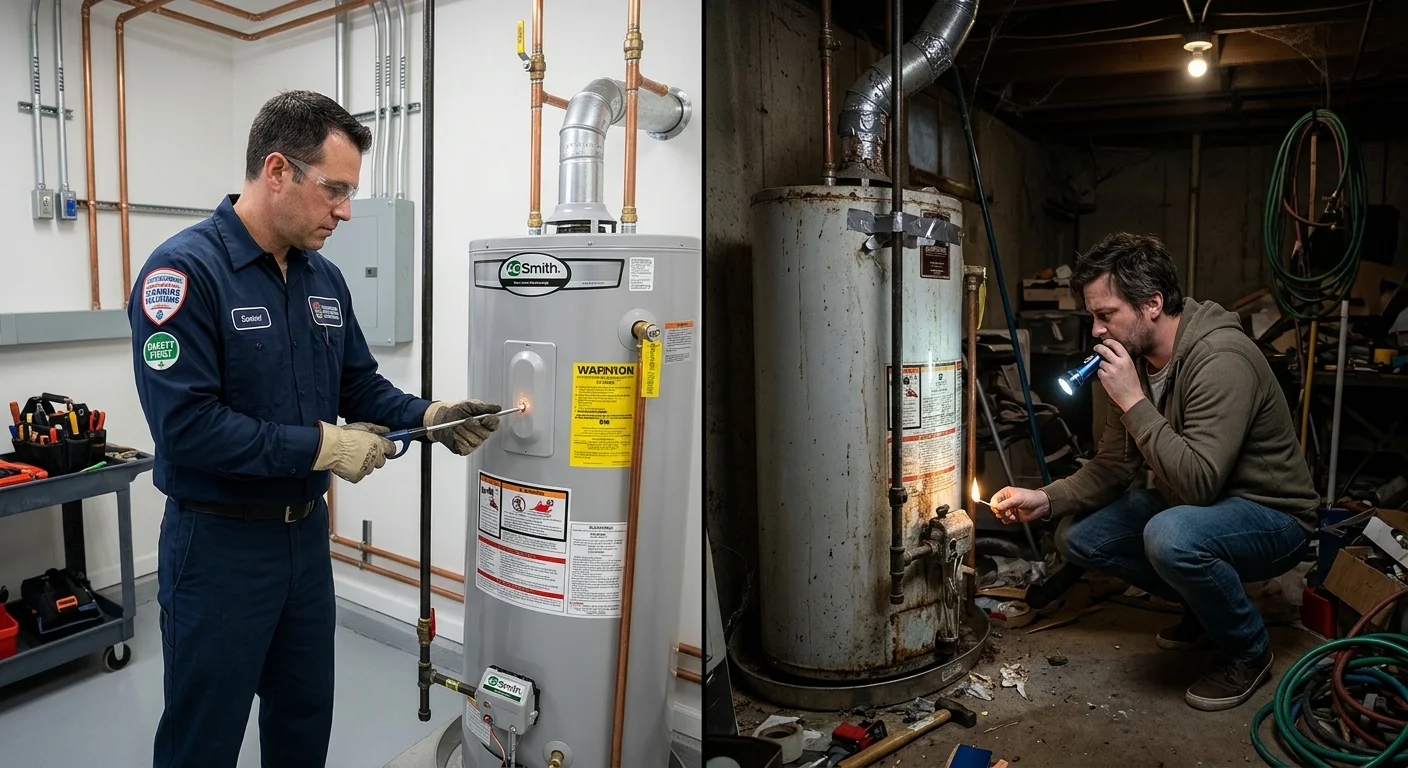
While resetting a simple circuit breaker or turning a manual gas valve falls within standard home maintenance, complex startup issues, system flushes, and gas burner repairs should always be handled by an experienced professional. Specialized tools, gas leak detectors, and voltage meters are necessary to verify that fuel pressure, electrical draw, and flue gas exhaust meet strict local building codes in Middle Tennessee.
Attempting to disassemble gas control valves, alter electrical wiring, or force a stuck pilot knob can cause permanent structural damage or severe personal injury. Do not attempt DIY repairs or part replacements on your appliance. Leave water heater repair and routine maintenance to qualified professionals. When you schedule an inspection or repair with an established water heater service provider, a licensed technician performs comprehensive safety checks, including gas pressure testing, thermal element resistance checks, anode rod evaluation, and flue draft verification. If your water heater is over ten years old, experiencing heavy tank corrosion, or failing to ignite despite multiple attempts, relying on specialized service guarantees long-term safety and reliable hot water delivery.
When your home’s hot water system stalls, fails to ignite, or trips your electrical panel, getting expert assistance protects your investment and ensures household safety. The Hot Water Heater Pros provide fast, reliable, and specialized water heater services for homeowners across Franklin, Brentwood, Nashville, Cool Springs, Thompson’s Station, Spring Hill, Murfreesboro, Mt. Juliet, Fairview, and nearby Middle Tennessee communities.
Our licensed team handles everything from standard gas pilot restorations and electric heating element testing to full water heater installation and emergency repair. We provide honest upfront pricing, clean expert work, and detailed safety checks on every visit. Contact The Hot Water Heater Pros today to schedule professional service or request a free quote for your hot water system.
