
Replacing a standard tank water heater typically takes between two and four hours, while a tankless conversion requires six to ten hours of expert labor. If you are swapping an older electric unit for an identical model, a professional installer can often finish the entire job in as little as 1.5 to 3 hours. On the other hand, upgrading from a traditional storage tank to an advanced, high-efficiency tankless system is a highly complex plumbing process that usually spans a full working day. For homeowners in Franklin, Brentwood, and Nashville dealing with an active leak or a complete loss of hot water, planning for a four-hour service window for a standard tank swap is the safest bet to return your household to normal. Knowing exactly what to expect helps you schedule your day and prepare your home for the brief period of utility disruption.
Typical Timeline: How Long Does It Take to Replace a Water Heater?
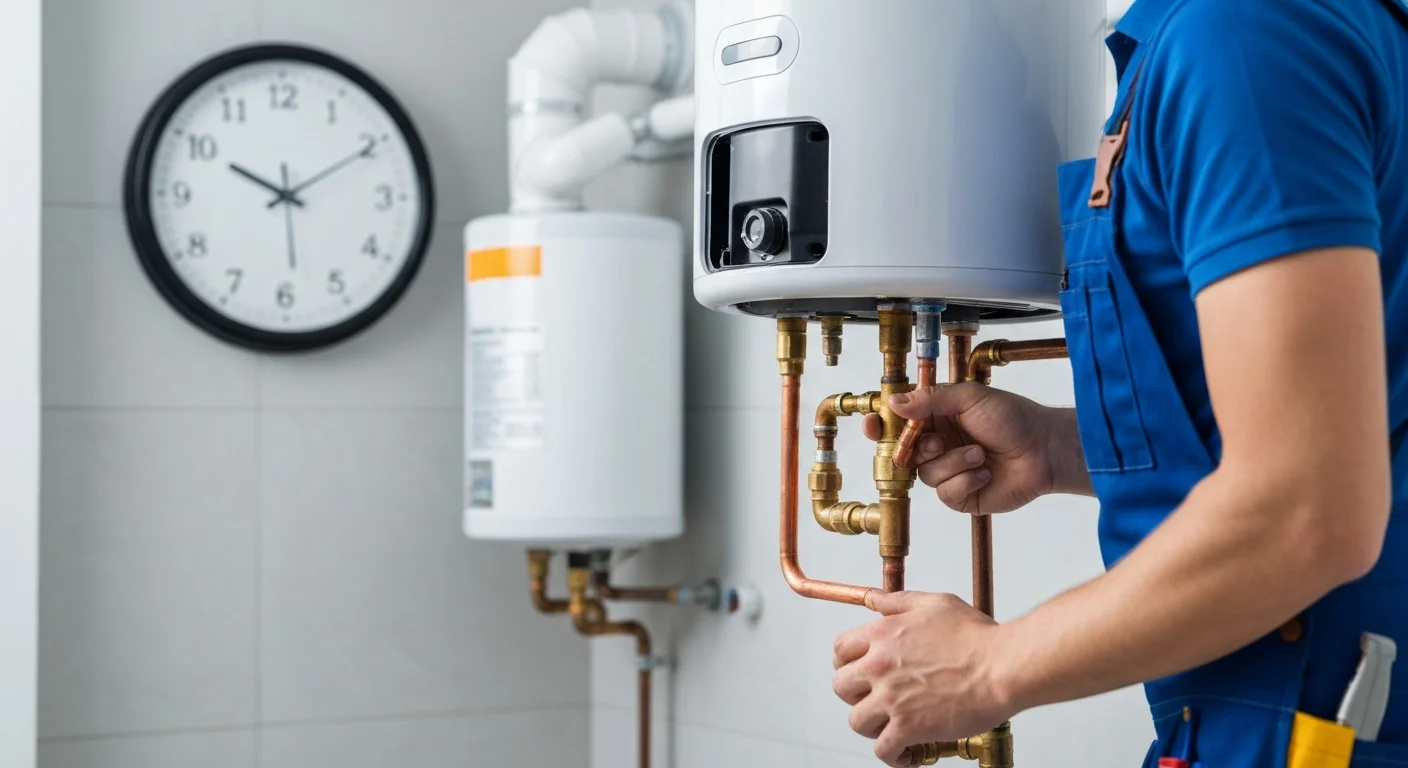
An identical tank replacement usually takes a professional team between 2 and 4 hours from start to finish. This timeframe applies to standard residential storage tanks ranging from 40 to 55 gallons, which are the most common sizes found in Middle Tennessee homes. When replacing a gas water heater with another gas model, the technician must carefully disconnect and reconnect the gas supply line, check the draft hood, and secure the exhaust venting. These extra steps mean a gas installation typically sits closer to the 3-to-4-hour mark.
Electric water heaters are generally faster to replace, often requiring only 1.5 to 3 hours. Because electric units do not require venting pipes or gas lines, the physical connections are simpler. The installer only needs to disconnect the electrical wiring at the junction box, replace the unit, and wire the new system. However, safety steps like turning off the correct circuit breaker and testing the voltage are critical to avoid severe injury. Before scheduling, you must first decide whether to repair or replace your water heater based on its age and condition.
According to data published by the U.S. Department of Energy, water heating accounts for roughly 18% of a home’s total utility costs. Because a new system represents a significant long-term investment, professional water heater company do not rush through the safety checks. Even during a straightforward swap, a technician must take the time to inspect the safety valves, test for leaks, and verify proper electrical resistance or gas combustion. Skipping these steps to save 30 minutes can lead to system failures, property damage, or safety hazards down the road.
What Influences the Time It Takes to Change a Water Heater?
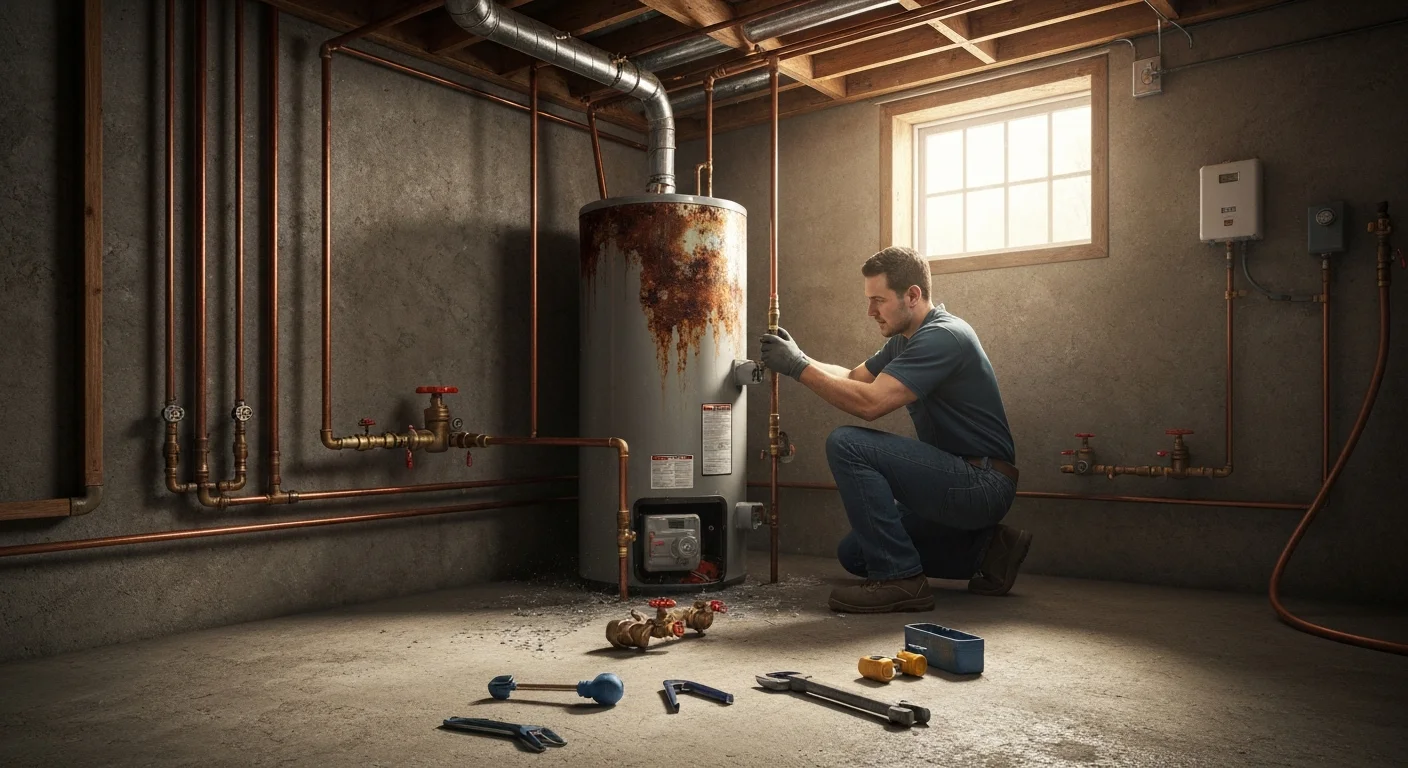
The physical location of your water heater within your home heavily influences the overall labor time. A water heater located in an open, easily accessible garage allows technicians to complete the swap quickly. If your water heater is tucked inside a tight utility closet, located in a low-clearance attic, or placed in a cramped crawlspace, the installation will take longer. Moving a heavy, waterlogged 50-gallon metal tank out of a tight space requires extreme care to avoid damaging your walls, doorways, and flooring.
Code compliance and safety upgrades also play a major role in how long a system replacement takes. Building codes in Williamson and Davidson counties are updated regularly to ensure residential safety. If your old water heater was installed ten or twelve years ago, the new installation will likely trigger mandatory safety upgrades. Common upgrades include installing a thermal expansion tank ($150 to $300), adding a gas sediment trap ($50 to $100), or upgrading to a heavy-duty brass drain valve. These upgrades add 30 to 90 minutes of detailed work to the installation timeline.
Water quality and sediment buildup within your old tank can also delay the decommissioning process. Municipal water systems and private wells in Middle Tennessee often carry dissolved minerals that settle at the bottom of the tank over time. If a tank is filled with thick mineral scale, the drain valve can clog completely. Draining a standard 50-gallon tank normally takes 20 to 40 minutes, but a clogged valve can extend this step to over an hour. Professional installers carry specialized transfer pumps to force water through clogged drains, which helps keep the project on schedule.
Understanding Tankless Systems: How Long to Install a Tankless Water Heater?
Installing a brand-new tankless water heater generally takes between 6 and 10 hours for a standard conversion. Swapping an existing, older tankless unit for a new one is much faster, usually wrapping up in 3 to 4 hours. However, converting from a traditional storage tank to an on-demand tankless system is a highly involved process. It requires altering your home’s infrastructure to handle the distinct operating demands of tankless technology.
The primary time-consuming task during a tankless conversion is upgrading the fuel supply. A standard tank water heater uses about 40,000 BTUs of gas, while a whole-home tankless unit can demand up to 199,000 BTUs to heat water instantly. To supply this massive amount of energy, technicians must often upsize your gas line from a half-inch pipe to a three-quarter-inch pipe. Running new gas lines through walls or floor joists adds several hours of high-precision labor to the project.
Venting and electrical requirements also contribute to the extended installation timeline. Tankless units generate acidic condensate and require specialized, category III or IV stainless steel or PVC venting lines. Installers must cut new vent pathways through your home’s exterior walls to route these pipes safely. According to the Energy Star program, highly efficient gas tankless units can reduce water heating bills by up to 34% compared to standard tanks. While the initial installation takes a full day, the monthly savings and endless hot water make the time investment well worth it.
Step-by-Step Breakdown: What Happens During a Hot Water Heater Installation?
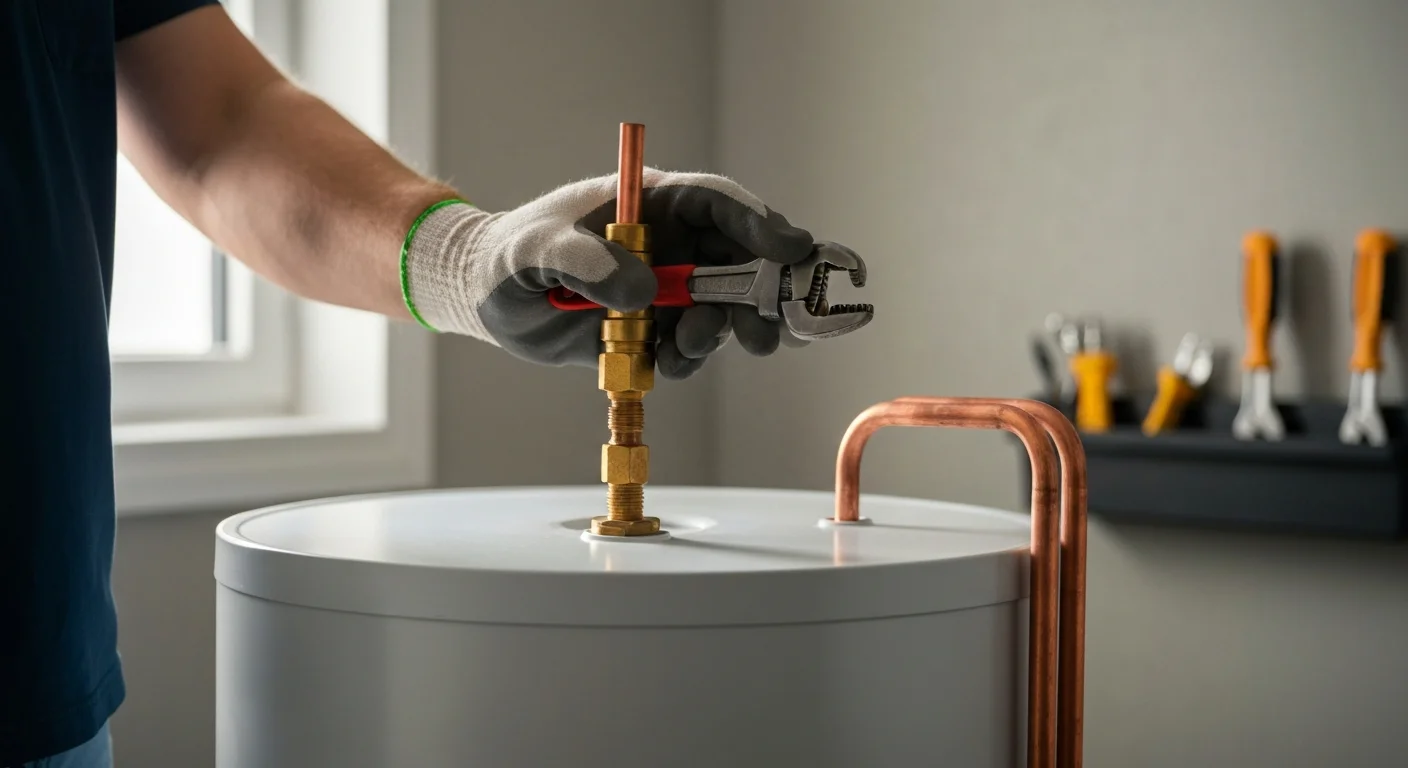
Understanding the exact sequence of events during a professional installation helps you prepare for the temporary shutdown of your water supply. Technicians follow a structured, multi-step process to ensure every component is safely installed and thoroughly tested. Below is the typical chronological order of a standard tank water heater replacement.
- Site Preparation and Safety Checks (15 to 30 minutes): The technician lays down protective drop cloths to shield your floors, shuts off the main fuel source (gas valve or electrical breaker), and closes the cold water supply valve.
- Draining the Storage Tank (20 to 60 minutes): A hose is attached to the drain valve at the bottom of the tank to route the hot water to a nearby floor drain, sump pump, or driveway.
- Disconnection of Utilities (20 to 30 minutes): The plumber detaches the hot and cold water copper pipes, removes the exhaust flue pipe (for gas models), and disconnects the gas line or electrical wiring.
- Removal of the Old Unit (15 to 30 minutes): The empty tank is carefully loaded onto a heavy-duty dolly and navigated out of your home to be hauled away for proper recycling.
- Positioning and Leveling the New Tank (20 to 40 minutes): The new water heater is set in place, perfectly leveled, and fitted with an emergency drain pan to prevent future water damage.
- Utility and Component Connections (45 to 90 minutes): The technician solders or connects new flexible water lines, reinstalls the gas or electrical connections, mounts a thermal expansion tank, and secures the vent pipe.
- System Filling and Initial Testing (30 to 45 minutes): The cold water valve is opened to fill the tank, plumbing fixtures throughout the home are bled of air, and the technician checks all joints for leaks before firing up the heating elements or gas burner.
Comparing Installation Times Across Different Systems
Different water heating systems require completely different levels of labor, tools, and technical expertise. The physical mechanics of a standard electric tank are vastly simpler than a high-efficiency hybrid heat pump or a complex gas tankless unit. The time involved directly affects labor costs, which you can explore in our guide on the cost of replacing a water heater in Middle Tennessee.
The table below provides a detailed comparison of the average installation times, typical equipment lifespan, and the primary labor drivers associated with each major residential water heater category.
| System Type | Average Installation Time | Primary Labor Drivers | Average System Lifespan |
|---|---|---|---|
| Standard Electric Tank | 1.5 to 3 Hours | Wiring connections, tank draining, level positioning | 8 to 12 Years |
| Standard Gas Tank | 2 to 4 Hours | Gas line safety testing, exhaust flue alignment, seismic strapping | 8 to 12 Years |
| Hybrid Heat Pump Tank | 4 to 8 Hours | Condensate drain routing, electrical circuit upgrades, air filtration setup | 10 to 15 Years |
| Tankless Gas Conversion | 6 to 10 Hours | Gas line upsizing, exterior wall venting, wall-mount brackets | 15 to 20 Years |
According to the U.S. Energy Information Administration, energy-efficient appliances continue to gain massive popularity as households look to curb rising utility costs. While advanced systems like hybrid heat pumps or gas tankless units require a higher initial time commitment for installation, their extended lifespans and superior energy profiles provide exceptional long-term value.
Key Factors That Speed Up or Delay the Process
Homeowners can take a few simple, proactive steps to ensure their water heater installation runs as fast and smoothly as possible. The most helpful thing you can do is clear a wide, unobstructed path from your driveway or garage directly to the water heater’s location. Removing storage boxes, laundry, shelving, or household clutter ahead of time can easily shave 30 minutes off the total labor time. Additionally, ensuring your family pets are safely secured in another room keeps both your animals and the technicians safe during the physical move.
On the other hand, unexpected technical problems can quickly derail a standard installation timeline. If your home’s main water shut-off valve is old, corroded, or frozen in place, the plumber cannot safely isolate the system. In these rare cases, the technician must locate the water meter in your yard to shut off the water at the street, which adds time and complexity. Similarly, discovering outdated, brittle galvanized piping or rusted copper connections requires the plumber to cut back and rebuild your plumbing joints, adding another hour to the job.
A common professional mistake we see occurs when well-meaning homeowners try to drain a heavily calcified tank themselves the night before an installation. If the plastic drain valve is brittle from years of heat exposure, it can easily snap off entirely. This creates an immediate, uncontrollable high-pressure leak inside your utility room or basement. It is always safest to leave the draining process entirely to the professional team, as they carry specialized commercial pumps, heavy-duty brass replacement fittings, and professional containment gear to handle any sudden complications safely.
Key Takeaways
- Standard tank replacements (gas or electric like-for-like) average 2 to 4 hours of on-site labor.
- Converting from a tank system to a tankless water heater is a full-day project requiring 6 to 10 hours.
- Draining the old water tank is the most variable step, taking anywhere from 20 to 60 minutes depending on internal sediment buildup.
- Upgrading your system to meet current local building codes can add 1 to 2 hours of adjustments during the installation process.
- Hiring specialized local technicians ensures a fast, same-day installation that minimizes overall household downtime.
