
For homeowners dealing with sudden cold showers, resetting your water heater is often the quickest way to restore hot water. For electric systems, you must turn off the circuit breaker, remove the upper access panel, and firmly press the red high-limit safety button. For gas systems, resetting usually involves restarting the pilot light or pressing a thermal switch. While a one-time reset can solve a temporary power spike, a system that trips repeatedly indicates a serious underlying electrical or thermal malfunction. In these cases, you should immediately turn off the unit and contact a licensed water heater service to diagnose the root cause rather than repeatedly pushing the button. Operating a system with a failing safety switch can lead to severe electrical shorts, element damage, or hazardous overheating. Here is a comprehensive guide to understanding your water heater’s safety controls, identifying why they trip, and determining when a professional repair is necessary to keep your Middle Tennessee home safe and comfortable.
Key Takeaways for Resetting Your Water Heater
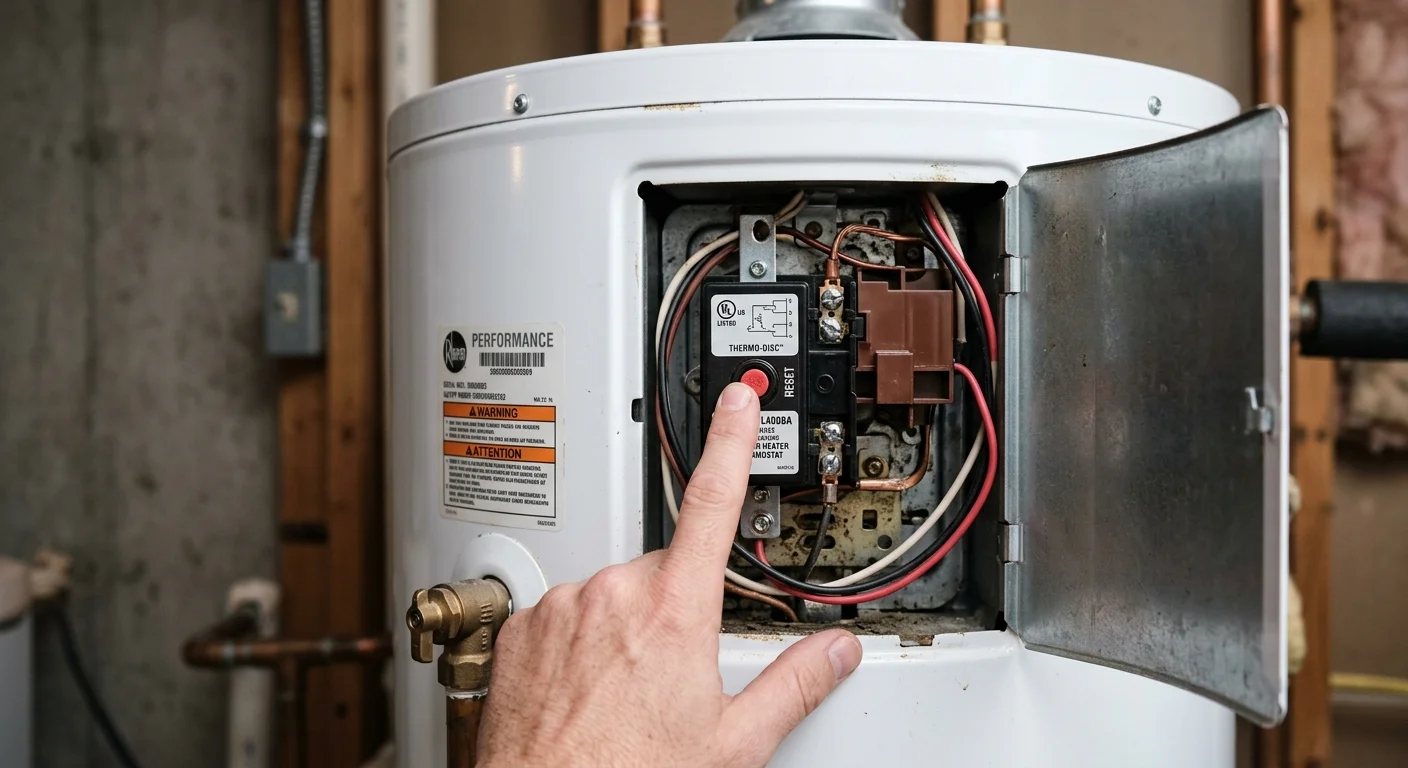
- Safety First: Always shut off the dedicated circuit breaker at your main electrical panel before removing any access plates on an electric water heater.
- The Tripping Trigger: The red reset button is a high-limit safety switch (ECO) that automatically trips when the water temperature exceeds 180 degrees Fahrenheit.
- One-Time vs. Chronic: A single trip can be a fluke caused by a local grid fluctuation, but repeated trips signal a failed thermostat, a grounded heating element, or loose wiring.
- Avoid DIY Repairs: While resetting is a basic troubleshooting step, replacing internal high-voltage components or diagnosing gas line issues requires a professional technician.
- Know When to Replace: If your system is over a decade old and experiencing electrical failures, it is often more cost-effective to upgrade to a modern, energy-efficient unit.
What Is the Water Heater Reset Button and Why Does It Trip?
The red button on your electric water heater is formally known as the high-limit switch or the Emergency Cut-Off (ECO). This safety device plays a critical role in preventing catastrophic failures. When working correctly, the ECO monitors the water temperature inside your tank. If that temperature climbs to an unsafe level—typically above 180 degrees Fahrenheit—the switch trips and instantly cuts off all electrical power to the heating elements.
This automatic shut-off prevents several major hazards. First, it protects your household from severe scalding. According to the safety guidelines published by the U.S. Consumer Product Safety Commission, water heated to 150 degrees Fahrenheit can cause third-degree burns in just two seconds. Second, the ECO prevents the water inside the tank from boiling. Boiling water creates intense steam pressure that, if left unchecked, could rupture the steel tank. Therefore, when the reset button pops out, it is not an annoying glitch; it is a vital safety system doing exactly what it was engineered to do to protect your home.
Where Is the Reset Button on Water Heater Units?
Locating the reset button on water heater units depends entirely on the design of your specific appliance. On almost all standard electric water heaters, the reset button is located behind the metal access panels on the side of the tank. Most residential electric units have two heating elements and two thermostats, which means they have an upper and a lower access panel.
In the vast majority of configurations, the red reset button is integrated into the upper thermostat, situated behind the upper access panel. However, some dual-element models feature a high-limit switch on both the upper and lower thermostats. To locate it, you will need to look for a small, rectangular plastic housing mounted directly against the tank wall. The button itself is almost always bright red and may have the word “RESET” stamped directly onto or next to it. Gas water heaters do not have this type of high-limit electrical switch, though modern energy-efficient gas units may feature a tiny thermal switch near the burner assembly designed to detect combustion chamber overheating.
How to Reset a Water Heater Safely
Resetting a hot water heater is a straightforward troubleshooting step, but because electric water heaters operate on a high-voltage 240-volt circuit, you must prioritize physical safety. Never attempt to remove panels or touch internal wiring while the system is actively receiving power. If you feel uncomfortable handling these steps, immediately call a professional. Here is the safest sequence to perform a basic reset:
- Shut off the electrical power: Go to your home’s main electrical breaker panel. Locate the double-pole breaker labeled “Water Heater” and flip it completely to the “Off” position.
- Remove the upper access panel: Use a flathead or Phillips screwdriver to remove the screws securing the metal plate on the upper portion of the water heater tank. Set the panel and screws aside safely.
- Peel back the insulation: You will see a layer of fiberglass or foam insulation protecting the thermostat. Gently fold or pull this back to expose the plastic thermostat housing. Do not tear or discard this insulation.
- Press the red reset button: Look for the red button. If the high-limit switch has tripped, the button will be slightly raised. Press it firmly with your thumb or the insulated handle of a screwdriver. You should hear and feel a distinct, metallic “click” as it snaps back into place.
- Reinstall the insulation and cover: Reposition the protective insulation over the thermostat. Place the metal access cover back over the opening and tighten the screws securely.
- Restore electrical power: Return to your breaker panel and flip the water heater breaker back to the “On” position.
- Monitor the water temperature: Wait for the system to heat the water. If you want to know how long this takes, you can read our guide on how long does a water heater take to heat up.
Troubleshooting Why Your Hot Water Heater Reset Button Keeps Tripping
If you find that you must reset hot water heater units repeatedly, you are dealing with an electrical or mechanical fault that a simple button press cannot fix. The high-limit switch is designed to trip only in emergencies. If it trips daily or weekly, the safety switch itself is wearing out, or more likely, one of the internal components is failing.
The most common culprit is a faulty thermostat. If the upper or lower thermostat becomes stuck in the “on” position, it will continuously power the heating elements. This causes the water to boil and triggers the ECO to shut down the unit. Another highly common issue is a grounded heating element. Over time, the protective outer sheath of a heating element can split, allowing the internal electric coil to make direct contact with the water or the tank. This creates an electrical short that allows the element to heat continuously, completely bypassing the thermostat’s control signals. Finally, loose or corroded wiring connections inside the access panels can generate localized heat. This localized heat tricks the thermostat sensors and causes the ECO to trip prematurely.
Gas vs. Electric vs. Tankless: How to Reset Hot Water Heater Systems
The mechanism for restoring hot water varies significantly depending on the fuel source and technology of your appliance. While electric models rely on the mechanical ECO switch we have described, gas and tankless systems utilize completely different safety architectures.
For traditional gas water heaters, there is no high-voltage electrical reset button. If you have no hot water, the issue is typically that the pilot light has gone out. Modern gas units feature a piezoelectric spark igniter and a gas control valve. To reset, you must rotate the gas control knob to “Pilot,” hold it down, and click the igniter button until the flame lights. However, newer flammable vapor ignition (FVIR) gas systems also feature a tiny thermal switch near the burner chamber. If this switch detects restricted airflow or excessive combustion temperatures, it will trip.
Tankless water heaters are highly computerized. When they overheat or experience a system error, they display a specific error code on an LCD screen. Resetting a tankless unit usually involves cycling the main power switch or clearing the code via the controller interface. If you are experiencing complex issues with these systems, it is always best to schedule a professional water heater repair rather than trying to fix gas lines or high-voltage control boards yourself.
Comparison of Reset Symptoms and What They Mean
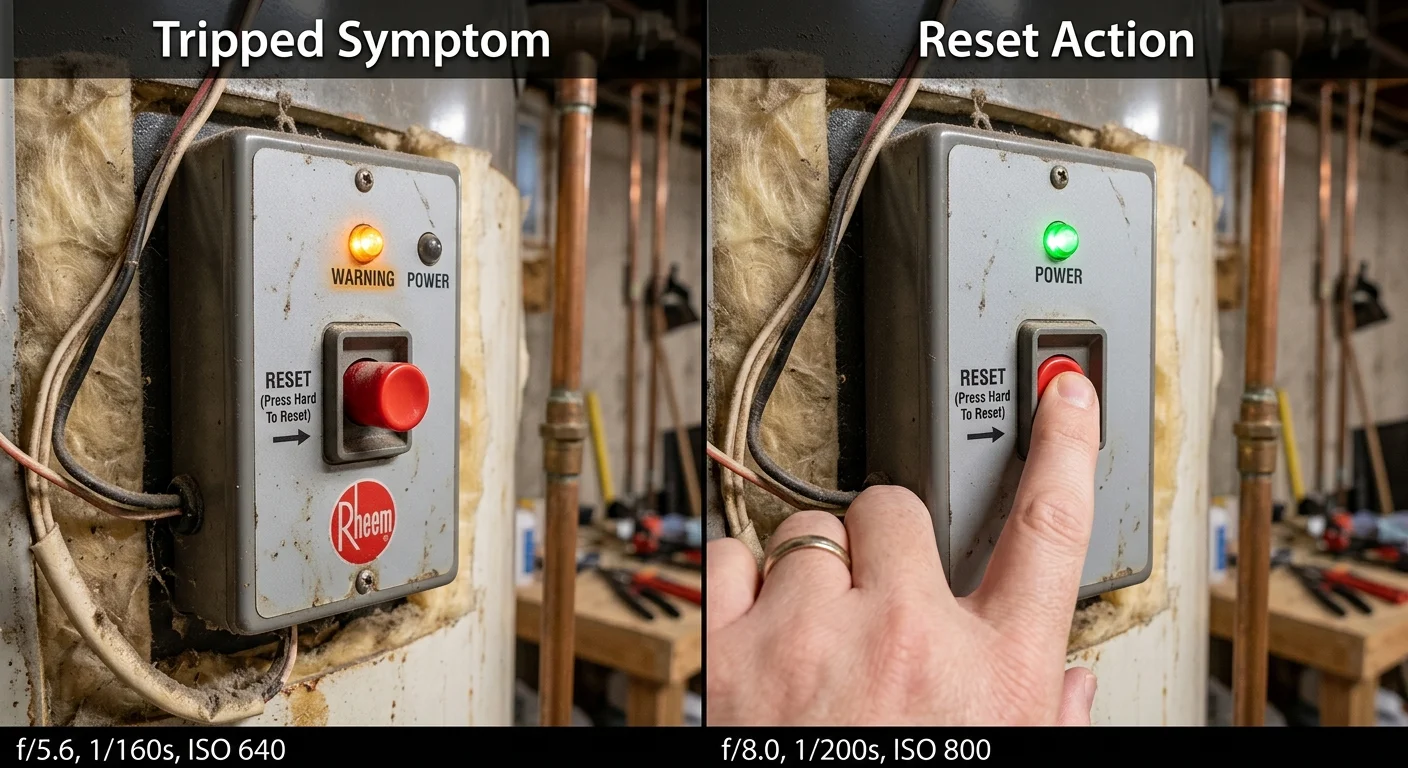
Understanding what happens when you attempt to reset your system can help you identify whether you need a minor adjustment or a professional replacement. When a homeowner pushes the red button, the physical feedback and subsequent behavior of the system provide critical diagnostic clues.
For example, if you press the button and it does not click, it means the switch was never actually tripped, or the thermal sensor has suffered complete mechanical failure. On the other hand, if you hear a solid click but the water heater trips again within 24 hours, you are likely dealing with a stuck thermostat or a grounded element that requires replacement. To help you evaluate your system’s behavior, we have compiled a comparison table detailing common reset symptoms, their probable causes, and the professional actions required to resolve them.
| Reset Symptom | Probable Underlying Cause | Recommended Action |
|---|---|---|
| Button clicks and water heats normally without tripping again | Temporary power fluctuation or minor electrical spike | No immediate action needed; monitor the system closely. |
| Button does not click when pressed | The water is not overheated, or the ECO switch is broken | Professional electrical testing of the thermostat and ECO. |
| Button clicks, but trips again within 24 to 48 hours | Stuck thermostat or grounded heating element | Professional replacement of the faulty thermostat or heating element. |
| Breaker trips simultaneously when the reset button is pushed | Severe direct electrical short or damaged wiring harness | Immediate electrical diagnostic and professional wiring repair. |
| Water is boiling hot or steaming before the system trips | Malfunctioning thermostat failing to cut power at set temp | Replace thermostat and check for scale buildup on elements. |
The Impact of Hard Water and Sediment on Safety Switches
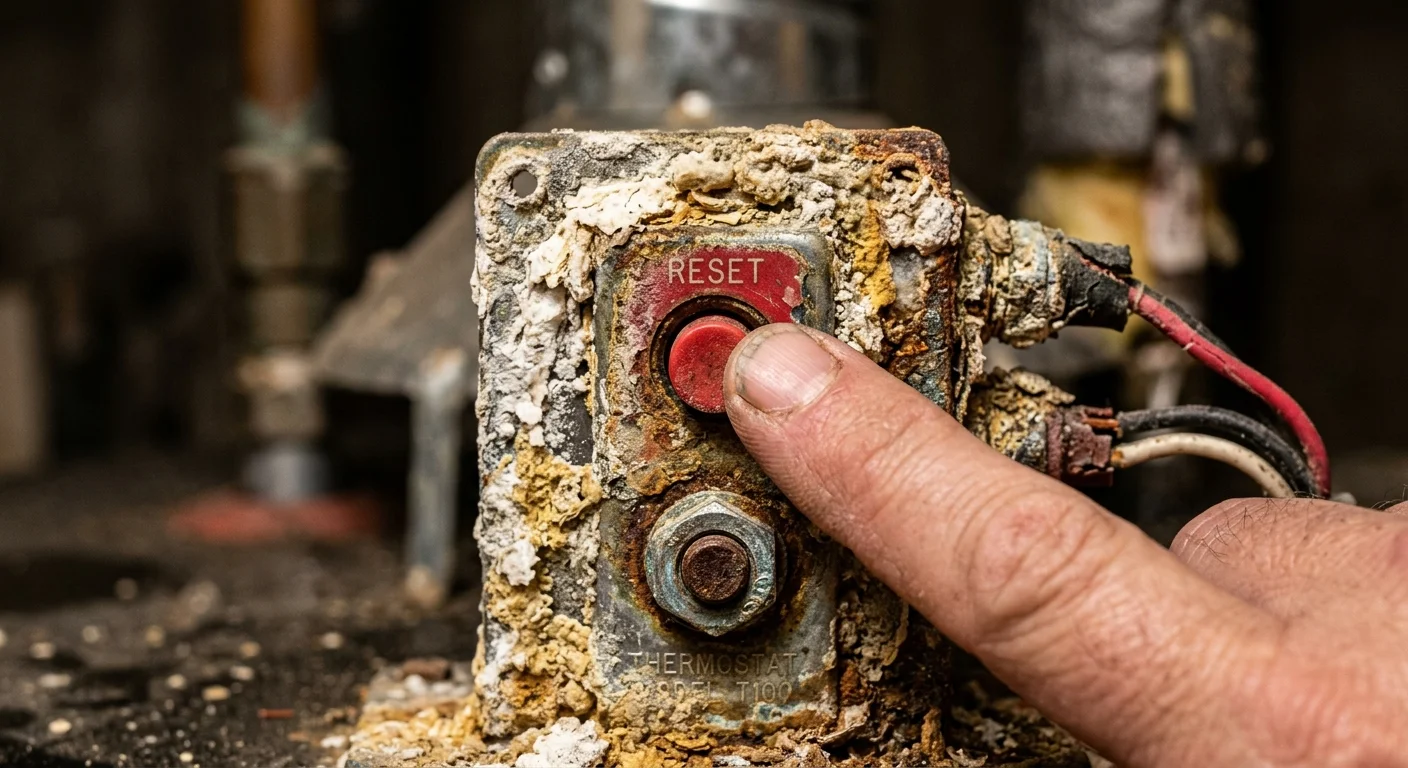
In Middle Tennessee communities like Franklin, Brentwood, and Nashville, hard water is an ongoing challenge for homeowners. Calcium and magnesium dissolved in municipal water supplies tend to precipitate out of the water when heated, settling at the bottom of the tank as thick sediment.
This accumulation has a devastating impact on your water heater’s internal components. Sediment coats the lower heating element, forcing it to work much harder to heat the surrounding water. According to the U.S. Department of Energy, water heating represents roughly 18% of a home’s total utility expenditure, and sediment insulating your heating elements can cause energy consumption to spike dramatically. Furthermore, this heavy sediment layer traps intense heat at the bottom of the tank. This localized overheating can confuse the lower thermostat, causing it to send incorrect signals or causing the upper ECO switch to trip because the overall tank temperature is fluctuating wildly. If you are struggling with hard water deposits, it is highly beneficial to look into professional water filtration system or water softener installation to protect your investment.
Professional Diagnoses vs. DIY Risks with High-Voltage Systems
While pressing a button seems harmless, attempting to diagnose or repair the underlying components of a 240-volt electric water heater without formal training carries significant hazards. The voltage supplied to residential electric water heaters is double that of standard wall outlets. This presents a genuine risk of severe electrical shock, electrocution, or arc flash if handled incorrectly.
A common homeowner mistake is replacing a thermostat or heating element without verifying the electrical integrity of the entire circuit. For instance, if you install a new thermostat but fail to address a frayed wire or a loose connection, you could create a high-resistance contact point. This resistance generates extreme heat, which can easily melt plastic components and start an electrical fire. Furthermore, determining if you should repair or replace your unit requires a holistic look at its overall condition. If you are weighing your options, our detailed guide on how to decide: repair water heater or replace in Middle Tennessee can help you make an informed financial decision. Leaving complex electrical diagnostics to a certified specialist ensures your home remains up to code and perfectly safe.
Why Your Water Heater Reset Button Won’t Click or Stay Down
If you have removed the access panel, located the red button, and pushed it only to find that it feels completely spongy or refuses to stay down, your water heater is telling you that a critical safety boundary has been crossed. The reset button will only lock back into its operational position if the water inside the tank has cooled down below the safety threshold, usually around 120 to 140 degrees Fahrenheit.
If the water is still boiling hot, the physical bimetal switch inside the ECO will remain expanded, preventing the mechanical button from latching. If you attempt to force the button down with a tool, you risk cracking the thermostat housing or permanently damaging the safety mechanism. This could lead to a catastrophic thermal runaway event. Alternatively, if the water is completely cold and the button still refuses to click or stay depressed, the switch itself has likely suffered an internal mechanical failure. Over years of operation, the internal springs and contacts can weaken or corrode. When this occurs, the entire thermostat assembly must be replaced by a qualified professional.
Calling the Experts for Reliable Middle Tennessee Water Heater Service
When your water heater is acting up, tripping breakers, or leaving you with freezing cold water, you do not have to struggle through the diagnostics alone. Pushing the reset button might provide a temporary fix, but it rarely addresses the real mechanical or electrical issue hiding inside the tank. Protecting your home and family means letting experienced professionals handle high-voltage wiring, gas controls, and complex thermal systems.
At The Hot Water Heater Pros, we specialize exclusively in water heater systems. We offer homeowners across Franklin, Brentwood, Nashville, and the surrounding Middle Tennessee areas fast, dependable, and highly expert service. Our team of certified technicians can quickly identify why your high-limit switch is tripping, replace failing thermostats or heating elements safely, and flush out energy-robbing sediment. We pride ourselves on upfront pricing, tidy installations, and clean, professional service. Don’t risk electrical shock or premature tank failure with DIY repairs. Contact us today to schedule a professional evaluation and restore reliable, safe hot water to your home.
