
For Middle Tennessee homeowners deciding on a premium hot water upgrade, choosing the right system depends on your household priorities and local water chemistry. For the ultimate balance of high efficiency, robust freeze protection, and an integrated recirculation pump that delivers instant hot water, choose Navien. For large families requiring raw, high-volume flow rates and an unrivaled century-long track record of reliability, choose Rinnai. For budget-minded homeowners or those looking for capable whole-home electric options, Rheem represents the most cost-effective solution. In the Nashville region, where limestone bedrock creates moderately hard municipal water, the structural differences in heat exchangers will directly impact your unit’s longevity. Navien and Rheem utilize dual stainless steel heat exchangers to resist mineral scale buildup. Meanwhile, many classic Rinnai models rely on copper, which requires more diligent maintenance to survive Middle Tennessee’s challenging water conditions.
Key Takeaways for Nashville Homeowners
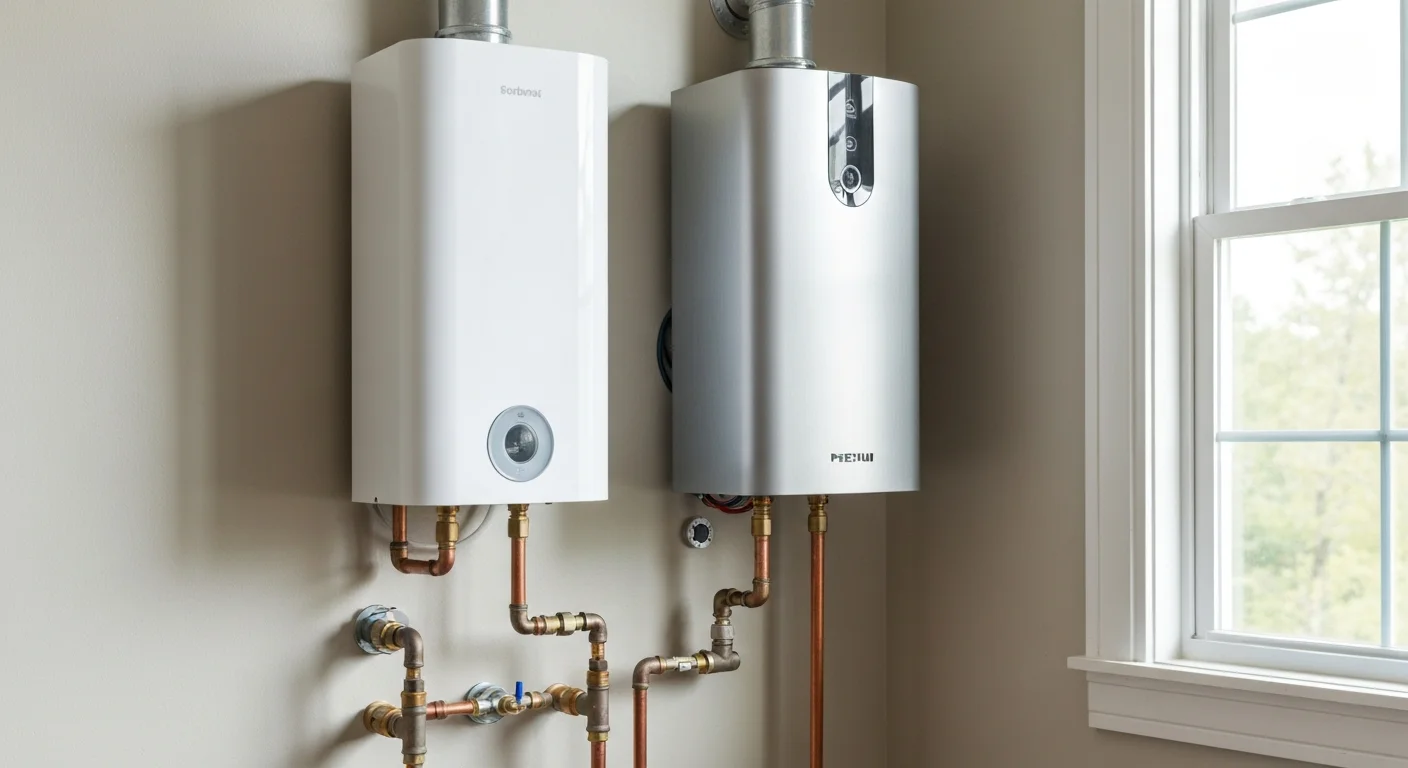
- Navien wins on efficiency and built-in features: Its integrated ComfortFlow recirculation pump prevents the annoying “cold-water sandwich” effect. It features a standard 15-year warranty on dual stainless steel heat exchangers.
- Rinnai leads in raw flow capacity: Offering some of the highest hot water flow rates, Rinnai is the ideal brand for larger Brentwood and Nashville homes with multiple high-flow showers.
- Rheem offers the lowest upfront cost: Providing budget-friendly condensing gas units and a highly competitive line of whole-home electric tankless water heaters.
- Water hardness dictates system lifespan: Due to local limestone geology, installing a water softener alongside any tankless unit is highly recommended to protect heat exchangers from premature scaling.
- Condensing units save more over time: Condensing models save 20% to 30% more energy than non-condensing versions, easily offsetting their higher upfront installation cost.
Navien vs Rinnai vs Rheem Tankless Water Heater Comparison
The primary difference when comparing a Navien vs Rinnai tankless water heater lies in their heat exchanger construction and standard recirculation technology. Navien units come standard with dual stainless steel heat exchangers. These components naturally resist corrosion and scale buildup better than traditional copper. This design is highly beneficial in communities like Thompson’s Station and Spring Hill, where local municipal water carries significant mineral content. On the flip side, the historical matchup of Rinnai vs Navien reveals that Rinnai built its reputation on high-grade copper heat exchangers. However, they have recently introduced stainless steel in their latest high-efficiency lines.
When adding Rheem to the comparison, the Navien vs Rinnai vs Rheem tankless water heater matchup highlights a different approach to design and value. Rheem offers a wide range of tankless models focused on energy efficiency, user-friendly controls, and competitive pricing. Many Rheem units feature stainless steel heat exchangers in newer high-efficiency models, helping improve durability and resistance to corrosion. While Rheem may not have the same premium positioning as Navien or the same long-standing tankless specialization as Rinnai, it remains a strong option for homeowners who want reliable performance with broad availability and easier access to replacement parts and service.
Navien’s standout feature is the integrated ComfortFlow recirculation system, which includes a small buffer tank and pump inside the casing. This internal loop entirely eliminates the dreaded cold-water sandwich, which is the sudden blast of cold water between hot cycles. While Rinnai offers smart recirculation firmware, it often requires purchasing an external pump or specialized piping. If you want a self-contained, highly efficient unit that delivers rapid hot water out of the box, Navien holds the advantage. To understand how these features perform over years of daily service, read our comprehensive Navien water heater review. However, if you are looking for a brand with a massive American service network and decades of field-proven mechanical reliability, Rinnai remains incredibly tough to beat. Rheem provides a middle-ground alternative, combining solid efficiency, accessible pricing, and dependable performance for homeowners who prioritize value.
How Middle Tennessee Water Conditions Impact Rheem vs Rinnai vs Navien Tankless Systems
According to the United States Geological Survey, water hardness in Middle Tennessee is characterized as moderate to hard due to the region’s dense limestone geology. When evaluating a Rheem vs Rinnai vs Navien tankless water heater under these specific local conditions, the heat exchanger material becomes your most critical decision point. Rheem has aggressively updated its premium condensing lineup to feature dual stainless steel heat exchangers. This makes a Rheem vs Rinnai vs Navien tankless comparison highly relevant for homeowners in Murfreesboro or Mt. Juliet, where mineral buildup can choke a water heater within a few years.
Copper heat exchangers, traditional in many Rinnai units, transfer heat slightly faster but are highly susceptible to calcium scaling. When mineral scale builds up on copper, the system must work harder to heat the water. This leads to localized overheating and eventual heat exchanger cracks. Navien takes a different approach by using dual stainless steel heat exchangers across many of its high-efficiency tankless models, providing strong resistance against corrosion and mineral accumulation. This design makes Navien particularly well-suited for areas with harder water conditions, where reducing scale-related wear is a major concern.
If you select a classic copper Rinnai unit over a stainless steel Rheem or Navien model, you must commit to annual flushing or install a whole-house water softener. Skipping this crucial maintenance can void your manufacturer warranty on either system, but copper-based systems will show stress much faster than their stainless steel competitors. For homeowners looking to balance performance with local water challenges, stainless steel components from Rheem and Navien offer a vital layer of protection, while Rinnai remains a proven option when paired with proper maintenance and water treatment.
Evaluating Navien vs Rheem vs Rinnai Tankless Water Heater Lifespans
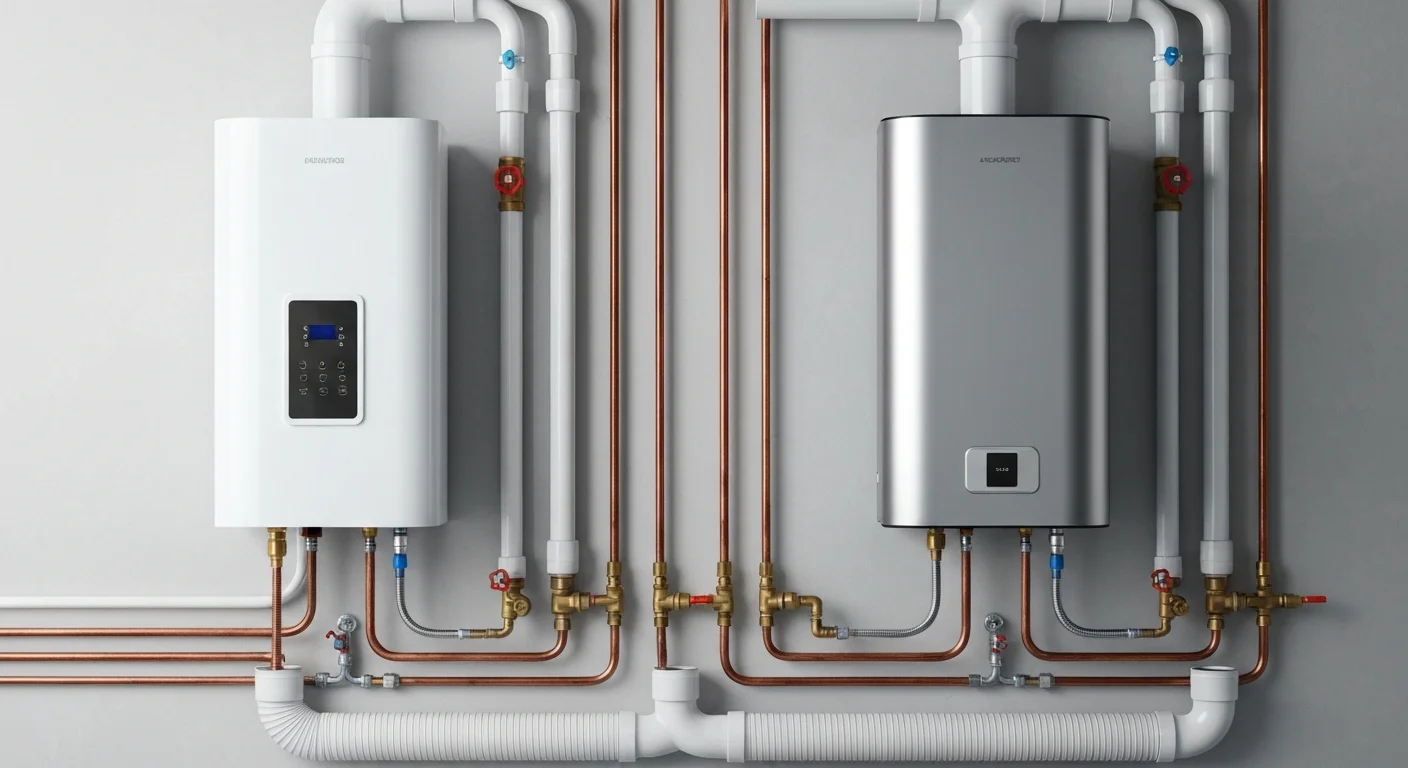
The projected lifespan of a Navien vs Rheem vs Rinnai tankless water heater depends heavily on build quality, components, and the manufacturer’s engineering standards. A premium Navien unit is engineered to last 20 to 25 years when properly maintained, backed by an industry-leading 15-year residential warranty on the heat exchanger. When comparing Navien vs Rheem, Rheem typically offers a 12-year warranty on their top-tier heat exchangers, with a design lifespan closer to 15 to 20 years. Rheem uses thinner gauge metals and more plastic components in their internal cabinetry to keep manufacturing costs low, making them a budget-friendly choice but slightly less robust.
Rinnai takes a different approach, building its reputation around long-term mechanical reliability and decades of experience in the tankless water heater industry. Many Rinnai systems are designed to provide 20+ years of service when professionally installed and regularly maintained. While warranty coverage varies by model, Rinnai’s commercial-grade engineering and extensive service network have made it one of the most trusted brands among contractors and homeowners who prioritize proven durability.
The engineering philosophy of Rheem vs Navien vs Rinnai is visibly different when you open the outer cover. Navien features organized, modular commercial-grade wiring, brass connections, and heavy-duty insulation. Rheem’s internal layout is more compact and can be more difficult for technicians to service in tight spaces. Rinnai units are known for their straightforward internal design, quality components, and service-friendly construction that helps technicians diagnose and repair systems efficiently. For homeowners in Nashville, Fairview or Cool Springs who view their water heater as a permanent 20-year home investment, the premium build quality of Navien and the proven reliability of Rinnai justify their higher entry price compared with more budget-focused alternatives. Choosing a cheaper unit with shorter warranty terms can lead to earlier replacement costs, erasing any initial savings you enjoyed during the installation phase.
Cost Differences Between Rinnai vs Navien and Rheem Units in Nashville
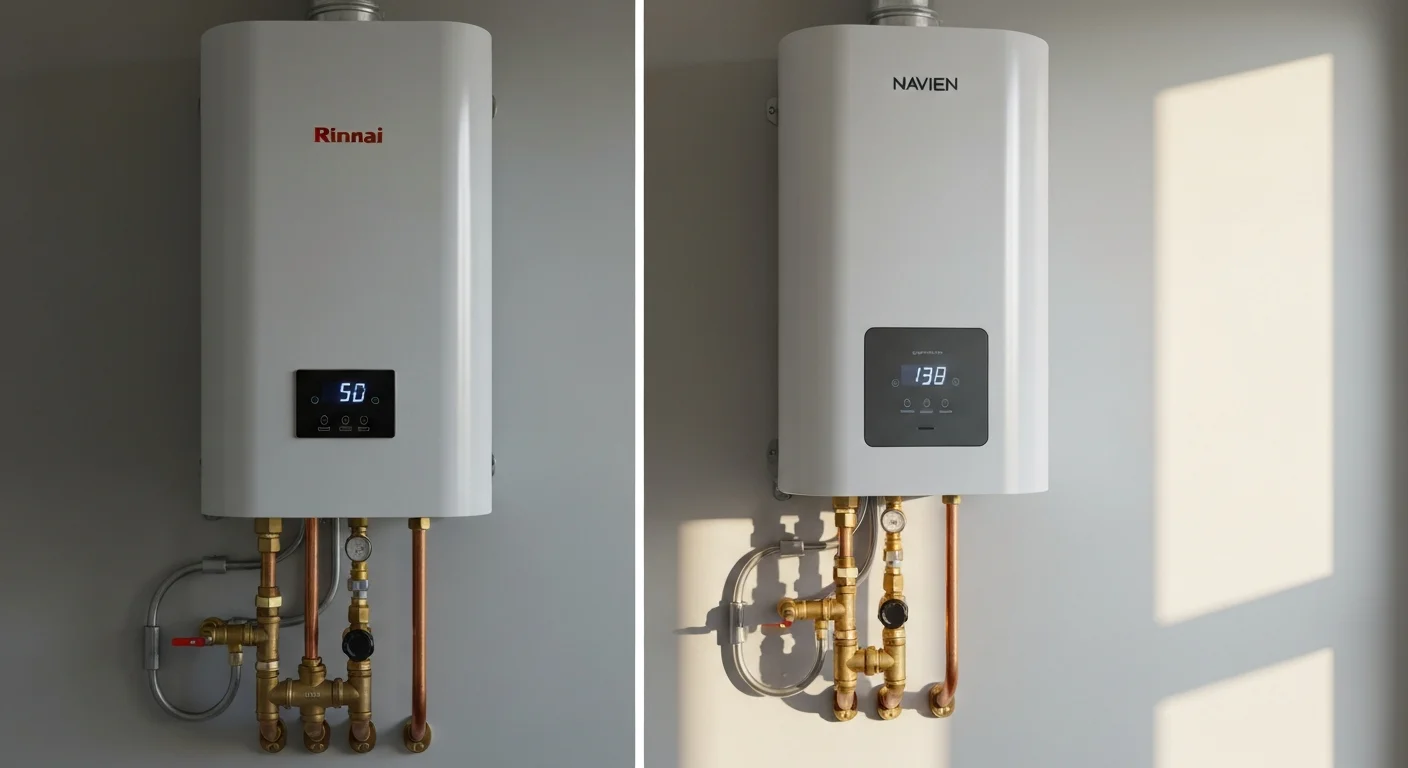
A direct cost comparison of Rinnai vs Rheem shows a clear distinction between premium engineering and mass-market affordability. A professional installation of a Rinnai vs Rheem tankless water heater in Middle Tennessee typically ranges from $5,000 to $8,000 for a Rinnai, while a Rheem installation averages between $4,700 and $7,500. This price variance stems from Rinnai’s specialized proprietary venting systems, advanced control boards, and premium brand markup. When you look at a Rheem vs Navien tankless water heater installation, Navien typically commands the highest premium, with all-in costs starting around $5,200 and reaching up to $8,300 for high-output models with built-in recirculation.
These upfront figures include the unit, professional plumbing connections, permits, gas line modifications, and venting. It is critical to factor in potential infrastructure upgrades. Older homes in historic Franklin or downtown Nashville may require upgrading gas lines from 1/2-inch to 3/4-inch black iron pipe to feed the high BTU demand of a tankless unit. However, you can offset these initial expenses through federal energy tax credits. According to the U.S. Department of Energy, homeowners can qualify for federal tax credits of up to 30% of the total installation cost for qualifying high-efficiency tankless units under the Energy Efficient Home Improvement Credit. This incentive makes investing in a premium, ultra-high-efficiency brand like Navien much more financially attractive for local families.
Tankless Water Heater Brand Comparison
| Feature or Metric | Navien (NPE-A2 Series) | Rinnai (Sensei RX Series) | Rheem (Prestige Series) |
|---|---|---|---|
| Max Efficiency (UEF) | 0.96 UEF | 0.93 to 0.95 UEF | 0.93 to 0.96 UEF |
| Heat Exchanger Material | Dual Stainless Steel | Stainless Steel or Copper | Dual Stainless Steel |
| Warranty (Heat Exchanger) | 15 Years Residential | 12 to 15 Years | 12 Years Residential |
| Recirculation Pump | Built-in (ComfortFlow) | Optional (External/Smart-Circ) | Optional (External) |
| Average Installed Cost | $5,200 to $8,300 | $5,000 to $8,000 | $4,700 to $7,500 |
The Truth About Flow Rates: Navien vs Rinnai vs Rheem Tankless Water Heater Performance
Understanding how raw flow rates translate to real-world performance requires looking at incoming groundwater temperatures. According to data from the U.S. Environmental Protection Agency, average household water use rises significantly during morning peak hours, making maximum flow capacity a vital metric. In Middle Tennessee, winter groundwater drops to around 50°F, meaning your system must raise the water temperature by 55°F to achieve a comfortable 105°F shower. Under these conditions, comparing Navien vs Rinnai vs Rheem reveals that Navien maintains more consistent flow rates due to its superior modulating gas valve, which precisely adjusts the burner flame.
A high-end Navien NPE-240A2 delivers a solid 5.8 GPM at a 67°F temperature rise, easily supporting three showers simultaneously. When analyzing a Navien tankless water heater vs Rinnai, Rinnai often wins on absolute maximum flow capacity in warmer months, with some commercial-grade residential units pushing up to 11.1 GPM. Rinnai’s powerful burners and high-capacity models make the brand especially appealing for larger households with demanding hot water requirements.
Rheem systems offer competitive performance with a strong focus on efficiency and value, but they can struggle slightly in peak winter conditions, occasionally experiencing a drop in water pressure to maintain the target temperature. When comparing Rheem vs Navien vs Rinnai, the choice often comes down to priorities: Rinnai delivers exceptional maximum flow capacity, Navien provides highly consistent temperature control and built-in efficiency features, while Rheem offers a reliable balance of performance and affordability. If you have a large family in Brentwood with multiple teenagers showering at the same time, Rinnai’s high-volume capabilities make it a stellar choice. For smaller to mid-sized homes in Spring Hill, Navien’s consistent delivery and standard freeze-protection heater prevent cold-weather pressure drops.
For a professional, worry-free setup, we highly recommend scheduling a certified professional tankless water heater installation in Nashville to guarantee code compliance and system safety. Choosing an experienced water heater company in Nashville ensures your system is properly sized, installed, and optimized for long-term performance. A qualified water heater plumber can also help with maintenance, repairs, and future service needs, giving you confidence that your investment will continue operating efficiently for years to come.
