
For Middle Tennessee homeowners facing a failing system, the choice comes down to age and the fifty percent rule. If your traditional tank water heater is under eight years old and the repair costs less than half of a new unit, choose repair. If your tank is over ten years old, actively leaking from the base, or requires a repair exceeding half the replacement cost, choose replacement. Standard storage tanks generally last eight to twelve years in our region, whereas modern tankless units can run for up to twenty years. Repairing a heavily corroded, decade-old system is a short-term fix that often leads to property damage from sudden leaks. Investing in a timely replacement prevents emergency disasters, lowers utility bills, and restores peace of mind to your home. Let us look at the warning signs, cost differences, and professional criteria to help you make the right choice.
Understanding the Lifespan of Local Water Heaters
The operational lifespan of a modern home water heater ranges from eight to twelve years for storage tanks and up to twenty years for tankless systems. If your system is approaching these milestones, its internal components are likely wearing down. This wear occurs even if the system seems to be running fine on the surface. Understanding what is the average life of a water heater helps you anticipate failures before they flood your utility room.
Fuel sources also play a major role in determining what is the life of a water heater. Gas-powered systems run under intense heat from a burner at the bottom of the tank. This constant thermal stress causes the metal to expand and contract rapidly, which often leads to structural fatigue around year eight or nine. Electric models do not have a direct flame but suffer from mineral scaling on their heating elements. This scale causes the elements to burn out prematurely in hard water environments.
Local environmental factors in communities like Franklin, Brentwood, and Nashville can shorten these standard lifespans. High mineral content in our local municipal water supply leads to accelerated sediment buildup. Over time, these minerals form a thick crust at the bottom of the tank. This layer forces the burner or heating elements to work twice as hard to heat the water. Ultimately, this added stress causes the steel tank to overheat, expand, contract, and eventually fracture.
Water Heater Repair vs Replacement Signs and Warning Indicators
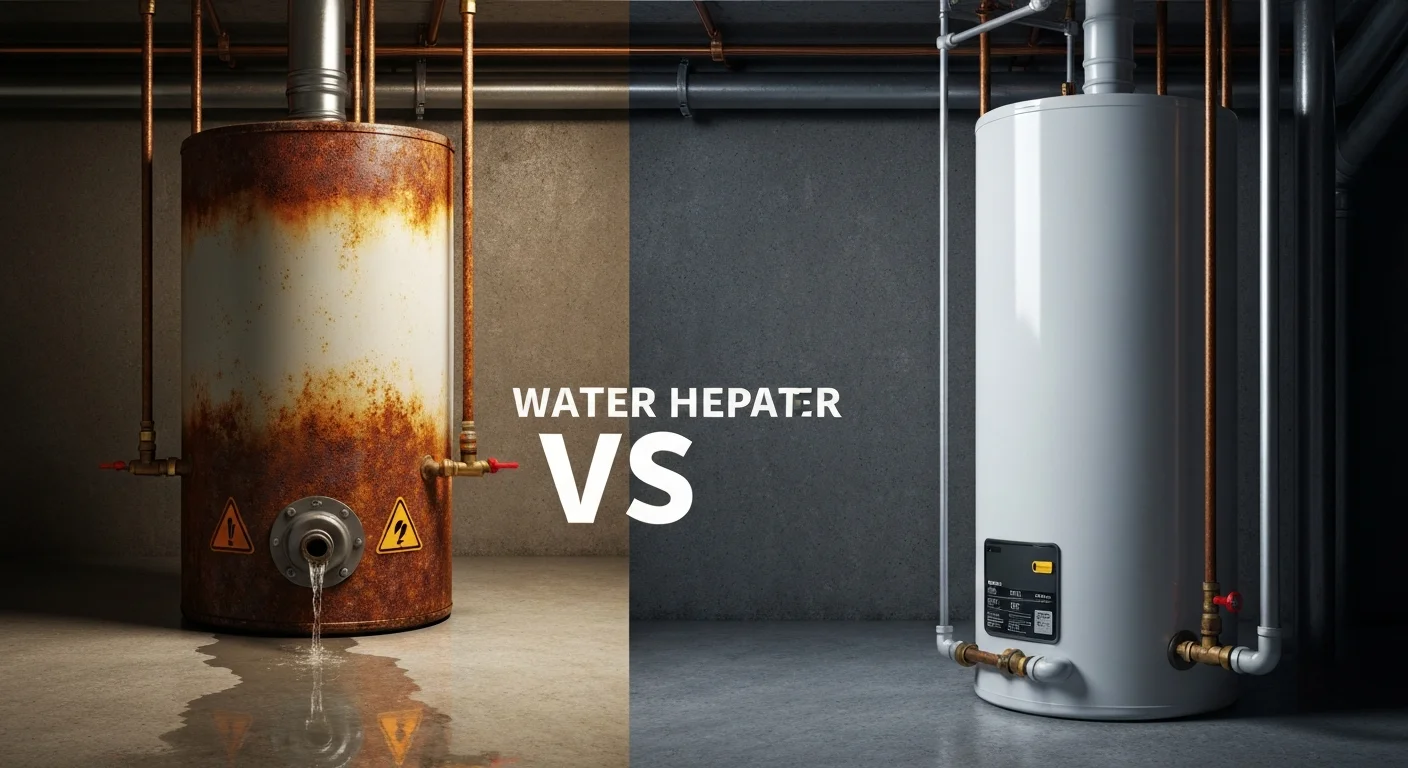
Identifying the difference between minor component failures and major structural breakdown requires observing system behavior, water quality, and physical dampness. Some malfunctions require simple component swaps, while others signal a catastrophic structural failure of the tank itself. Recognizing these water heater repair vs replacement signs early can save you thousands of dollars in emergency restoration fees.
If you hear loud popping, cracking, or rumbling noises, your system is crying out for maintenance. These sounds occur when steam bubbles burst through thick layers of hardened sediment at the bottom of the tank. If your hot water looks rusty, hazy, or smells like sulfur, corrosion has settled inside your system. Lukewarm water or a total lack of heat usually points to a broken thermostat, a fractured dip tube, or burnt-out heating elements. These are classic signs water heater needs repair vs replacement, as elements and thermostats are easily replaceable.
Conversely, some warning signs point directly to replacement. If you notice pooling water around the base of the tank, the inner lining has likely cracked. This issue cannot be fixed. A slow drip from the top of the unit might just be a loose fitting or a failing temperature and pressure relief valve. However, a leak coming from the bottom of the metal shell means the structure has failed. Always inspect the physical jacket of your unit for rust spots or dampness to catch these issues early.
Knowing Exactly When to Replace Your Hot Water Heater
You should replace your system immediately if the storage tank itself starts leaking, is over ten years old, or requires a costly major repair. Unlike copper pipes or brass valves, a compromised steel storage tank cannot be welded, patched, or resealed. Once the inner glass lining fractures, the water pressure forces its way through the outer steel jacket, leading to an inevitable rupture. This is why a leaking tank is the ultimate sign of when should a water heater be replaced.
Another critical factor is the frequency of repairs. If you have called a technician twice in the past year for different issues, your unit is likely entering a phase of systemic failure. Spending money on a new control valve today only to have the heating element fail next month is a common financial trap. Evaluating when replace water heater becomes easier when you look at the total historical repair costs of the older system.
We must also consider energy efficiency losses. Older water heaters operate with significantly lower efficiency than modern models. As sediment accumulates, the heat transfer rate drops, which forces the system to run longer cycles. If your monthly utility bills have risen steadily without a change in household usage, an aging water heater is often the culprit. Upgrading to a modern energy-efficient model restores performance and lowers your monthly overhead.
Water Heater Repair vs Replacement Cost Analysis
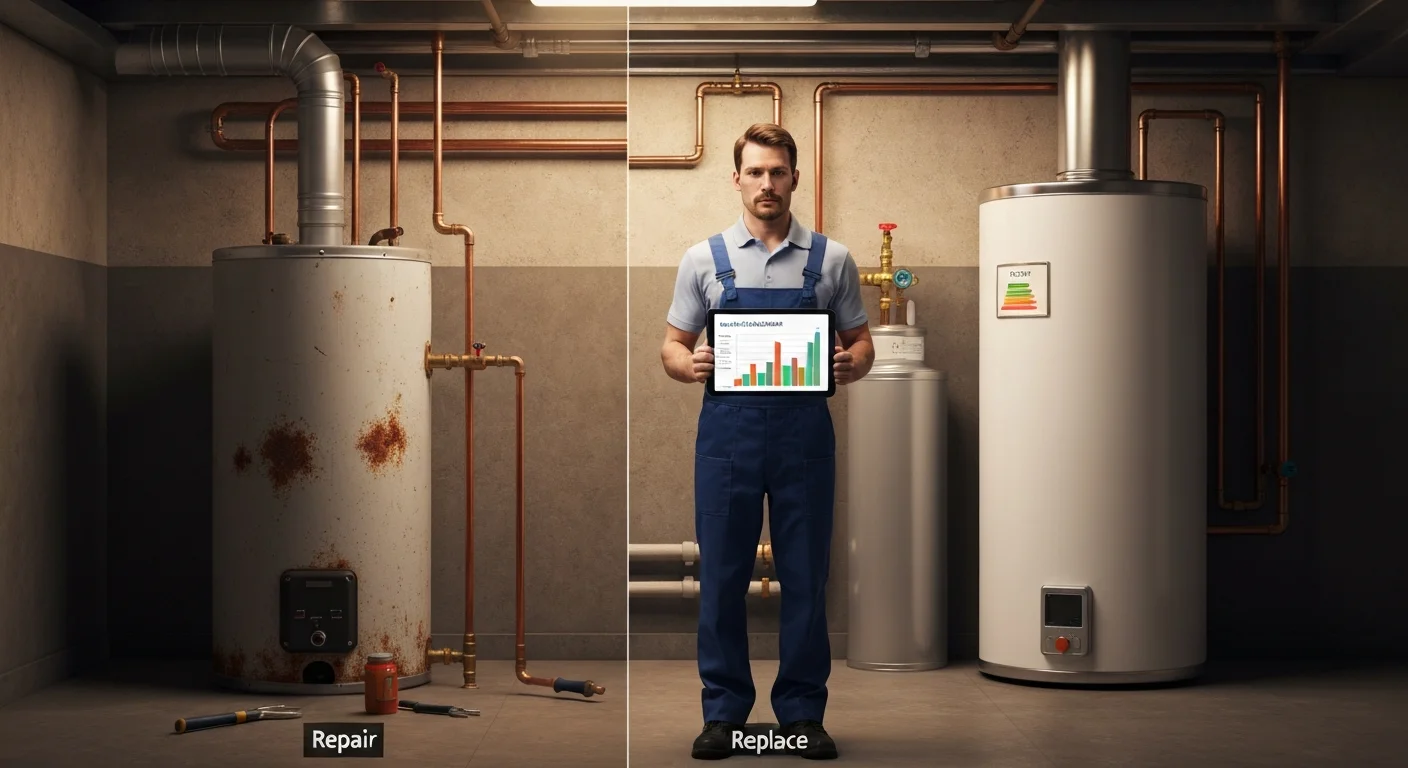
The financial choice between fixing an old unit and buying a new one rests on comparing the immediate repair bill with the long-term energy savings. Minor repairs like replacing a bad heating element, a broken thermostat, or a faulty T&P relief valve generally run between $150 and $450. In contrast, installing a completely new standard storage tank water heater ranges from $1,500 to $3,200, depending on the gallon capacity and local building permit fees. When faced with a repair bill that approaches or exceeds $600 on an older unit, putting that money toward a modern, high-efficiency system makes far better financial sense.
Operating costs represent another major component of the water heater repair or replacement equation. According to the U.S. Department of Energy, heating water accounts for approximately 18% of your home’s total utility bills. Furthermore, data from the Air-Conditioning, Heating, and Refrigeration Institute reveals that old, unmaintained storage tanks can experience a 15% drop in operational efficiency over their lifespan. This efficiency loss means you are paying more money every month for less hot water.
If you are torn between standard and high-efficiency options, reviewing the benefits of tankless vs tank water heaters can clarify which system fits your household usage. If you are currently dealing with a sudden breakdown, scheduling professional water heater repair services can provide an immediate diagnostic assessment of your unit. This assessment ensures you do not waste money on a system that is beyond saving.
Step-by-Step Diagnostic Method for Homeowners
You can systematically diagnose your hot water issues by following a clear, step-by-step checklist before calling for local water heater plumber. This method helps you rule out minor electrical or gas supply issues before jumping to the conclusion that you need a costly replacement. Follow these steps to evaluate your system’s health:
- Verify the power source: Check your home breaker panel to ensure the water heater circuit has not tripped. For gas units, verify that the gas valve is open and the pilot light is lit if you have an older manual ignition system.
- Check the physical surroundings: Walk around the unit with a flashlight to look for any standing water, slow drips, or damp spots on the floor. Pay close attention to the bottom drain valve and the top pipe connections.
- Examine the hot water quality: Run a hot water tap in a white porcelain sink or bathtub. Note if the water is discolored, rusty, or carries a metallic smell, which points to internal tank corrosion.
- Audit the age of the unit: Locate the manufacturer label on the side of the tank. Write down the serial number and search for it online to decode the exact manufacture date of your system.
- Listen to the operating cycle: Stand near the unit while it is actively heating water. Listen for loud popping, crackling, or knocking sounds, which indicate heavy sediment accumulation on the bottom of the tank.
If you complete these steps and find no physical leaks, your issue is likely a component failure. In this scenario, a quick repair can often restore your system to full operation without the expense of a complete replacement. However, if step two reveals a puddle at the base, skip the repair process entirely and prepare for a water heater replacement.
How Local Hard Water Impacts Your Water Heater Decision
High mineral content in Middle Tennessee municipal water accelerates tank decay and often makes early replacement a more practical choice. Our local aquifer sits deep within natural limestone formations, which enrich our water with calcium carbonate and magnesium. According to the U.S. Geological Survey, water containing more than 120 milligrams of dissolved minerals per liter is classified as hard, a threshold that most Middle Tennessee communities easily exceed. As this hard water heats up, the minerals crystallize and settle directly onto your system’s internal surfaces.
A common mistake homeowners make is ignoring annual maintenance in these hard water areas. When mineral scale builds up on electric heating elements, it creates an insulation barrier. The metal elements must get much hotter to transfer heat to the water, which leads to physical deformation and element burnout. In gas water heaters, the sediment layer on the bottom of the tank acts as a thermal barrier, causing the burner to overheat the steel tank bottom. This localized overheating weakens the steel and destroys the protective glass lining, leading to premature tank failure.
As an experienced practitioner, I must warn you about a common professional trap: flushing a heavily neglected water heater that is over eight years old can actually cause it to leak. Over several years, mineral scale can actually plug tiny pinholes that have corroded through the inner steel tank. When a technician flushes that scale away, those hidden holes are exposed, resulting in an active leak. If your older system has never been flushed, replacing it is often safer than attempting a deep flush that might trigger a catastrophic rupture.
Comparison of Repair vs Replacement Criteria
Making the final choice between fixing your current unit or installing a new one requires looking at several physical and financial factors. The table below outlines how these critical details align to guide your decision:
| Diagnostic Factor | When to Choose Repair | When to Choose Replacement |
|---|---|---|
| System Age | Under 8 years old for tanks; under 12 years for tankless. | Over 10 years old for tanks; over 15 years for tankless. |
| Physical Integrity | No visible rust, dry floor, minor drips from loose fittings. | Active tank leak, rust on outer shell, heavy corrosion on base. |
| Repair Cost | Under $400 (less than 50% of replacement cost). | Over $600 (exceeds 50% of a new installation). |
| Performance | Consistent hot water output with occasional temperature drops. | Constant lukewarm water, rapid recovery failure, low pressure. |
Using this table as a baseline allows you to make an objective decision rather than reacting in panic when your hot water stops. Always cross-reference the estimated repair quote with the overall age of the unit to ensure you are making a logical financial investment.
Proactive Upgrades vs. Emergency Replacements
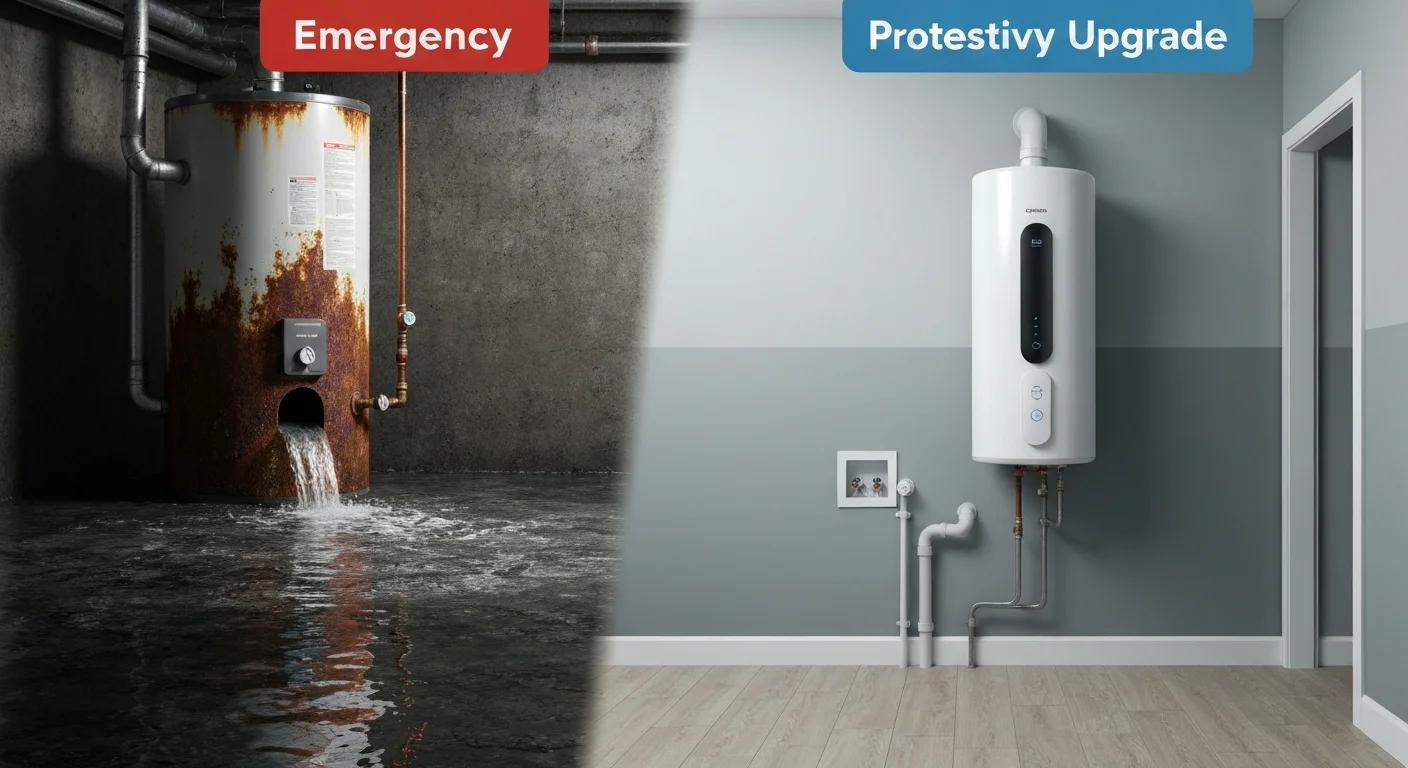
Choosing a proactive upgrade before your system fails completely prevents unexpected flood damage and lets you choose the most efficient system. Most homeowners only think about their water heater when they step into a freezing cold shower. When you are forced to make a decision in a rush, you often settle for whatever standard unit is available on the service truck that day. This panic buying deprives you of the chance to evaluate modern, high-efficiency options that can save you money over time.
A proactive replacement also allows you to plan for upgrades like a tankless system or a hybrid heat pump water heater. Hybrid units use advanced heat pump technology to pull warmth from the surrounding air, making them up to four times more efficient than standard electric tanks. These upgrades require planning because they may need electrical panel upgrades or dedicated condensate drains. By scheduling your water heater replacement proactively during a kitchen or bathroom renovation, you can make these adjustments without interrupting your family’s daily routine.
Furthermore, planning ahead protects your home from the silent threat of water damage. A ruptured water heater can release dozens of gallons of pressurized water into your home in minutes. If your utility closet is located on the second floor or near finished living spaces, this flooding can cause extensive structural damage. Replacing an aging, rust-weakened system before it splits open is the single best way to keep your home safe, dry, and consistently supplied with hot water.
Key Takeaways: Should You Repair The Water Heater or Replace It?
- The average life of a standard tank water heater is 8 to 12 years, while tankless units typically last 15 to 20 years.
- Apply the fifty percent rule: if a repair costs more than half of a replacement, it is time to purchase a new system.
- Active tank leaks or visible rust on the outer shell require immediate replacement, as they cannot be repaired.
- Hard water in Middle Tennessee accelerates sediment buildup, which damages heating elements and shortens equipment lifespan.
- Upgrading to an energy-efficient hybrid or tankless system can lower monthly energy bills and qualify for federal tax credits in 2026.
